Aby Warburg (1866-1929)
On: Italo Spinelli, Roberto Venuti (a cura di), MNEMOSYNE. L’Atlante della memoria di Aby Warburg (Artemide Edizioni, Roma 1998)
Martin Warnke
Abstract | Versione italiana originale
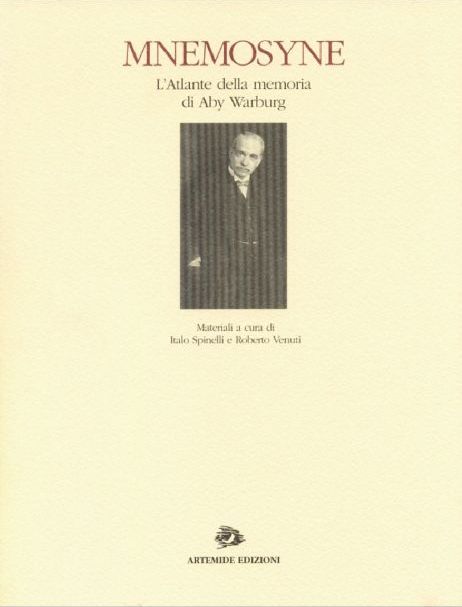
MNEMOSYNE. L’Atlante della memoria di Aby Warburg, a cura di I. Spinelli, R. Venuti (Artemide Edizioni, Roma 1998).
Indice
Presentazione, Antonio Paolucci
Presentazione, Christoph Luitpold Frommel
Lo zio Aby, Ingrid Warburg Spinelli
Aby Warburg (1866-1929), Martin Warnke
L’Atlante Mnemosyne di Warburg (1930), Fritz Saxl
Introduzione all’Atlante Mnemosyne (1929), Aby Warburg
Tavole – Didascalie e materiali
Testi citati
Bibliografia essenziale
Dati biografici
Martin Warnke first published this intellectual portrait of Warburg in Heinrich Dilly’s Altmeister moderner Kunstgeschichte (Berlin, 1990, 117-130). It acquired a new readership in 1998, when Italo Spinelli and Roberto Venuti included an Italian translation in the volume accompanying the Daedalus reconstruction in Italy (“L’Atlante Mnemosyne di Aby Warburg”: Siena, Santa Maria della Scala, 29 April-1 July 1998; Firenze, Gallerie degli Uffizi, 19 December 1998–16 January 1999; Roma, Biblioteca Hertziana, 19 January-6 February 1999). There it followed Ingrid Warburg Spinelli’s recollection of her uncle and preceded Saxl’s letter to Teubner and Warburg’s own introduction. Visitors saw the panels in the exhibition and could turn to the book for captions and passages from Warburg. Warnke’s essay asked what had become of Warburg’s historical psychology of expression in a discipline that remembered him chiefly for iconography. The 1998 Italian text appears here alongside the essay’s first English translation.
Aby Warburg (1866-1929)
Aby Warburg, together with Heinrich Wölfflin, ranks among the founders of art history as a modern discipline—by which is meant an art-historical scholarship that, beyond its significance as a scholarly and specialist discipline, has helped deepen the discipline’s self-understanding and broaden the scope of human knowledge over the course of this century. Yet whereas Wölfflin’s formal analysis was representative of the first half of the century, Warburg’s influence established itself on a worldwide scale only in its second half.
I
The personal and material circumstances that enabled Warburg to develop his ideas and pursue his work are well known. Born in 1866 into an old family of Jewish bankers who had been established in Hamburg since the seventeenth century, he drew upon the financial resources available to the bank, which had increased considerably during the Gründerjahre, in order to “demonstrate by our example that capitalism is also capable of intellectual achievements of a scope which would not be possible otherwise” (Gombrich 1970, 130).
Indeed, throughout his life, first his parents and subsequently his brother Max—an important figure to whom he had relinquished his inheritance rights—covered his personal and scholarly expenses.
Warburg completed his studies very rapidly. In 1886 he moved to Bonn, where his attention was drawn first to Henry Thode and then to Carl Justi; more important, however, was the influence exerted upon him by the classical philologist and scholar of mythology Hermann Usener and by the historian Karl Lamprecht. In 1888 the International Art Exhibition drew Warburg to Munich for the summer semester. There he joined a group of students preparing to leave for Florence, where they intended to attend a seminar and assist August Schmarsow, a professor at Leipzig who hoped to establish an institute of art history in the Italian city—an undertaking that Warburg continued to support and advocate throughout his life. During this period he developed the subject of his dissertation, which, however, failed to meet with Justi’s approval in Bonn. In 1889 he was therefore obliged to move to Strasbourg to study under Hubert Janitschek, a distinguished authority on the Italian Renaissance. Since in Strasbourg, too, Warburg pursued an exceptionally wide range of interests—not hesitating, for example, to give a paper on the logical premises of games of chance in a seminar on probability theory—he was able to complete his dissertation only in December 1891, taking what was, by the standards of the time, a relatively long period to do so.
After receiving his doctorate, Warburg moved to Berlin to attend courses at the Faculty of Medicine. He also spent a year performing military service in a horse artillery regiment. In 1893, no longer very young by the standards of the time, he completed his military service at the age of twenty-seven and returned to Florence, where he pursued a somewhat desperate search for new subjects of study. The wedding of one of his brothers provided a welcome opportunity to travel to America in 1895 (Saxl 1957, 325-330). There he sought the assistance of the Smithsonian Institution in arranging a journey among several Native American tribes in New Mexico. In accordance with the theories current at the time, he identified among the Native Americans a condition of blind paganism from which Europe had succeeded in freeing itself through Greek rationalism. After returning to Germany, in 1897 he spent four weeks in Paris, followed by another four-week stay in England. In October of the same year, despite strong opposition from both families, he married Mary Hertz, a painter from a well-established family with whom he had been in a relationship for more than ten years.
The couple settled in Florence. Meanwhile, Warburg gave several lectures in Hamburg—including one on Leonardo da Vinci in 1899. In Florence, together with the Dutch Germanist André Jolles, he planned an epistolary novel. In 1902 he wrote two seminal essays, one on the last will of Francesco Sassetti and another on the fortunes of Memling’s triptych in Danzig.
Plans to establish a library of his own progressed, and Warburg reached an agreement with his family. In 1904 he left his Florentine home and settled with his family in Hamburg. He sought to obtain his Habilitation in Bonn, but was unsuccessful because Paul Clemen, Justi’s successor, considered that Warburg, now thirty-eight, had published too little for his age. He was nevertheless offered a chair in Breslau, which he declined, just as he would later decline a chair at Halle in 1912. The Hamburg Senate conferred upon him the title of professor in 1912. The pleasure Warburg took in organisational work during these years may be interpreted as an indication of a crisis on the creative front: far from contenting himself with the development of his library, he also organised a congress in Dresden in 1906 and an ethnological congress in Hamburg. He defended Hugo Lederer’s monument to Bismarck and organised exhibitions of children’s drawings. Finally, in 1908, he decided to move into a new house, install his books there, and live as a Privatgelehrter, an independent scholar. He employed assistants, some of whom would later become celebrated: first P. Hübner, then Wilhelm Waetzoldt in 1909, the Orientalist W. Printz in 1912, and Fritz Saxl, who joined them in 1913.
During this period Warburg actively campaigned for the establishment of a university in Hamburg. His activities also extended to the international sphere: as treasurer, he played an essential part in organising the International Congress of Art Historians held in Rome in 1912; on that occasion he delivered a lecture regarded as the birth of iconology (Wuttke 1979, 611 ff.). The outbreak of war brought to an end his first plans to transform his library into a public institution and to bring young researchers to Hamburg on scholarships.
The First World War, which prompted Wölfflin to write the Kunstgeschichtliche Grundbegriffe (Principles of Art History), brought Warburg close to abandoning the discipline altogether. He directed a journal devoted to improving Italo-German relations and reorganised his entire library and its resources for the purpose of archiving and cataloguing the events of the war (Heise 1947, 42 f.). At the end of the conflict, in 1918, a mental illness that had long been developing became acute. Warburg was admitted to a clinic in Kreuzlingen, where he remained until 1924 (Diers 1979, 6-14). During his absence, Saxl transformed the library into an active institution that rapidly acquired considerable importance within the culture of the Weimar Republic. He organised interdisciplinary lectures and published the Studien der Bibliothek Warburg. The building in Heilwigstrasse, which still survives today, was inaugurated in 1926 (Jesinghausen-Lauster 1985, 197 f.).
When Warburg left Kreuzlingen in 1924, Saxl celebrated his return by installing a panel to which photographs relating to the themes that had hitherto occupied Warburg’s work were attached. This mode of presentation impressed Warburg so deeply that he made it the principal instrument of his subsequent reflection and activity in the field of art history. He used it for a number of educational exhibitions—for example, for the Congress of Orientalists in 1926, an exhibition that he subsequently installed at the Hamburg Planetarium as well (where it can still be seen today); for the “Verein Niederdeutscher Bibliotheken” he exhibited a series of illustrations drawn from works by Ovid, and in the summer of 1927 he organised an exhibition of postage stamps, providing an analysis of them on the panels; in 1928 he presented The Medici Festivals at the Hamburg Chamber of Commerce. All these elements converged towards a new monumental form, that of the “picture atlas”. Accompanied by a servant and by his assistant Gertrud Bing, who had obtained her doctorate under Ernst Cassirer, he travelled to Rome, where he settled for a time in a suite at the Hotel Eden.
It was in Rome that he produced the panels of the picture atlas, which he also presented at the Bibliotheca Hertziana on 19 January 1929. Three months after his return to Hamburg, on 26 October 1929, Aby Warburg died following a heart attack.
The significance of Aby Warburg’s work for art history as a specialist discipline cannot be reduced to a single denominator. Yet if one considers the more recent responses elicited by his work, it must be borne in mind that it was only Gombrich’s biography that made Warburg’s diaries and notes accessible for the first time, revealing entirely new aspects of his personality that had remained unknown until 1970: Warburg the theorist, the psychologist, the social psychologist, the systematic scholar who continually shifted his approach, the man of fragile psychological constitution. These newly revealed aspects of his life, which his contemporaries either did not know or, at least, did not consider worthy of being handed down, now threaten to dominate the image of his personality, although they found their way into his writings only in fragmentary form. This supplementary evidence has nevertheless provided a personal context around his work that allows the intentions of this scholar to be assessed with greater confidence.
Three areas of Warburg’s activity acquired particular significance in the history of the discipline: his library, the fundamental aims he set himself, and the influence he exerted.
II
Warburg’s “Library of Cultural Science” has a history of its own. Over the years it acquired considerable autonomy from the personality of its founder. For a long time it remained the flexible and continuously readjusted instrument of an intellectual concerned with highly original questions. It does not appear to have been conceived initially as a means of securing its owner’s independence, since Warburg regularly used the Hamburg Staatsbibliothek. Regular journeys to Berlin and Florence, together with extensive correspondence in which he requested information and documents, enabled a scholar such as Warburg to remain constantly up to date. Yet Warburg’s extraordinary curiosity, the remarkable breadth of his interests and his financial means meant that among the 20,000 volumes contained in his library by 1920—a figure equivalent to the average holdings of the library of a present-day university institute—there were numerous exceedingly rare works whose presence alone constituted an inexhaustible source of interest (Saxl [1943-1944] [1970] 2023, 109-123).
It has been suggested that Warburg took inspiration from the structure of the seminar building at the University of Strasbourg, where art history was, as it were, merely one niche among a series of specialised humanities libraries. The Institute for Cultural and Universal History established by Karl Lamprecht in Leipzig in 1909, the first “teaching and research institute in the humanities in Germany to arise from a private initiative” (vom Brocke 1982, 470), may likewise have provided Warburg with a model.
At this stage, it was still the exceptionally lively and original library of a single Privatgelehrter. That threshold was crossed when the new building was completed in 1926: Fritz Saxl reclassified the books with considerable intelligence according to a system perfectly adapted to their subjects. The elliptical reading room, lit from above and also used as a lecture hall, “was to be provided with the necessary handbooks and reference works, as well as display stands for older and recent periodicals”. The remaining books were:
housed on four floors. The first began with books on the general problems of expression and on the nature of symbols. From here one was led to anthropology and religion and from religion to philosophy and the history of science. The second floor contained books on expression in art, its theory and history. The third was devoted to language and literature, and the fourth to the social forms of human life—history, law, folklore, and so forth. (Saxl [1943-1944] [1970] 2023, 118).
It is symptomatic that there had been no thought whatsoever of creating a specialist library of art history, nor specifically of documenting an “afterlife of Antiquity”. Only a single objective was stated: “The forms of artistic expression, their theory and their history”. The system revolved around a single question, a single problematic: the social conditions and necessities of artistic expression. Yet this field of interest was defined so broadly that the library accommodated exceptionally rare books—books that would later prove important to scholars emerging from the young university: the philosopher Ernst Cassirer, the art historian Erwin Panofsky, the Byzantinist Richard Salomon and the Orientalist Hellmut Ritter.
To understand the full importance of this institution during the first phase of its existence, one must bear in mind that Germany at that time still had no research institutes devoted to art history. The discipline was still something of a hobby, and those who practised it at universities were not all formally trained art historians. Justi, for example, had originally been a philosopher. Wölfflin, too, had obtained his doctorate in philosophy, as had Richard Hamann. Justus Brinckmann, Warburg’s colleague at the Kunst- und Gewerbemuseum, had previously been a lawyer and political journalist. Heinrich Wölfflin, the first art historian to be elected to a learned academy specifically in that capacity, was only then beginning to exert his influence across the humanities. At least implicitly, the two scholars, Warburg and Wölfflin, pursued the same objective: to establish art history as a fully fledged discipline within the humanities. “As a pupil of Justi, Usener and Janitschek”, Warburg wrote on 18 March 1912, “for many years I have had to watch my generation sawing through the roots of conscientious scholarship without anyone hurling a ‘quos ego’ at the sentimental aesthetes or the ‘generous’ journalists” (letter of 18 March 1912, Copy Book, vol. IV, 275, WIA).
To recall initiatives similar to Warburg’s, whether earlier or contemporary, aimed at providing art history with a scholarly foundation is not to diminish his achievement. It was a private initiative on the part of August Schmarsow that gave rise to the Kunsthistorisches Institut in Florenz; its foundation was agreed upon at a congress in 1893, and from 1903 it received the support of the German imperial government. The Prussian Historical Institute in Rome had an art-historical section which, between 1906 and 1915, supported Arthur Haseloff’s research into Hohenstaufen architecture in southern Italy. This did not prevent Henriette Hertz from installing an art-historical library in Palazzo Zuccari, which had been donated to her in 1904 by an industrial magnate in the ammonia and soda business. The library was funded by capital from the same enterprise and donated in 1913 to the Kaiser-Wilhelm-Gesellschaft. A year later, Warburg considered for the first time the idea of institutionalising his own library (Saxl [1943-1944] [1970] 2023, 114).
Other private initiatives likewise characterised the climate in which Warburg’s project developed. Their founders, too, were not infrequently Privatgelehrten. Two scholars of Warburg’s generation, Ulrich Thieme and Karl G.E.F. Becker, created in Leipzig the technical and organisational conditions that made it possible to involve numerous specialists, including scholars from other countries, in the production of a thirty-six-volume work, the Allgemeines Lexikon der bildenden Künstler von der Antike bis zur Gegenwart (“General Dictionary of Artists from Antiquity to the Present”)—an indispensable work of reference, the product of German art-historical scholarship, which has remained in worldwide use to the present day. Similarly, the photographic campaigns that Richard Hamann undertook at his own expense in Marburg from 1913 onwards, and the image archives that resulted from them—which enabled him to supply art-history seminars at other universities with slides—expanded until they provided the material basis for the creation of a research institute, the precursor of the present-day Central Institute.
At the time, numerous charlatans and adventurers were drawn to the discipline, provoking continual controversies and debates; but there were also gifted outsiders and scholars of considerable intellectual stature such as Carl Giehlow, a scholar from Holstein who had moved to Vienna and was three years older than Warburg. Giehlow left his position as a government assessor in Berlin in order to obtain his doctorate with a study of Maximilian’s Book of Hours. With his studies of Dürer’s Melencolia I (1903), and above all with his work Die Hieroglyphenkunde in der Allegorie der Renaissance (The Study of Hieroglyphs in Renaissance Allegory, 1915), he might rival Warburg for the title of founder of modern iconography—if the significance of the latter could be reduced to this field alone (Mrazek 1964, 371).
The intellectual openness of the discipline may be gauged by recalling the case of Theodor Eduard Hampe, an official at the Germanisches Nationalmuseum in Nuremberg, who in 1904 published, in three volumes, an admirable edition of the Nürnberger Ratsverlässe and subsequently worked for many years on his Sieben Bücher vom idealen Egoismus (Seven Books on Ideal Egoism), which enabled him in 1926 to present himself to the public as a philosopher (Schadendorf 1966, 599). Rigour and a willingness to take risks, originality and universality operated in such manifold ways within the discipline that Warburg’s projects were by no means entirely isolated.
Warburg’s undertaking may claim a certain distinctiveness with regard to its Jewish dimension. The Jewish intelligentsia played a vital role in the young discipline. Adolph Goldschmidt, himself the son of a Hamburg banker of Jewish origin, had become a full professor in Berlin and provided an example of the fact that the discipline placed no obstacles in the path of a genuinely qualified scholar. Hamburg society, or at least the city’s young university, had created a climate of openness in which Warburg’s Institute could feel secure. The fact that Max Warburg, Aby’s brother, was the target of defamatory attacks on numerous antisemitic posters undoubtedly strengthened the bank’s resolve to continue supporting the library’s wide-ranging intellectual activity, and its growing prestige, even after Aby Warburg’s death (Gay 1978, 126 f.).
After its transfer to London in 1933—where it was subsequently incorporated into the University of London—the library acquired a new function. Erwin Panofsky, the first full professor of art history at the University of Hamburg, had moved to Princeton. Panofsky and the Warburg Library in London became two secure points of anchorage from which the methods and fundamental principles of iconographic research could spread throughout the world.
This naturally occurred with certain inevitable limitations and adjustments to the programme devised by Warburg. At the same time, this process of concentration earned the Institute a reputation as an incorruptible stronghold of research and erudition at the highest levels of the humanities. The organisational burden of this transformation fell upon the shoulders of Gertrud Bing and Edgar Wind, but above all Fritz Saxl, who, in carrying out this task so successfully, undoubtedly sacrificed the possibility of being counted among the most brilliant art historians of the century (Bing 1957; Garin 1965).
III
The transformation of Warburg’s programme into a learned iconography, or into a history-of-ideas form of scholarship, a transformation welcomed internationally, led to a simplification of his complex intentions. The original principle of Warburg’s work may be defined—in his own words—as “cultural-historical”, although this should not be confused with the kind of art history with historicist pretensions of which Hermann Grimm, and also Thode and Justi, were more or less distinguished representatives.
Warburg’s cultural-historical approach demanded more than an art history; the latter was to constitute a field of enquiry in which his own phobias, problems, repressions and anxieties about the future, as well as those of his age, were prefigured. The painting was the expressive vehicle of a “social memory”, of an experience within and with society—an experience that, if authentic, could only be impassioned. In its manifestations, art exercised for Warburg a historically “polarising” action, that of a historically concrete “energy of confrontation”. This “diagnostic” conception of the work of art, which excludes contemplative aesthetic observation, was so new and unfamiliar that sustaining it required not merely a library organised on entirely new principles, but also a theoretical foundation that could not be established without the assistance of the social sciences or social psychology.
From the information gathered by Gombrich from Warburg’s posthumous writings, we know of the desperate search he undertook for guidance in the theories of the most diverse authors: philosophers such as Friedrich Theodor Vischer, Thomas Carlyle and Wilhelm Wundt; scientists such as Darwin; psychologists such as Ewald Hering and Richard Semon; anthropologists such as Herbert Spencer and James Frazer; sociologists such as Durkheim and Lévy-Bruhl. Sociology as a modern discipline achieved above all what historicism, ossified into positivism, could no longer accomplish: it built a bridge to the present and employed historical material in order to diagnose the contemporary age. It is often forgotten that Wölfflin’s Grundbegriffe of 1915 also contained this present-oriented perspective, insofar as he rightly wished art to be detached from the interests of the present.
Warburg did not want an art and an art history that were usable, but an art and an art history that were engaged and productive. With the aid of art and its history he intended to advance knowledge and provide points of orientation. In short, his programme belongs among the projects of universal enlightenment characteristic of this century. In the face of such ambition, to reduce his achievements to a “method”—iconography or iconology, for example—would amount to an impoverishment. For him, method was not an objective but a path to be followed. The relatively small number of themes and questions that Warburg addressed over the course of his studies acquired in his hands a relation to the present that did not establish analogies or parallels, but explained, compared and encouraged.
The Renaissance—Burckhardt maintained in a formulation that remains valid today—marked the birth of modern man. Warburg’s scholarly work is concerned almost exclusively with this period, in which he could already discern the problems of his own age. His dissertation on Botticelli’s Primavera was certainly a refined exercise in philological apprenticeship, in which he clarified its relations with Poliziano’s Giostra; but the text explains that we owe this painting to the Medici festivals, and that the “Italian festive pageantry”, according to the passage from Burckhardt quoted by Warburg, “is a true transition from life into art” (Warburg [1893] 1999, 125).
Warburg asks why the Florentines of the early Renaissance were able to take an interest in Antiquity and, with the aid of Alberti, Poliziano and other evidence, finds the answer in the “accessory in motion”, the “accessory forms in motion”, embodied in the flowing hair and garments displayed at these festivals. In 1905 Warburg would give these animated accessories, these motifs of movement, the name Pathosformeln, or “pathos formulae”. He did not attribute an invariably univocal value to them: when they are mere quotations, or simply decorative ornaments, they are detached from life and become mere rhetorical flourishes—like those of the Jugendstil of his own age. Yet they may also function as a kind of “explosive”, insofar as they attack and “polarise” that which is prescribed by the norm, tranquil, constant and stable (Warnke 1980, 61 f.). Warburg is always on the side of the risk-embracing formal energy that dynamises and drives things forward: it “interests” him positively, whereas formulae detached from every context or devoid of energy interest him only negatively.
In his essay The Art of Portraiture and the Florentine Bourgeoisie (Bildniskunst und florentinisches Bürgertum, 1902), Warburg explicitly presents “the ideological and practical demands of real life” as the “causal factors” of works of art, seeking, as it were, “to prove the complicity of the public through circumstantial evidence alone”. The fact that Lorenzo de’ Medici’s entire family parades through Ghirlandaio’s frescoes in a chapel of Santa Trinita signals the secularisation of Christian cultural space, whose content is transformed into a “backdrop for Florence’s opulent mercantile aristocracy”. Yet this secularisation has a positive dimension: a mercantile class that delights in risk and is on the point of conquering the world still seeks to secure the blessing of traditional forces. It must psychologically legitimise its conquering audacity by grounding itself in traditional norms. From this perspective, Warburg is clearly reflecting upon the need for legitimation experienced by a class of merchants with imperial ambitions, a social group he knew at first hand and whose conduct he sought to guide. To sustain the tension and resolve it within oneself: in this essay, this becomes almost a programme of social psychology:
When conflicting worldviews kindle partisan emotions, setting the members of a society at each other’s throats, the social fabric inexorably crumbles; but when those views hold a balance within a single individual—when, instead of destroying each other, they fertilize each other and expand the whole range of the personality—then they are powers that lead to the noblest achievements of civilization (Warburg [1902] 1999, 190).
This intention is expressed still more forcefully five years later in the study Francesco Sassetti’s Last Injunctions to His Sons (1907). This courageous merchant had been obliged to attempt to overcome Fortuna in the manner of the ancients. Yet there remained in him a deference to “an old-fashioned and backward-looking attitude”, a residue of the “medieval culture of loyalty”. This human type sought “to express, in terms of pagan heroism, the stance of the individual at war with the world” while at the same time endeavouring, in the spirit of a “philosophy of equilibrium”, to safeguard his choices by appealing to Christian obedience and medieval modesty—“He believed that he had laid the unquiet spirits of antiquity to rest by building them into the solid conceptual architecture of medieval Christianity. He was not to guess—before the advent of Savonarola—just how critical a test this optimistic attempt to absorb and enlist antiquity would prove to be” (Warburg [1907] 1999, 239-240, 249). Other constellations of the early Italian Renaissance studied by Warburg also move within this field of tensions—for example, the preference that emerged in Italy for Netherlandish art, which enabled Warburg to develop, in an entirely new form, a theme already addressed by Burckhardt.
As for the celebrated lecture delivered at the International Congress of Art Historians held in Rome in 1912, Warburg’s aim was not to establish an iconological method: he refers to it only once, as a “critical iconology” (Warburg [1912] 1999, 569; Wuttke 1979, 625 f.). Rather, he sought to present an image of the High Renaissance in which the “attempt to liberate artistic genius from medieval illustrative servitude” ultimately exposed astrology as a dangerous enemy to all creative invention (Warburg [1912] 1999, 563), a force and a form of fetishistic, anti-Enlightenment thought that has continued to survive into the present. Critical iconology consists in “removing the shell”, in sweeping away astrology’s distortions of the achievements of the Greek rational spirit. It is remarkable that these distortions were able to become effective once again during the Renaissance:
It is understandable that a Renaissance man, on finding these astrological specters walking abroad in his own family circle, should have taken up arms against so barbaric a combination of idolatry and fatalism (another sworn foe of astrology, Savonarola, also came from Ferrara). But it is all the more symptomatic of the continuing strength of late antique and medieval ideas and practices at the Este court that, as late as 1470, the process of restoring the true artistic face of the Olympian gods had not progressed beyond the first step (Warburg [1912] 1999, 581).
The lecture was certainly “a plea for an extension of the methodological borders of our study of art, in both material and spatial terms”, but only in the name of a “historical psychology of human expression”, proceeding from the idea that “genius is both a gift of grace and a conscious dialectical energy” required to enter into reciprocal confrontation. Genius makes possible not only pleasurable enjoyment but also—as the emphatic conclusion of the lecture declares—enlightenment:
The grandeur of the new art, as given to us by the genius of Italy, had its roots in a shared determination to strip the humanist heritage of Greece of all its accretions of traditional “practice”, whether medieval, Oriental, or Latin. It was with this desire to restore the ancient world that “the good European” began his battle for enlightenment, in that age of internationally migrating images that we—a shade too mystically—call the Age of the Renaissance (Warburg [1912] 1999, 586).
Just as Nietzsche and Burckhardt had burdened the image of Antiquity with problems, Warburg transformed the image of the Renaissance, in which the modern bourgeoisie complacently celebrated its own origins, into a psychogram agitated by multiple tensions (Schramm 1979, 37).
It is solely to a shift in perspective caused by historical contingency that we should attribute the fact that Warburg developed his study Pagan-Antique Prophecy in Words and Images in the Age of Luther during and after the First World War. The same questions and the same problems appear here under more dramatic circumstances and in a different setting. Warburg identifies a form of pagan astrological superstition in Luther and Melanchthon, who, in order to comply with astrological rules, went so far as to alter dates of birth. Within this “primitive, totemistic obsession with correspondences”, every enlightened reason, every “mental space”, appears atrophied and sacrificed (Warburg [1920] 1999, 685, n. 44).
This superstitious blindness has such disastrous effects because it is disseminated by “sensational illustrated publications” that employ “the impact of woodcut illustration as a powerful new means of working on an uneducated public”—a medium that had found its modern application during the First World War. One could not but be disturbed by the realisation that, in the age of the Reformation, even enlightened minds had been capable of being blinded, and that through “campaigns in the illustrated press” every inhibition among the popular masses could be overcome. In this essay, the profound fear felt by the bourgeois in the face of an uncontrolled uprising of the masses lends contemporary relevance to remote material from the history of art.
During the final years of his life, Warburg devoted his scholarly activity almost entirely to the “picture atlas”. This was a visualisation of the principal themes he had studied throughout his life, created with the aid of photographs of works of art, but also of objects and illustrations drawn from everyday life, such as postage stamps and newspapers. Although he presented these panels on numerous occasions and even signed a contract with a publisher, the surviving photographs—approximately sixty panels—cannot be regarded as a completed and definitive work.
It must nevertheless be borne in mind that these panels exerted a considerable influence and that many younger scholars, including Wind, Panofsky, Cassirer, G. Bing, P.E. Schramm, R. Wittkower in Rome, E.R. Curtius and K. Clark, were able to discover Warburg only through these panels covered with such compelling sequences of images. Ernst Robert Curtius dedicated his book European Literature and the Latin Middle Ages (Bern, 1948) to the memory of Gustav Gröber and Aby Warburg. These sequences, which also bore titles, may have contributed to the misunderstanding that Warburg was ultimately concerned only with iconographic successions, with chains of motifs that established constants or archetypes throughout history. To this heterogeneous material, presented in a form permitting numerous cross-references, Warburg added, towards the end of his life, commentaries that are difficult to understand. The material might suggest that he intended to undertake a topographical investigation that sought the origin of everything in Antiquity, an investigation whose subsequent fortunes might then be explained by the history of ideas.
A gap therefore opens between Warburg’s work and his influence. His own work addresses one of the most complex, difficult, wide-ranging, ambitious, but also most problematic sets of questions ever to have concerned art history. His influence, by contrast, is confined to the rehabilitation—undoubtedly important, but less ambitious—of subject matter and content in works of art handed down by tradition, and hence to the refoundation of iconography. From this perspective, his Enlightenment impulse—which had led him to regard the work of art as a useful and necessary phenomenon within the movements and developments of history—has played no significant role.
Aby Warburg (1866-1929)
Aby Warburg, insieme a Heinrich Wölfflin, appartiene al novero dei fondatori della storia dell’arte moderna – intendendo una storiografia artistica che, al di là della sua rilevanza scientifica e specialistica, ha contribuito ad accrescere la comprensione di sé medesima e ad ampliare l’ambito delle conoscenze umane nel corso di questo secolo. Ma mentre l’analisi formale di Wölfflin è stata rappresentativa per la prima metà di questo secolo, l’influenza di Warburg si è imposta su scala mondiale soltanto nella seconda metà del secolo.
I
Le condizioni personali e materiali che permisero a Warburg di sviluppare le sue idee e di svolgere la propria attività sono ampiamente note. Nato nel 1866 da un’antica famiglia di banchieri ebrei stabilitisi ad Amburgo a partire dal XVII secolo, egli utilizzò i mezzi finanziari di cui disponeva la banca, notevolmente cresciuti nel corso dei “Gründerjahre”, per “dimostrare con il nostro esempio che il capitalismo è anche capace di realizzazioni intellettuali di un’ampiezza che sarebbe altrimenti impensabile” (Gombrich [1970] 1983, 118).
In effetti, durante tutta la sua vita, prima i genitori, poi il fratello Max – un personaggio importante al quale egli aveva ceduto i propri diritti ereditari – provvidero a coprire le sue spese personali e scientifiche.
Warburg completò molto rapidamente i suoi studi. Nel 1886 si trasferì a Bonn, dove i suoi interessi furono attratti prima da Henry Thode, poi da Carl Justi; più importante fu però l’influenza che esercitarono su di lui il filologo dell’antichità e studioso dei miti Hermann Usener e lo storico Karl Lamprecht. Nel 1888 l’esposizione internazionale d’arte attirò Warburg a Monaco per il semestre estivo. Qui si unì a un gruppo di studenti in procinto di partire per Firenze, dove intendevano frequentare un seminario e dare manforte ad August Schmarsow, professore a Lipsia, intenzionato a fondare nella città italiana un istituto di storia dell’arte – impresa che Warburg continuò a sostenere e caldeggiare durante tutta la sua vita. In questo periodo elaborò l’argomento per la sua dissertazione, che non incontrò però l’approvazione di Justi a Bonn. Nel 1889 fu costretto perciò a recarsi a Strasburgo presso Hubert Janitschek, grande conoscitore del Rinascimento italiano. Poiché anche in questa città Warburg condusse studi particolarmente disparati – non disdegnando, ad esempio, di tenere una relazione sui presupposti logici dei giochi d’azzardo in un seminario sul calcolo delle probabilità – poté completare la sua dissertazione solo nel dicembre 1891, impiegando, per l’epoca, un tempo relativamente lungo.
Conseguito il dottorato, Warburg si trasferisce a Berlino per frequentare i corsi della Facoltà di Medicina. Per un anno assolve anche il servizio militare in un reggimento di artiglieria a cavallo. Non è più giovanissimo nel 1893 quando, a 27 anni, terminato il servizio militare, riparte per Firenze, dove conduce ricerche un po’ disperate per trovare nuovi temi di studio. Le nozze di uno dei fratelli sono l’occasione propizia per recarsi nel 1895 in America (Saxl 1957, 325-330). Qui chiede l’assistenza della Smithsonian Institution per effettuare un viaggio presso alcune tribù indiane del Nuovo Messico. Secondo le teorie dell’epoca, egli individua presso gli indiani quella condizione di paganesimo cieco da cui in Europa ci si era potuti liberare grazie al razionalismo dei Greci. Tornato in Germania, nel 1897 compie un viaggio di quattro settimane a Parigi, poi un altro di pari durata in Inghilterra. Nell’ottobre dello stesso anno, nonostante la forte opposizione delle due famiglie, sposa Mary Hertz, una pittrice di solide origini con la quale intratteneva una relazione da più di dieci anni.
Insieme a lei si stabilisce a Firenze. Nel frattempo tiene alcune conferenze ad Amburgo – nel 1899 su Leonardo da Vinci. A Firenze, insieme al germanista olandese André Jolles, progetta un romanzo epistolare. Nel 1902 scrive due articoli fondamentali, quello sulle ultime volontà di Francesco Sassetti e quello sulle sorti del trittico di Memling a Danzica.
I progetti per dar vita a una propria biblioteca progrediscono, ed egli conclude un accordo con la famiglia. Nel 1904 lascia la casa fiorentina e si stabilisce con i familiari ad Amburgo. Cerca di ottenere l’abilitazione a Bonn, ma non ci riesce perché Paul Clemen, successore di Justi, ritiene che Warburg, che ha 38 anni, abbia pubblicato troppo poco per la sua età. Ciononostante gli viene proposta una cattedra a Breslavia, che egli rifiuta, come farà anche nel 1912 per una cattedra a Halle. Il Senato di Amburgo gli conferisce il titolo di professore nel 1912. Il piacere che Warburg in questo periodo prova per il lavoro organizzativo può essere interpretato come il segnale di una crisi sul versante creativo: lungi dal ritenersi soddisfatto dall’allestimento della sua biblioteca, organizza anche un congresso a Dresda nel 1906 e un congresso di etnologia ad Amburgo. Difende il monumento per Bismarck di Hugo Lederer, allestisce mostre di disegni infantili. Infine, nel 1908 decide di stabilirsi in una nuova casa, di collocarvi i suoi libri e di vivere come Privatgelehrter. Assume degli assistenti, alcuni dei quali in seguito diventeranno celebri: P. Hübner in un primo momento, poi nel 1909 Wilhelm Waetzoldt, nel 1912 l’orientalista W. Printz, a cui nel 1913 s’aggiunge Fritz Saxl.
In questo periodo Warburg si impegna attivamente per la creazione di una università ad Amburgo. Svolge anche attività a livello internazionale: in qualità di tesoriere svolge un ruolo essenziale nell’organizzazione del Congresso internazionale degli storici dell’arte che si svolge nel 1912 a Roma; in quest’occasione tiene una conferenza considerata il battesimo dell’iconologia (Wuttke 1979, 611 ss.). Lo scoppio della guerra fa cadere i suoi primi progetti di trasformare la sua biblioteca in un’istituzione pubblica e di far giungere ad Amburgo, con delle borse di studio, giovani ricercatori.
La guerra mondiale, che spinge Wölfflin a scrivere i Kunstgeschichtliche Grundbegriffe (Principi fondamentali della storia dell’arte), porta Warburg quasi ad abbandonare la disciplina. Dirige una rivista per il miglioramento delle relazioni italo-germaniche; trasforma tutta la sua biblioteca e gli strumenti che vi si trovano al fine di archiviare e schedare gli eventi bellici (Heise 1947, 42 s.).
Al termine del conflitto, nel 1918, una malattia psichica, che si annunciava da lungo tempo, assume forma acuta. Warburg viene ricoverato in una casa di cura a Kreuzlingen, dove resta fino al 1924 (Diers 1979, 6-14).
Durante la sua assenza Saxl fa della biblioteca un’istituzione attiva che in breve tempo acquista un suo peso nella cultura della Repubblica di Weimar. Organizza conferenze interdisciplinari e pubblica gli Studi della Biblioteca Warburg. Al 1926 risale l’inaugurazione dell’edificio della Heilwigstrasse, ancor oggi esistente (Jesinghausen-Lauster 1985, 197 s.).
Quando nel 1924 Warburg lascia Kreuzlingen, Saxl, per festeggiare il suo ritorno, fa installare un pannello su cui sono fissate alcune foto che si riferiscono ai temi cui Warburg aveva consacrato fino ad allora il suo lavoro.
Questa tecnica di presentazione impressiona a tal punto Warburg che egli ne fa lo strumento principale della sua riflessione e della sua attività ulteriore nel campo della storia dell’arte. La utilizza per alcune mostre didattiche – ad esempio per il Congresso degli Orientalisti nel 1926, una mostra che allestisce in seguito anche per il Planetarium di Amburgo (dove è possibile vederla di nuovo ai giorni nostri); per il “Verein Niederdeutscher Bibliotheken” espone una serie di illustrazioni tratte da opere di Ovidio e, durante l’estate del 1927, organizza una mostra di francobolli, di cui fornisce un’analisi sui pannelli; nel 1928 presenta Le feste medicee presso la Camera di commercio di Amburgo. Tutti questi elementi convergono verso una nuova forma monumentale, quella dell’“atlante illustrato”. Insieme a un domestico e alla sua assistente Gertrud Bing, che aveva conseguito il dottorato con Ernst Cassirer, parte per Roma dove si stabilisce per un certo periodo in una suite dell’albergo Eden.
In questa città realizza le tavole dell’atlante illustrato che presenta anche alla Biblioteca Hertziana il 19 gennaio 1929. Tre mesi dopo il suo ritorno ad Amburgo, il 26 ottobre 1929, Aby Warburg muore in seguito a un infarto cardiaco.
Il significato dell’opera di Aby Warburg per la storia dell’arte intesa come disciplina specialistica non si può ridurre a un unico denominatore. Ma se ci si riferisce alle reazioni recenti suscitate dalla sua opera, si deve tener conto del fatto che solo la biografia scritta da Gombrich ha permesso di conoscere per la prima volta diari e appunti stilati da Warburg, documenti che hanno rivelato aspetti totalmente nuovi e fino ad allora (1970) sconosciuti della sua personalità: il teorico, lo psicologo, lo psicologo sociale, lo studioso sistematico che cambia continuamente approccio, l’uomo dalla fragile costituzione psichica. Questi aspetti nuovi della sua esistenza, che i contemporanei non conoscevano o, per lo meno, non giudicavano degni d’essere tramandati, minacciano oggi di dominare l’immagine della sua personalità, sebbene siano passati nei suoi scritti solo in forma frammentaria. Questi dati accessori hanno tuttavia tracciato intorno alla sua opera un contesto personale che consente di giudicare con maggior sicurezza le intenzioni di questo studioso.
Sono tre i settori dell’attività di Warburg che hanno acquistato un peso rilevante nella storia della disciplina: la sua biblioteca, gli obiettivi di fondo che egli si era prefissato e l’influenza che ha esercitato.
II
La “Biblioteca di scienze della cultura” di Warburg ha una sua storia. Con il passare degli anni essa ha acquistato notevole autonomia rispetto alla personalità del suo fondatore. Per lungo tempo è stata lo strumento flessibile e continuamente riadattato di un intellettuale che si occupava di questioni originali. Non sembra che in origine essa sia stata concepita per assicurare l’indipendenza del suo possessore, perché costui aveva l’abitudine di frequentare regolarmente la Staatsbibliothek di Amburgo. Viaggi regolari a Berlino e a Firenze, una corrispondenza abbondante in cui egli chiedeva informazioni e documenti, permisero a uno studioso come Warburg di essere sempre aggiornato. Tuttavia la sorprendente curiosità di Warburg, la grande ampiezza d’orizzonte dei suoi interessi e le sue possibilità economiche hanno fatto sì che tra i 20.000 volumi che contava la sua biblioteca nel 1920 – una cifra che corrisponde alla quantità media dei volumi della biblioteca di un istituto universitario dei nostri giorni – si trovassero numerose opere rarissime la cui presenza costituisce da sola un’inesauribile fonte d’interesse (Saxl [1943-1944] [1970] 1983, 277-290).
È stata avanzata l’ipotesi che Warburg si sia ispirato alla struttura che caratterizzava l’edificio dei seminari dell’Università di Strasburgo, dove la storia dell’arte era, per così dire, solo una nicchia tra altre biblioteche specializzate in scienze umane. Anche l’Istituto di Storia culturale e universale creato da Karl Lamprecht nel 1909 a Lipsia, il primo “istituto d’insegnamento e di ricerca in scienze umane della Germania nato da una iniziativa privata” (vom Brocke 1982, 470), potrebbe aver rappresentato un modello per Warburg.
Si trattava ancora della biblioteca, estremamente viva e originale, di un semplice Privatgelehrter. Questa soglia fu superata quando nel 1926 fu completato il nuovo edificio: Fritz Saxl riclassificò i libri con molta intelligenza e in base a un sistema perfettamente adeguato ai soggetti. La sala di lettura a forma di ellisse, illuminata dall’alto, che era anche sala per le conferenze, “doveva essere provvista dei manuali e repertori necessari, e di espositori per le riviste antiche e recenti”. Gli altri libri erano:
Sistemati su quattro piani. Al primo c’erano quelli sui problemi generali dell’espressione e sulla natura dei simboli; poi si passava all’antropologia e alla religione, e quindi alla filosofia e alla storia della scienza. Il secondo piano conteneva i volumi sull’espressione artistica, sulla sua teoria e sulla sua storia. Il terzo era dedicato al linguaggio e alla letteratura, e infine il quarto alle forme sociali della vita umana – storia, diritto, folklore e così via (Saxl [1943-1944] [1970] 1983, 286).
È sintomatico il fatto che non si fosse minimamente pensato a creare una biblioteca specializzata di storia dell’arte, né a permettere una “vita postuma dell’antichità”. Si indicava un solo obiettivo: “Le forme d’espressione artistica, la loro teoria e la loro storia”. Il sistema era centrato su una sola questione, una sola problematica: le condizioni e le necessità sociali dell’espressione artistica. Ma questo centro d’interesse era definito con tale ampiezza che nella biblioteca trovavano posto libri estremamente rari – libri che in seguito poterono svolgere una funzione importante per gli studiosi usciti dalla giovane università: il filosofo Ernst Cassirer, lo storico dell’arte Erwin Panofsky, il bizantinista Richard Salomon, l’orientalista Hellmut Ritter.
Per comprendere tutta l’importanza di questo istituto durante la prima fase della sua esistenza, si deve tener conto del fatto che all’epoca in Germania non esistevano ancora istituti di ricerca per la storia dell’arte. Questa disciplina era ancora una sorta di hobby, e coloro che la praticavano nelle università non erano tutti storici dell’arte diplomati. Justi, ad esempio, era in origine un filosofo. Anche Wölfflin aveva conseguito il suo dottorato in filosofia, come del resto Richard Hamann. Justus Brinckmann, collega di Warburg al “Kunst- und Gewerbemuseum”, era stato in precedenza giurista e giornalista politico. Heinrich Wölfflin, il primo ad essere nominato membro di un’accademia scientifica come storico dell’arte, cominciava solo allora ad esercitare la sua influenza in tutti i campi delle scienze umane. Per lo meno implicitamente, i due studiosi, Warburg e Wölfflin, perseguivano il medesimo obiettivo: quello di consentire alla storia dell’arte di entrare a pieno diritto nella cerchia delle scienze umane. “Come allievo di Justi, Usener e Janitschek” – scrive Warburg il 18 marzo 1912 – “per lunghi anni ho dovuto osservare come la mia generazione segava le radici di una erudizione coscienziosa senza che si lanciasse un ‘quos ego’ agli esteti sentimentali o ai giornalisti ‘generosi’” (lettera del 18 marzo 1912, Libro delle copie, vol. IV, 275, WIA).
Non vuol dire ridimensionare l’opera di Warburg ricordare iniziative analoghe, anteriori o contemporanee alle sue, miranti a dare una base scientifica alla storia dell’arte. Fu un’iniziativa privata di August Schmarsow a dar vita all’Istituto Germanico di Storia dell’arte di Firenze; la sua fondazione fu decisa nel 1893 durante un congresso e il governo imperiale tedesco fornì il suo sostegno dal 1903. L’Istituto Storico Prussiano a Roma aveva una sezione di storia dell’arte che dal 1906 al 1915 favorì le ricerche di Arthur Haseloff sull’architettura degli Staufen nell’Italia meridionale. Questo non impedì a Henriette Hertz di collocare in Palazzo Zuccari, che le era stato donato nel 1904 da un magnate dell’industria dell’ammoniaca e della soda, una biblioteca di storia dell’arte che fu finanziata con capitali della stessa impresa e donata nel 1913 alla Kaiser-Wilhelm-Gesellschaft. Un anno dopo, Warburg prendeva in considerazione per la prima volta l’idea di una istituzionalizzazione della propria biblioteca (Saxl [1943-1944] [1970] 1983, 282).
Ma anche altre iniziative private caratterizzarono il clima che vide svilupparsi il progetto di Warburg. Non di rado i loro ideatori furono anch’essi dei Privatgelehrten. Due studiosi coetanei di Warburg, Ulrich Thieme e Karl G.E.F. Becker, crearono a Lipsia le condizioni tecniche e organizzative che consentirono di impegnare numerosi esperti, anche provenienti da altri paesi, nella realizzazione di un’opera in 36 volumi, il Dizionario universale degli artisti dall’Antichità ai giorni nostri – un’indispensabile opera di consultazione, frutto della ricerca storico-artistica tedesca, diffusa fino ai nostri giorni su scala mondiale. Ma anche le campagne fotografiche che Richard Hamann intraprese con i propri mezzi a Marburgo a partire dal 1913 e gli archivi iconografici che ne ricavò – e grazie ai quali poté rifornire di diapositive i seminari di storia dell’arte delle altre università – crebbero fino a costituire il materiale per la creazione di un istituto di ricerca, il precursore dell’attuale Istituto Centrale.
All’epoca molti furono i ciarlatani e gli avventurieri che si avvicinarono alla disciplina, suscitando polemiche e dibattiti continui; ma c’erano anche outsider d’ingegno e solide personalità come Carl Giehlow, uno studioso dello Holstein trasferitosi a Vienna, di tre anni più anziano di Warburg, il quale lasciò il suo posto di assessore governativo a Berlino per conseguire il dottorato con una ricerca sul Libro d’ore di Massimiliano. Con i suoi studi sulla Melencolia I di Dürer (1903), ma soprattutto con il lavoro su Die Hieroglyphenkunde in der Allegorie der Renaissance (La scienza dei geroglifici nell’allegoria del Rinascimento, 1915), potrebbe contendere a Warburg il titolo di fondatore dell’iconografia moderna – se fosse possibile ridurre solo a tale campo l’importanza di quest’ultimo (Mrazek 1964, 371).
Si può misurare l’apertura intellettuale della disciplina ricordando il caso di Theodor Eduard Hampe, funzionario del Germanisches Nationalmuseum di Norimberga, che presentò nel 1904, in tre volumi, una mirabile edizione dei Nürnberger Ratsverlässe e lavorò poi per lunghi anni ai suoi Sieben Bücher vom idealen Egoismus (I sette libri dell’egoismo ideale) che gli permisero nel 1926 di presentarsi al pubblico in veste di filosofo (Schadendorf 1966, 599). Rigore e piacere del rischio, originalità e universalità operavano in modo tanto molteplice all’interno della disciplina che i progetti di Warburg non erano del tutto isolati.
L’impresa di Warburg può rivendicare una certa particolarità per quel che riguarda la sua componente ebraica. L’intellighenzia ebraica animava la giovane disciplina. Adolph Goldschmidt, anch’egli figlio di un banchiere amburghese di origine ebraica, era divenuto professore ordinario a Berlino ed era un esempio del fatto che la disciplina non poneva ostacoli sul cammino di uno studioso realmente qualificato. La società amburghese, o per lo meno la giovane Università di questa città, aveva creato un clima di apertura in cui l’Istituto di Warburg poteva sentirsi al sicuro. Il fatto che Max Warburg, fratello di Aby, fosse fatto oggetto di attacchi diffamatori su numerosi manifesti antisemiti, incoraggiò certamente la banca nella sua volontà di sostenere l’attività universale della biblioteca, con il suo crescente prestigio, anche dopo la morte di Aby Warburg (Gay 1978, 126 s.).
La biblioteca, dopo il suo trasferimento nel 1933 a Londra – dove in seguito fu incorporata nella London University – acquistò una nuova funzione. Erwin Panofsky, primo professore ordinario di storia dell’arte presso l’Università di Amburgo, si era trasferito a Princeton. Questo studioso e la Biblioteca Warburg a Londra furono due solidi punti d’ancoraggio che permisero ai metodi e ai principi fondamentali della ricerca iconografica di diffondersi in tutto il mondo.
Ciò accadde ovviamente con alcune inevitabili limitazioni e aggiustamenti del programma elaborato da Warburg. D’altro canto, questo processo di concentrazione valse all’Istituto la reputazione di bastione incorruttibile della ricerca e dell’erudizione ai livelli più alti delle scienze umane. Il peso organizzativo di questa trasformazione gravò sulle spalle di Gertrud Bing, di Edgar Wind, ma soprattutto di Fritz Saxl che, per ben adempiere questo compito, sacrificò senza dubbio la possibilità di essere annoverato nella schiera degli storici dell’arte più geniali di questo secolo (Bing 1957; Garin 1965).
III
La trasformazione del programma di Warburg in un’iconografia erudita o in un’erudizione di tipo storico-ideale, trasformazione salutata a livello internazionale, ha condotto a una semplificazione delle sue intenzioni complesse. Il principio originario del lavoro di Warburg può definirsi – con le sue stesse parole – di tipo ‘storico-culturale’ – anche se non si deve pensare a quella storia dell’arte con qualche pretesa storicistica di cui furono rappresentanti più o meno brillanti Hermann Grimm, o anche Thode e Justi.
L’approccio storico-culturale di Warburg esigeva più di una storia dell’arte; questa doveva costituire un campo problematico ove si prefigurassero le fobie, i problemi, le rimozioni e le angosce per l’avvenire, sue e della sua epoca. Il quadro era il supporto espressivo di una “memoria sociale”, di un’esperienza nella società e con la società – esperienza che, se autentica, non poteva che essere appassionata. Nelle sue manifestazioni l’arte esercita per Warburg un’azione storica “polarizzante”, quella di un’“energia di confronto” storicamente concreta. Questa concezione “diagnostica” dell’opera d’arte, che esclude un’osservazione estetica contemplativa, era talmente nuova e inconsueta che per sostenerla non era necessaria soltanto una biblioteca dotata di una organizzazione nuova, ma anche un fondamento teorico che non poteva vedere la luce senza l’ausilio delle scienze sociali o della psicologia sociale.
Sappiamo, in base alle informazioni raccolte da Gombrich nei testi postumi di Warburg, quali ricerche disperate questi condusse per trovare aiuto nelle teorie degli autori più diversi: filosofi come Friedrich Theodor Vischer, Thomas Carlyle o Wilhelm Wundt; scienziati come Darwin; psicologi come Ewald Hering o Richard Semon; antropologi come Herbert Spencer o James Frazer; sociologi come Durkheim o Lévy-Bruhl. La sociologia come disciplina moderna realizzava soprattutto ciò che lo storicismo, irrigidito nel positivismo, non poteva più condurre a buon fine: gettava un ponte verso il tempo presente, usava il materiale storico per una diagnosi dell’epoca contemporanea. Si dimentica spesso il fatto che anche i Grundbegriffe di Wölfflin del 1915 contenevano questa prospettiva attualizzante, in quanto egli voleva a giusto titolo che l’arte fosse sganciata dagli interessi del tempo presente.
Warburg non voleva un’arte e una storia dell’arte utilizzabili, ma un’arte e una storia dell’arte interessate e produttive. Con l’ausilio dell’arte e della sua storia egli era intenzionato a promuovere la conoscenza, a salvare orientamenti. In breve: il suo programma fa parte dei programmi di rischiaramento universale di questo secolo. Di fronte a questa ambizione, ridurre i suoi risultati a un “metodo” – ad esempio l’iconografia o l’iconologia – equivarrebbe a un impoverimento. Per lui il metodo non era un obiettivo, ma un cammino da seguire. I temi e le questioni di numero relativamente esiguo che Warburg ha affrontato nel corso dei suoi studi, tra le sue mani acquisivano un legame con il tempo presente che non stabiliva analogie o paralleli, ma spiegava, confrontava, incoraggiava.
Il Rinascimento – afferma Burckhardt con una formula ancora valida ai giorni nostri – ha segnato l’ora di nascita dell’uomo moderno. L’opera scientifica di Warburg si occupa quasi esclusivamente di quest’epoca in cui egli già distingue i problemi della propria. La sua dissertazione sulla Primavera di Botticelli fu certamente un lavoro di raffinato apprendistato filologico in cui egli precisò le relazioni con la Giostra del Poliziano; ma il testo spiega che dobbiamo questo dipinto alle feste dei Medici e la “festa”, secondo la citazione di Burckhardt ripresa da Warburg, fu “un vero e proprio passaggio dalla vita all’arte” (Warburg [1893] 1966, 39).
Warburg si chiede quale sia il motivo per cui i Fiorentini dell’inizio del Rinascimento poterono interessarsi dell’Antichità e scopre, con l’ausilio dell’Alberti, del Poliziano e di altre testimonianze, che l’“accessorio in movimento”, la “mobilità esteriore dell’accessorio senza volontà” stava nelle capigliature e negli abiti fluttuanti che venivano esibiti in queste feste. A questi accessori animati, ai motivi del movimento, Warburg nel 1905 darà il nome di Pathosformeln, di “formule del pathos”. Ad esse egli non attribuisce un valore sempre univoco: quando sono semplici citazioni, o soltanto ornamenti decorativi, sono staccate dalla vita, sono semplici fiori retorici – simili a quelli dello Jugendstil della sua epoca. Ma possono anche essere una sorta di “esplosivo” nella misura in cui attaccano, “polarizzano” ciò che è dato dalla norma, che è tranquillo, costante, stabile (Warnke 1980, 61 s.). Warburg sta sempre dalla parte dell’energia formale amante del rischio, che dinamizza e fa progredire: essa “lo interessa” positivamente, mentre le formule staccate da ogni contesto o prive di energia lo interessano solo negativamente.
Nel saggio Arte del ritratto e borghesia fiorentina (Bildniskunst und florentinisches Bürgertum, 1902) Warburg presenta esplicitamente “come ‘causalità’” delle opere d’arte “le richieste ideali o pratiche della vita reale”, cercando per così dire “di incolpare il pubblico di questa collaborazione ricorrendo a prove indiziarie”. Il fatto che tutta la famiglia di Lorenzo de’ Medici sfili negli affreschi dipinti dal Ghirlandaio in una cappella di Santa Trinita è un segnale della laicizzazione dello spazio culturale cristiano, il cui contenuto è trasformato in un “elemento decorativo dell’aristocrazia mercantile e possidente di Firenze”. Ma questa secolarizzazione ha un versante positivo: una classe mercantile che ha il piacere del rischio ed è in procinto di conquistare il mondo cerca ancora di assicurarsi la benedizione delle forze tradizionali. Essa deve legittimare psicologicamente la sua audacia conquistatrice appoggiandosi alle norme tradizionali. Da questo punto di vista Warburg conduce certamente una riflessione sui bisogni di legittimazione avvertiti da una classe di commercianti con mire imperialiste, categoria sociale che Warburg conosceva molto da vicino e che voleva condurre sulla retta via. Sostenere la tensione, risolverla nel proprio intimo: in questo saggio diventa quasi un programma sociopsicologico:
I contrasti nella concezione della vita, allorché incitano a una lotta per la vita o per la morte riempendo i singoli membri della società di passioni di parte, sono la causa della irrefrenabile decadenza sociale; eppure sono allo stesso tempo le forze propulsive della più alta fioritura di civiltà allorché quei medesimi contrasti entro l’individuo si affievoliscono, si compensano e, invece di distruggersi a vicenda, si fecondano reciprocamente, e in tal modo imparano ad ampliare tutta l’entità della persona (Warburg [1902] 1966, 118 s.).
Questo intento si esprime in maniera ancor più pregnante cinque anni più tardi, nello studio su Le ultime volontà di Francesco Sassetti (1907). Questo mercante coraggioso aveva dovuto cercare di vincere la Fortuna alla maniera degli antichi. E tuttavia permane in lui “un riguardo alla moda antica”, un resto della “cultura medievale del lealismo”. Questo tipo umano cerca di “esprimere, nello stile eroico dell’antichità pagana, la posizione del singolo individuo in lotta con il mondo” e contemporaneamente si sforza, nello spirito di una “filosofia dell’equilibrio”, di assicurare le proprie scelte facendo appello all’obbedienza cristiana e alla modestia medievale – “perché credeva di aver scongiurato quegli spiriti paurosamente vivi, per così dire, inserendoli nella solida architettura del pensiero cristiano medievale. Che questo ottimistico tentativo di subordinazione di fatto significasse davvero una prova critica di resistenza, egli – prima di Savonarola – non poteva presentire” (Warburg [1907] 1966, 232, 246). All’interno di questo campo di tensioni si muovono anche altre costellazioni del primo Rinascimento italiano studiato da Warburg – ad esempio la preferenza manifestatasi in Italia per l’arte delle Fiandre, che consente a Warburg di sviluppare, in forma totalmente nuova, un tema già affrontato da Burckhardt.
Quanto alla celebre conferenza pronunciata durante il Congresso internazionale degli storici dell’arte, tenutosi a Roma nel 1912, il fine di Warburg non è quello di dar vita a un metodo iconologico: non ne parla che una sola volta, come di una “iconologia critica” (Warburg [1912] 1966, 256; Wuttke 1979, 625 s.). Egli vuole piuttosto dare del Rinascimento maturo un’immagine secondo cui il “tentativo di liberare il genio artistico dalla servitù illustrativa medievale” finisce per smascherare nell’astrologia una “pericolosa avversaria della libera creazione artistica” (Warburg [1912] 1966, 249), una forza e una forma di pensiero feticista e anti-illuminista che ha continuato a sopravvivere fino ai nostri giorni. L’iconologia critica consiste nel “togliere il guscio”, nello spazzar via le falsificazioni dell’astrologia rispetto alle conquiste dello spirito razionale greco. È sorprendente che queste falsificazioni abbiano potuto agire ancora una volta durante il Rinascimento:
Si capisce che un uomo rinascimentale nel cui ambiente intimo riusciva a penetrare questa ridda di demoni astrologici (anche il Savonarola nemico dell’astrologia era nato a Ferrara) sorgesse in armi contro simili idoli barbarici della sorte. Ma con quanta forza la mitologia antica della corte estense doveva ancora essere legata a idee e a pratiche medievali e tardo-antiche, se ancora nel 1470 si trovano soltanto i primi sintomi di una sicura restaurazione artistica dell’Olimpo (Warburg [1912] 1966, 263).
La conferenza reclamava certo “un ampliamento metodologico dei confini tematici e geografici della nostra disciplina”, ma solo in nome di una “psicologia storica dell’espressione umana”, in cui si parta dall’idea che “il genio è grazia e allo stesso tempo energia consapevole di impegnarsi in un confronto reciproco”. Il genio rende possibile non solo un piacevole godimento, ma anche – come dichiara in termini enfatici la conclusione della conferenza – un rischiaramento:
Il nuovo grande stile [del Rinascimento maturo] donatoci dal genio artistico italiano era radicato nella volontà sociale di liberare l’umanità greca dalla “pratica medievale”, oriental-latina. Con questa volontà di restaurare l’antichità, il “buon europeo” iniziava la sua lotta per i lumi in quell’età di migrazioni internazionali delle immagini che noi – in un modo un po’ troppo mistico – chiamiamo età del Rinascimento (Warburg [1912] 1966, 268 s.).
Così come Nietzsche e Burckhardt avevano gravato di problemi l’immagine dell’Antichità, Warburg ha trasformato quella del Rinascimento, in cui la borghesia moderna celebrava con sufficienza la propria origine, in uno psicogramma agitato da molteplici tensioni (Schramm 1979, 37).
Va ricondotto soltanto a uno spostamento di prospettiva, causato dalla contingenza storica, il fatto che Warburg abbia elaborato il suo studio sulla Divinazione antica pagana in testi ed immagini dell’età di Lutero durante e dopo la Prima guerra mondiale. Vi compaiono le stesse questioni, gli stessi problemi in circostanze più drammatiche e in uno scenario di natura diversa. Warburg scopre una forma di superstizione astrologica pagana in Lutero e Melantone, i quali per rispettare le regole astrologiche giungono al punto di trasformare le date di nascita. In questo “bisogno primitivo e totemico di concatenamento”, ogni ragione illuminata, ogni “spazio mentale dell’equilibrio” appare atrofizzato e sacrificato.
Questo accecamento superstizioso ha un effetto tanto funesto perché è diffuso da una “stampa illustrata sensazionalistica” che utilizza “l’illustrazione fatta con l’incisione […] come un mezzo d’agitazione nuovo e potente per impressionare le persone senza cultura” – un mezzo che durante la Prima guerra mondiale aveva trovato una sua applicazione moderna. Non si poteva non restare turbati nel constatare che all’epoca della Riforma anche spiriti illuminati avevano potuto essere accecati, e che per mezzo di “campagne della stampa illustrata” poteva essere annullata ogni inibizione nelle masse popolari. In questo saggio la paura profonda che il borghese prova di fronte a una sollevazione incontrollata delle masse conferisce attualità a un materiale remoto della storia dell’arte.
Durante gli ultimi anni della sua vita Warburg dedicò quasi completamente la sua attività scientifica all’“atlante delle immagini”. Si tratta della visualizzazione dei temi principali che aveva studiato nel corso della sua esistenza, realizzata con l’ausilio di fotografie di opere d’arte, ma anche di oggetti e d’illustrazioni tratti dalla vita quotidiana, come francobolli o giornali. Benché egli abbia presentato queste tavole in numerose occasioni e anche firmato un contratto con un editore, le foto conservate – circa sessanta tavole – non si possono considerare un’opera compiuta e definitiva.
Si deve d’altro canto tener conto del fatto che queste tavole hanno esercitato un’influenza non trascurabile e che molti giovani ricercatori come Wind, Panofsky, Cassirer, G. Bing, P.E. Schramm, a Roma R. Wittkower, E.R. Curtius o K. Clark, poterono scoprire Warburg solo grazie alle sue tavole coperte da queste interessanti serie di immagini. Ernst Robert Curtius ha dedicato il suo libro Letteratura europea e Medioevo latino (Berna 1948), alla memoria di Gustav Gröber e Aby Warburg. Queste sequenze, che recavano anche dei titoli, poterono anche alimentare il malinteso che Warburg, in ultima analisi, si preoccupasse soltanto di successioni iconografiche, di catene di motivi che, attraverso tutta la storia, fissavano delle costanti o degli archetipi. A questo materiale eterogeneo, presentato in una forma che consente numerosi riferimenti, Warburg al termine della sua vita aggiunse dei commenti difficilmente comprensibili. Esso potrebbe suggerire l’idea che egli avesse l’intenzione di condurre una ricerca topografica che cercava nell’Antichità l’origine di ogni cosa, ricerca di cui la storia delle idee potrebbe spiegare il destino successivo.
Si apre dunque un divario tra l’opera e l’influenza di Warburg. La sua opera personale affronta una delle questioni più complesse, difficili, vaste, ambiziose, ma anche più problematiche che abbiano mai riguardato la storia dell’arte. La sua influenza si limita alla riabilitazione – senza dubbio importante, ma meno ambiziosa – dei temi e dei contenuti nelle opere d’arte tramandate, e dunque alla rifondazione di una iconografia. Da questo punto di vista, il suo impulso illuministico – che lo aveva portato a considerare l’opera d’arte come un fenomeno utile e necessario nei movimenti e nelle evoluzioni della storia – non ha svolto un ruolo importante.
Bibliography
Abbreviations and Editions Used
- Renewal
A. Warburg, The Renewal of Pagan Antiquity. Contributions to the Cultural History of the European Renaissance, edited by K.W. Forster, Eng. trans. D. Britt, Los Angeles 1999. - RPA
A. Warburg, La rinascita del paganesimo antico, a cura di G. Bing, tr. it. E. Cantimori, Firenze 1966. - WIA
Warburg Institute Archive, London.
Writings by Aby Warburg
- Warburg [1893] 1966
A. Warburg, La “Nascita di Venere” e la “Primavera” di Sandro Botticelli [Sandro Botticellis “Geburt der Venus” und “Frühling”. Eine Untersuchung über die Vorstellungen von der Antike in der Italienischen Frührenaissance, Hamburg/Leipzig 1893], in RPA, 1-58. - Warburg [1893] 1999
A. Warburg, Sandro Botticelli’s Birth of Venus and Spring [Sandro Botticellis “Geburt der Venus” und “Frühling”. Eine Untersuchung über die Vorstellungen von der Antike in der Italienischen Frührenaissance, Hamburg/Leipzig 1893], in Renewal, 89-156. - Warburg [1902] 1966
A. Warburg, Arte del ritratto e borghesia fiorentina [Bildniskunst und florentinisches Bürgertum. Domenico Ghirlandaio in Santa Trinita: die Bildnisse des Lorenzo de’ Medici und seiner Angehörigen, Leipzig 1902], in RPA, 109-146. - Warburg [1902] 1999
A. Warburg, The Art of Portraiture and the Florentine Bourgeoisie [Bildniskunst und florentinisches Bürgertum. Domenico Ghirlandaio in Santa Trinita: die Bildnisse des Lorenzo de’ Medici und seiner Angehörigen, Leipzig 1902], in Renewal, 185-222. - Warburg [1907] 1966
A. Warburg, Le ultime volontà di Francesco Sassetti [Francesco Sassettis letztwillige Verfügung, in H. Weizsäcker et. al, Kunstwissenschaftliche Beiträge August Schmarsow gewidmet, Leipzig 1907, 129-152], in RPA, 211-246. - Warburg [1907] 1999
A. Warburg, Francesco Sassetti’s Last Injunctions to His Sons [Francesco Sassettis letzwillige Verfügung, in H. Weizsäcker et al., Kunstwissenschaftliche Beiträge August Schmarsow gewidmet, Leipzig 1907, 129-152], in Renewal, 223-262. - Warburg [1912] 1966
A. Warburg, Arte italiana e astrologia internazionale nel Palazzo Schifanoja di Ferrara [Italienische Kunst und internationale Astrologie im Palazzo Schifanoia zu Ferrara, “L’Italia e l’Arte straniera. Atti del X Congresso Internazionale di Storia dell’Arte, 1912”, Roma 1922, 179-193], in RPA, 247-272. - Warburg [1912] 1999
A. Warburg, Italian Art and International Astrology in the Palazzo Schifanoia, Ferrara [Italienische Kunst und internationale Astrologie im Palazzo Schifanoia zu Ferrara, “L’Italia e l’Arte straniera. Atti del X Congresso Internazionale di Storia dell’Arte, 1912”, Roma 1922, 179-193], in Renewal, 563-592. - Warburg [1920] 1966
A. Warburg, Divinazione antica pagana in testi ed immagini dell’età di Lutero [Heidnisch-antike Weissagung in Wort und Bild zu Luthers Zeiten, “Sitzungsberichte der Heidelberger Akademie der Wissenschaften” XXVI (1919), Heidelberg 1920], in RPA, 309-390. - Warburg [1920] 1999
A. Warburg, Pagan-Antique Prophecy in Words and Images in the Age of Luther [Heidnisch-antike Weissagung in Wort und Bild zu Luthers Zeiten, “Sitzungsberichte der Heidelberg Akademie der Wissenschaften”, Philosophisch-historische Klasse, XXVI, 1919, Heidelberg 1920], in Renewal, 597-698.
Bibliographical references
- Bing 1957
G. Bing, Fritz Saxl (1890-1948): A Biographical Memoir, in D.J. Gordon (ed.), Fritz Saxl, 1890-1948: A Volume of Memorial Essays from his Friends in England, London 1957, 1-46. - Curtius 1948
E.R. Curtius, Europäische Literatur und lateinisches Mittelalter, Bern 1948. - Diers 1979
M. Diers, Kreuzlinger Passion, “Kritische Berichte” 7, 4/5 (1979), 5-14. - Garin 1965
E. Garin, Introduzione, in F. Saxl, La storia delle immagini, tr. it. G. Veneziani, Bari 1965, IX-XXIX. - Gay 1978
P. Gay, Freud, Jews and Other Germans, Oxford 1978. - Gombrich 1970
E.H. Gombrich, Aby Warburg. An Intellectual Biography, London 1970. - Gombrich [1970] 1983
E.H. Gombrich, Aby Warburg. Una biografia intellettuale [Aby Warburg. An Intellectual Biography, London 1970], tr. it. A. Dal Lago, P.A. Rovatti, Milano 1983. - Heise 1947
C.G. Heise, Persönliche Erinnerungen an Aby Warburg, New York 1947. - Jesinghausen-Lauster 1985
M. Jesinghausen-Lauster, Die Suche nach der symbolischen Form, Baden-Baden 1985. - Mrazek 1964
W. Mrazek, Giehlow, Johann Carl Friedrich, in Neue Deutsche Biographie, 6, Berlin 1964, 371. - Saxl 1957
F. Saxl, Warburg’s Visit to New Mexico, in Id., Lectures, vol. I, London 1957, 325-330 [now in “La Rivista di Engramma” 201 (aprile 2023), 183-190]. - Saxl [1943-1944] [1970] 1983
F. Saxl, La storia della Biblioteca Warburg [The History of Warburg’s Library (1886-1944), in E.H. Gombrich, Aby Warburg. An Intellectual Biography, London 1970, 325-338], in E.H. Gombrich, Aby Warburg. Una biografia intellettuale, tr. di A. Dal Lago e P.A. Rovatti, Milano 1983, 277-290; nuova traduzione di M. Maguolo in “La Rivista di Engramma” 198 (gennaio 2023), 125-140. - Saxl [1943-1944] [1970] 2023
F. Saxl, The History of Warburg’s Library (1886-1944), in E.H. Gombrich, Aby Warburg. An Intellectual Biography, London 1970, 325-338 [now in “La Rivista di Engramma” 198 (gennaio 2023), 109-123]. - Schadendorf 1966
W. Schadendorf, Hampe, Theodor Eduard, in Neue Deutsche Biographie, 7, Berlin 1966, 599–600 - Schramm 1979
P.E. Schramm, Mein Lehrer Aby Warburg, in S. Füssel (Hrsg.), Mnemosyne. Beiträge zum 50. Todestag von Aby M. Warburg, Göttingen 1979, 36-41. - vom Brocke 1982
B. vom Brocke, Lamprecht, Karl, in Neue Deutsche Biographie, 13, Berlin 1982, 467-472 - Warnke 1980
M. Warnke, Vier Stichworte, in W. Hofmann, G. Syamken, M. Warnke, Die Menschenrechte des Auges. Über Aby Warburg, Frankfurt am Main 1980m 53-83. - Wuttke 1979
D. Wuttke, Nachwort, in A. Warburg, Ausgewählte Schriften und Würdigungen, hrsg. von D. Wuttke, Baden-Baden 1979, 605-633.
Abstract
First published in German in 1990 and subsequently translated into Italian for the 1998 catalogue accompanying the Italian exhibitions of the Daedalus group, edited by Italo Spinelli and Roberto Venuti (Artemide Edizioni 1998), Martin Warnke’s essay is republished here and presented for the first time in English. The text offers an intellectual portrait of Aby Warburg, reconstructing the biographical, institutional, and historiographical contexts of his work, from the formation of the Kulturwissenschaftliche Bibliothek Warburg to the development of his conception of cultural history, iconology, and the Mnemosyne Atlas. Particular attention is devoted to Warburg’s understanding of Renaissance culture, the Pathosformel, astrology, and the historical psychology of human expression, as well as to the subsequent reception of his legacy within twentieth-century art history.
keywords | Heinrich Wölfflin; Jacob Burckhardt; Fritz Saxl; Gertrud Bing; Ernst Cassirer; Erwin Panofsky; Edgar Wind; Hermann Usener; Karl Lamprecht; Carl Giehlow; Italo Spinelli; Roberto Venuti; Daedalus.
Per citare questo articolo / To cite this article: M. Warnke, Aby Warburg (1866-1929). On: Italo Spinelli, Roberto Venuti (a cura di), MNEMOSYNE. L’Atlante della memoria di Aby Warburg (Artemide Edizioni, Roma 1998), “La Rivista di Engramma” n. 239, settembre 2026.