Introduction to the Chinese Translation
On: Dong Lü, Hongkai Qiao (eds.), Jiyi nüshen tuji 记忆女神图集 (Chongqing University Press, Chongqing 2024)
Hongkai Qiao
Abstract | 中文原文
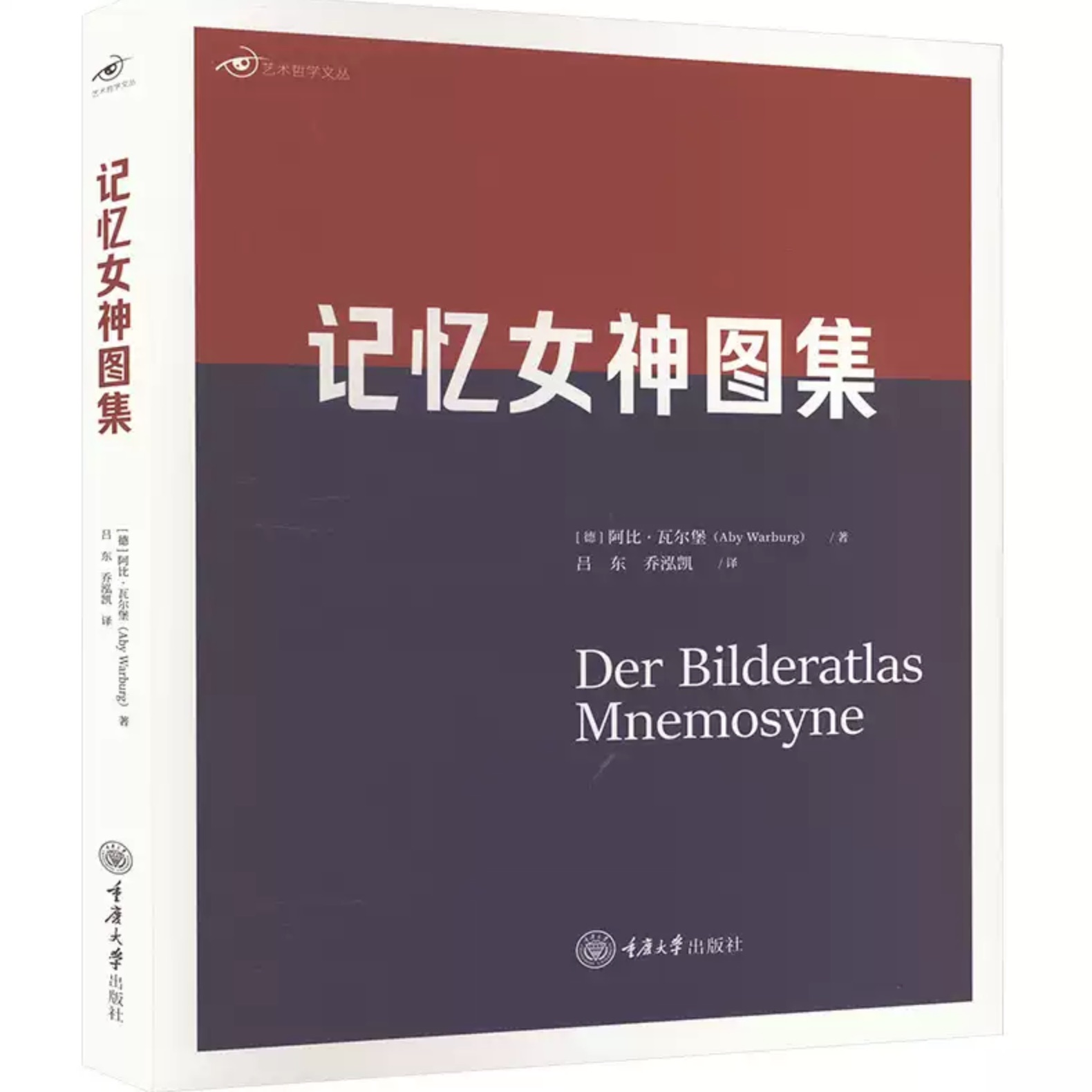
A. Warburg, Jiyi nüshen tuji 记忆女神图集, edited by D. Lü, H. Qiao (Chongqing University Press, Chongqing 2024).
中文版目录
出版者前言
弗里茨·扎克斯尔致 B. G. 图依布纳出版社的信
导言
中译导言
记忆女神图集
索引
Dong Lü and Hongkai Qiao’s Chinese translation of the Atlas, Jiyi nüshen tuji 记忆女神图集, published by Chongqing University Press in 2024, takes Warnke’s Berlin edition as its point of reference. Qiao’s introduction stands between Warburg’s text and the panels. It recalls an earlier encounter with the Atlas in China, the 2016 exhibition “La mémoire brûle”, curated by Georges Didi-Huberman at OCAT. The task Qiao sets himself in print is to guide a reader from one panel to the next. Drawing on Gertrud Bing’s notes and earlier attempts to group the panels, he traces nine sequences. The Florentine Nymph can thus be followed as far as an advertisement for the HAPAG shipping line on Panel 77. His introduction appears here in Chinese and English.
Introduction to the Chinese Translation
As early as his 1905 lecture Dürer and Italian Antiquity (Dürer und die italienische Antike), published in 1906, Warburg had prepared a set of illustrated reference plates for his audience. He subsequently used similar display panels on numerous occasions in his lectures. These research materials formed the basis of his final research project, the Mnemosyne Atlas (hereafter the Atlas).
In May 1928, Warburg provisionally established several of the Atlas’s themes, including Burgundian courtly realism, ancient and revived pathos formulae, astrology, festivals and theatre, and “the dynamics of contemporary political symbolism all’antica” (Mnemosyne Atlas Berlin 2020, 17). On this basis he assembled a series of panels, 43 of which were photographed as the Atlas’s “first series”.
Before travelling to Italy with Gertrud Bing in 1928—a journey largely devoted to gathering material for the Atlas—Warburg produced another series comprising 77 panels (the ‘second series’). During this period, he moved the cosmological panels from the end to the beginning: this significant change was retained in the “final series”.
In his celebrated 1929 lecture at the Bibliotheca Hertziana in Rome, Warburg publicly presented some of the Atlas’s contents. These were subsequently photographed as a new series of panels (the “Hertziana series”), which was essentially an abridgement of the “first series”. From Ghirlandaio to Northern realism, and then to Dürer and Rembrandt, this lecture, which “ran considerably over time”, addressed many subjects that Warburg had valued throughout his scholarly career, together with materials of particular significance to him.
After returning to Hamburg, he assembled another series, originally planned to comprise 79 panels (the “final series”). He continued to rearrange and revise this “final series” until his death in October 1929. In its eventual form, the “final series” consisted of 63 numbered panels and several unnumbered panels (some of the unnumbered panels were included in the reconstruction prepared by Roberto Ohrt and Axel Heil in 2020: Mnemosyne Atlas Berlin 2020). Some gaps in the sequence of 63 numbered panels may have been intended to accommodate subjects from the “second series” that had not yet been represented, or material relating to Perseus or Giordano Bruno.
The Chinese edition translates Der Bilderatlas Mnemosyne, volume II.1 of Warburg’s “Gesammelte Schriften. Studienausgabe”, edited by Martin Warnke with the assistance of Claudia Brink on the basis of the Atlas’s final series (Mnemosyne Atlas Berlin 2000).
After Warburg’s death in 1929, Saxl and Bing had in fact planned a six-volume collection of his writings. Ultimately, however, only the two-volume German collection (Gesammelte Schriften), entitled The Renewal of Pagan Antiquity (Die Erneuerung der heidnischen Antike), appeared in 1932 (GS). It brought together Warburg’s published essays and supplementary material from his annotated working copies. Not until 1999, the seventieth anniversary of Warburg’s death, was this two-volume collection translated into English by David Britt, with an important introduction by Kurt W. Forster (Renewal). The project for Warburg’s “Gesammelte Schriften. Studienausgabe” was revived in the 1990s, and publication began in 1998. Before then, many of his manuscript notes omitted from the two-volume collection were chiefly accessible through Gombrich’s Aby Warburg: An Intellectual Biography. Gombrich discussed Warburg’s entire scholarly career in detail, echoing Saxl’s words in his 1932 letter to B. G. Teubner: “It is precisely in these letters, rather than in the weighty scholarly essays, that Warburg gives freer rein to his linguistic inventiveness. Here he appears before us once again as a thinker and as a fully rounded human being” (Mnemosyne Atlas Berlin 2000, XIX).
From the 1990s onwards, as “political iconology” and the “pictorial turn” gained widespread currency, Warburg was swept into these developments and became a fashionable field of study. Numerous contemporary art theorists sought to reactivate the irrational energies of the Atlas’s forms of visual knowledge. Such attempts can be found in Dorothée Bauerle’s Gespenstergeschichten für ganz Erwachsene: Ein Kommentar zu Aby Warburgs Bilderatlas Mnemosyne (“Ghost Stories for Grown-Ups: A Commentary on Aby Warburg’s Mnemosyne Atlas”: Bauerle 1988), Giorgio Agamben’s Nymphs (Agamben [2007] 2016), Philippe-Alain Michaud’s Aby Warburg and the Image in Motion (Michaud [1998] 2004), and Georges Didi-Huberman’s The Surviving Image: Phantoms of Time and Time of Phantoms: Aby Warburg’s History of Art (Didi-Huberman [2002] 2017), among other works. Didi-Huberman, moreover, brought the Atlas into the contemporary exhibition context for the first time with “ATLAS: How to Carry the World on One’s Back?” at the Museo Nacional Centro de Arte Reina Sofía in Madrid in 2010. He subsequently developed further projects paying homage to Warburg: “Nouvelles histoires de fantômes”, conceived with Arno Gisinger at the Palais de Tokyo in Paris in 2014, and “Soulèvements”, held at the Jeu de Paume in Paris in 2016–2017. Didi-Huberman also served as an important intermediary in Chinese scholars’ encounter with Warburg. In 2016, he brought the Atlas panels to the exhibition 记忆的灼痛 La mémoire brûle (“The Burning Pain of Memory”), which he curated at OCAT—essentially an abridged version of “ATLAS: How to Carry the World on One’s Back?”—and delivered OCAT’s annual lecture. The names of Warburg and Didi-Huberman thus gradually became familiar within the Chinese art world.
Compared with the vast body of Warburg scholarship, relatively little work has directly decoded and interpreted the Atlas panels themselves. Such work may seem of little use to an academic industry in pursuit of novelty, but it provides the indispensable “grammatical introduction” to Warburg and his Atlas. A representative example is Christopher D. Johnson’s Memory, Metaphor, and Aby Warburg’s Atlas of Images (Johnson 2012), which offers detailed interpretations of several particularly significant groups, including Panels 41–49 and Panels 70–75. The materials accompanying the exhibition “Aby M. Warburg, Mnemosyne”, edited in 1994 by Marianne Koos, Wolfram Pichler and others (Mnemosyne Atlas Hamburg 1994), are also of considerable documentary value. Following the numbered sequence of panels, the volume brings together information on the images on each panel and related textual materials, including relevant lectures by Warburg. In 2016, to mark the 150th anniversary of Warburg’s birth, the ZKM in Karlsruhe organised a major exhibition devoted to the Atlas and published the catalogue “Aby Warburg: Mnemosyne Bilderatlas”. This included analyses and commentaries on each panel by the Forschungsgruppe Mnemosyne at Hamburg’s 8. Salon, including Roberto Ohrt, Axel Heil, Christian Rothmaler, Giovanna Targia and Philipp Schwalb, among others. Since 2011, the group has been engaged in reconstructing the Atlas (Mnemosyne Atlas Hamburg/Karlsruhe 2016-2017).
An image produced by the Forschungsgruppe Mnemosyne and published in the periodical “Baustelle” in 2013 has circulated widely. It classifies the Atlas panels as follows: Panels 1–8, pre-coinages from antiquity; Panels 20–29, the return of antiquity to Italy; Panels 40–49, Italian antiquity and Florence/Ghirlandaio; Panels 50–59, Mantegna, Manet and Dürer; and Panels 70–79, the Baroque, Rembrandt and the contemporary world (Mnemosyne Atlas Hamburg/Karlsruhe 2016-2017). Johnson’s classification provides a still more useful point of reference. In his monograph, he divides the panels into nine broad groups:
Panels A, B, C: a cosmological-genealogical prelude; Panels 1, 2, 3: ancient cosmology; Panels 4, 5, 6, 7, 8: ancient “pre-coinages” of artistic “expressive values”; Panels 20, 21, 22, 23, 23a, 24, 25, 26, 27, 28, 29: the transmission and degeneration of Greek astronomical thought in the astrological imagery of the Hellenistic world, the medieval Arab world, and medieval and Renaissance Europe; Panels 30, 31, 32, 33, 34, 35, 36, 37, 38, 39, 40, 41, 41a, 42, 43, 44, 45, 46, 47, 48, 49: the ‘afterlife’ of ancient ‘expressive values’ in Renaissance art, especially in the late fifteenth century; Panels 50, 51, 52, 53, 54, 55, 56: ‘inversion’, ascent and descent in Renaissance art, particularly from the sixteenth century to Manet; Panels 57, 58, 59, 60, 61–64: Virgil, Dürer, Rubens and Northern transformations (translatio); Panels 70, 71, 72, 73, 74, 75: Baroque excess and its reconciliation in Rembrandt; Panels 76, 77, 78, 79: final ‘inversions’: advertising and Eucharistic transubstantiation (Johnson 2012, 11-12).
The classification adopted in this article does not differ substantially from these two schemes, which it further refines.
This contribution seeks to immerse itself in the materials. Taking the introductory notes written by Gertrud Bing for each numbered panel as its starting point, it examines the material panel by panel and places it in the context of the relevant studies undertaken throughout Warburg’s scholarly career. In doing so, it attempts to lay some groundwork for clarifying his organisation and arrangement of the materials and understanding their particular significance for him. As Gombrich puts it: “Only by tracing their growth in Warburg’s mind can we understand the ideas underlying Mnemosyne” (Gombrich [1970] 2018, 324). The Atlas is itself a non-linear container of history, a vast constellation of images. While proceeding through the numbered sequence, this article will therefore also make the necessary leaps between panels, in order to reveal their complex interconnections and tensions. Warnke reminds us that “little consideration has been given to the fact that the Atlas also has an ‘afterlife’ (Nachleben) that is itself in motion” (Mnemosyne Atlas Berlin 2000, IX). As an open undertaking that can never be completed, the Atlas’s meaning remains perpetually in the process of becoming and movement. This will ultimately render every interpretation of it obsolete.
I. The Introductory Panels and Panels 1-3: Ancient Cosmology
The three introductory panels that underpin the entire Atlas all concern cosmology. For Warburg, cosmology offered a particularly revealing example of the intellectual achievements of the primitive mind, thus providing the Atlas with a foundation in both intellectual history and art history. As Saxl observed: “Astrology is a historical and philosophical problem; the investigation of this problem illuminated intellectual connections for Warburg like a searchlight” (Mnemosyne Atlas Berlin 2000, XIX). Panel A consists of three images arranged from top to bottom: a celestial map from the Netherlands (no. 1—whenever an individual item from the Atlas is discussed in this essay, it is identified in parentheses as “no. X”), a map of “migration routes” (Wanderstraßen) tracing exchanges from North to South and East to West (no. 2), and a genealogical tree of the Medici and Tornabuoni families drawn by Warburg (no. 3). The three images correspond respectively to what the introductory note calls “the different systems of relationships in which human beings are involved: cosmic, earthly and genealogical” (Mnemosyne Atlas Berlin 2000, 8). The notion that the cosmic configuration at the moment of birth determines an individual’s destiny in general terms is an “intellectual achievement” (Denkleistung) of the primitive mind, enabling a decisive, magical transformation between humanity and its natural environment. From cosmology to genealogy, what Warburg calls “evolutionist psychology” (Entwicklungspsychologie) finds full expression in Panel A: the first reading of the night sky is an epistemological event, and the consciousness of distance between ‘monstra-spheres’ constitutes a precondition of civilisation. Warburg may have held that the establishment of every structure of signification—every symbolic relationship—depends on the formation of orienting constellations and the primordial definition of humanity’s place in the cosmos. Under the influence of Karl Lamprecht, Hermann Usener and Tito Vignoli, among others, Warburg successfully reread marginal forms of knowledge in dynamic terms. The complexity and ambiguity of this endeavour are especially apparent in his difficulty in naming his own work: “cultural science”, “a psychology of human expression”, “intellectual history”, “an iconology of the interval”, and so forth. At one level, Warburg’s pioneering work invested contemporary image studies with considerable energy and found an echo in the “anthropology of images” (Bild-Anthropologie) of Hans Belting, Jean-Pierre Vernant and others.
Panel B retraces the transformation of the ancient idea of harmony between macrocosm and microcosm in the pagan-Christian world and the Renaissance. Again in the sense of “evolutionist psychology”, it presents different levels of “human appropriation of the cosmic system” (Mnemosyne Atlas Berlin 2000, 10). The materials on Panel B can be broadly divided into zodiacal figures (homo signorum) in medieval and early modern manuscripts, including books of hours (nos. 1–3), bloodletting diagrams in Gothic barber-surgeons’ calendars (nos. 4–6), and Renaissance illustrations of human proportions by Dürer, Leonardo da Vinci and Agrippa (nos. 7–9). The “zodiacal man” condenses a polar transformation between the internal organs and the stars. Macrocosm and microcosm are connected through an “analogical harmony” (harmonia analogica) immanent in all things, suggesting a divinatory dimension involving the “manifestation” of the soul and the “elevation” of matter. Bloodletting constitutes a dogmatic experiment in sympathetic magic grounded in ancient knowledge. In the Renaissance, the idea of harmony between the human body and the cosmos eventually led to an earthly geometry concerned with human proportions: “The late diminution of harmony reduces it to an abstract geometry, no longer grounded in the cosmos” (Mnemosyne Atlas Berlin 2000, 12).
Warburg does not seek to offer a linear narrative of enlightenment. Rather, he emphasises “untimely” fossils of antiquity and the mnemonic energy reactivated in their cognitive mapping. In Panel C, for instance, Warburg juxtaposes Kepler’s Neoplatonic polyhedra (no. 1), Kepler’s orbit of Mars and the orbit of Mars in modern astronomy (nos. 2 and 3), and a medieval image of the children of Mars with contemporary newspaper cuttings depicting airships (nos. 4 and 5). He thereby constructs a heterochronic account of the “interpretation of Mars”. The airship in Panel C seems to herald another collapse of the “image–harmony system–symbol” model: modern technology effaces distance and cosmic experience, returning the heavens to magical chaos. As Warburg says at the end of his lecture on the Serpent ritual: “In their efforts to explain intellectually the relationship between human beings and their surroundings, mythical and symbolic thought created a space for contemplation or thought (Andachtsraum oder Denkraum); instantaneous electrical connection (elektrische Augenblicksverbindung), however, destroys that space” (Warburg [1923] [1988] 1995, 54). This originally unpublished lecture reveals Warburg’s anxiety over the loss of distance—a space for thought. His engagement with inherited impressions (Eindruckserbmasse) inscribed by fear in the primitive mind also constituted, at one level, an attempt at psychic self-rescue. Franklin and the Wright brothers are modern Prometheuses and Icaruses; technological spectacle constitutes an ultimate form of the loss of aura, and the Atlas becomes a jigsaw puzzle charged with effects of “arrest” and “shock”.
Panel 1 presents a range of materials relating to ancient Babylonian astrological practices. After the general cosmology of the introductory panels, it offers a topological schema linking the body—the microcosm—and cosmology, or what the introductory note describes as “dissolving the cosmos into a part of the body” (Mnemosyne Atlas Berlin 2000, 14). Clay liver models (nos. 1 and 2–4) used in hepatoscopy—the divinatory examination of the liver—provide a link between body and cosmos. They indicate the macrocosmic system’s command over “the microcosmic destiny of the ordinary body”, the subject of Panel 23a (Mnemosyne Atlas Berlin 2000, 38). This ancient proposition has already been anticipated in the introductory panels and is reinforced in Panels 1, 23 (23a) and 58. As an ancient instrument of cognition, the liver also evokes the pathos of Prometheus’s suffering as his liver is pecked away. Prometheus and the Atlas of the work’s title together metaphorise the bearing of cosmic destiny—the establishment of order—and the polarisation between suffering and redemption. Furthermore, the liver that first appears in Panel 1 directs us towards Panel 75, whose introductory note reads: “Magical anatomy (Anatomie). Inspection of the entrails (Gedärmschau)—the search for the seat of the soul. Scientific anatomy = through the convergence of the lament”. In Panel 75, images of the liver appear alongside ancient sarcophagi and painted scenes of Hippocrates and Democritus. Through a montage that untimely summons the pathos of mourning and the props of the corpse, Warburg reconstructs the panel’s central subject—Rembrandt’s Anatomy Lesson of Dr Tulp—and dissolves it in a ferment of science and pre-science. Panel 1 also presents ancient Babylonian astral religion (no. 7), through which Warburg traces the distant Eastern origins of the “determinism of the astral gods” underlying ancient astrological practice.
The subject of Panel 2 is “the Greeks’ conception of the cosmos” (Mnemosyne Atlas Berlin 2000, 16). Together with Panel 1 and Panel 3, it establishes an East–West framework for ancient astrology. The earliest astronomical catalogue of ancient Greece can be traced to Eudoxus. In his catalogue, constellations were represented by simple images of actual things, chosen for purely visual reasons and having little connection with mythology. Subsequently, in his astronomical poem Phaenomena, Aratus subjected Eudoxus’s celestial sphere to a mythological treatment. The famous Farnese celestial globe on Panel 2 points to an intermediate stage in this process: Perseus already appears as a mythologised astral deity, holding Medusa’s head, whereas Hercules retains the constellation’s original form as an ordinary kneeling man. Panel 2 also presents a celestial map from the celebrated Leiden manuscript (no. 7), which derives from Germanicus’s Latin translation of Aratus’s astronomical poem. The panel also deliberately emphasises the place of the sun, Apollo, and the Muses, as ancient goddesses, in Greek cosmology. The sun’s particular position in cosmic space suggests the framework of a pagan solar religion and is closely connected with “ascent to heaven”. It thus directs us towards Panel 8, whose subject is “ascent to the sun”. The introductory note to Panel 3 reads: “The orientalisation of ancient figures. Gods as demons. The enrichment of the celestial sphere: zodiac and decans. The transformation of the sphere into a plane. Cosmological dice board. The legend of Perseus” (Mnemosyne Atlas Berlin 2020, 34).
In Panel 3, Warburg traces the Egyptian origins, at Dendera, of the “foreign constellations” (sphaera barbarica). Egypt’s systems of paranatellonta and decans enriched the Greek heavens. At the same time, the relationship between orientalised ancient figures—for example, the cults of the Near Eastern deities Jupiter Heliopolitanus and Jupiter Dolichenus in the Roman period—and foreign astrological practices once again presents a double process of orientation and de-demonisation within the cosmic system. The Egyptians’ planar celestial charts, meanwhile, prefigure the secularisation of the starry heavens.
II. Panels 4-8: Pre-coinages from Antiquity
Panels 4–8 chiefly present a series of affective motifs as “pre-coinages from antiquity” (Vorprägungen, preformed expressive patterns): abduction, ascent or apotheosis, sacrifice, mourning, suffering and pagan goddesses, among others. Vorprägungen is a term specific to Warburg. Its root, prägen, originally means “to mint” or “to stamp”, and Warburg uses it to emphasise the formative energy of ancient pathos formulae and their immanent inheritance of impressions. “Coinage” can be understood as a fundamental artistic act, in the sense of a general human psychology, “Through which primordial events, expressive gestures and turbulent passions are transformed into aesthetic forms, making them available for imitation and transmission. It is therefore an act between the phenomenological and ontological domains, between the extremes of flux and stasis” (Johnson 2012, 21). In Panel 4, Warburg emphasises “earthbound existence” (Erdgebundenheit), which provides a mysterious foundation for the primitive mind. This corresponds to the “Great Mother” (Magna mater) in the following Panel 5: the Atlas thus returns from the starry heavens to the earth. In Panels 4–8, Warburg focuses on the primordial pathos formulae pre-coined by antiquity. These constitute the underlying vocabulary of the entire Atlas, whose subsequent panels repeatedly return to them and establish direct internal connections with them. For example, the composition of the Judgement of Paris sarcophagus on Panel 4 (no. 6) reappears in the group of river gods and nymphs in Marcantonio Raimondi’s Judgement of Paris after Raphael, before eventually entering Manet’s Le Déjeuner sur l’herbe. Manet’s transformation of ancient pathos is concentrated in Panel 55, “The Judgement of Paris without ascent to heaven”. Similar links can be established between Panels 5 and 42, and between Panel 7 and Panels 52 and 49. As Warburg puts it: “Pre-coinage (Vorprägen) influenced the formation of a Renaissance style for representing life in motion: the Mnemosyne Atlas was initially intended simply as an inventory, based on visual materials, of the imprints of antiquity” (Mnemosyne Atlas Berlin 2000, 3). For Warburg, “sarcophagus” can almost be regarded as synonymous with ancient pathos. Sarcophagi provide fossil-like survivals of pathos formulae: a cognitive mapping akin to stratigraphic archaeology—we may recall that Warburg described his own work as that of a “seismograph”. Within the same stratum, arrested development and regression constitute a pervasive “heterochronic condition”, indicating the non-linear narrative model of Warburg’s “afterlife”.
Phaethon’s presence on Panel 4 is also crucial (nos. 10–15). His figure is intrinsically connected with ancient solar worship, while metaphorising the inversion of the pathos formula—ascent and fall. Phaethon himself can be regarded as a “dynamogram” (Dynamogramm) in Warburg’s sense, possessing a polarising function. Warburg even associated airships shot down during the First World War with Phaethon’s chariot. This reveals the dangerous energies of ancient pathos and the hysterical condition of civilisation that he particularly feared. Phaethon’s heliotropism remains latent both in Warburg’s studies of Michelangelo and in Panels 51–56, devoted to “Ascent and fall”. As Warburg wrote in his diary on 27 February 1929: “A Phaethon drawing has been discovered; it must be inserted into the chain as an important link” (quoted in Gombrich [1970] 2018, 341). At one level, Panel 5 continues the dimension of Panel 3 associated with maternal deities. The Great Mother Cybele, as well as Isis and Fortuna, embodies obscure, enclosed and potentially violent meanings. The ghosts of the scenes of primordial passion on Panel 5—Niobe, Medea, Orpheus, Alcestis and the death of Pentheus—haunt the entire Atlas. For example, Andrea del Verrocchio’s relief for the tomb of Francesca Tornabuoni on Panel 42, “The energetic inversion of the pathos of suffering”, derives from the sarcophagus reliefs of the death of Alcestis on Panel 5 (nos. 16 and 17): pagan passion is here inverted into an act of mourning. Agostino di Duccio’s relief on Panel 25, showing Saint Bernardino rescuing two children, derives from an inversion of the sarcophagus scenes of the Medea legend on Panel 5 (no. 9). Panel 5 also directly incorporates the reference plates from Warburg’s lecture on Dürer and Italian Antiquity (in 1905, Warburg produced an unbound set of reference illustrations for the audience of his lecture Dürer und die italienische Antike. These included Greek vase paintings and Jacopo del Sellaio’s Orpheus and Eurydice, among other materials, and constituted his first experiment with “panels”), in which he analysed in detail how Dürer brought pagan antique figures into balance, thereby countering the Baroque language of gesture.
Continuing the scenes of death on Panel 5, Panel 6 unfolds the motifs of offering, sacrifice and mourning as concentrated releases of Dionysian pagan emotion. The sacrifice and immolation of Polyxena (nos. 1 and 2) recall the bloody rites of Mithraism on Panel 8. Laocoön, as an extreme manifestation of gestural language—regarded by Warburg as the high point of Baroque gesture—becomes the subject of Panel 41a. At the end of Panel 6, Warburg also includes material from his doctoral dissertation: a drawing after an ancient sarcophagus depicting Achilles and the daughters of Lycomedes (no. 14), which directly influenced the representation of the “nymph” in Botticelli’s Birth of Venus. Beside this image, the rites of Isis and the dance of death recall Salome as a “headhunting goddess”: the elegantly dancing nymph of Panel 46 stands only one step away from the hunter of Panel 47.
Panel 7 presents Roman triumphal imagery, including the Arches of Constantine and Titus and figures of winged Victory, before moving on to imperial apotheosis, elevation on a shield and coronation. Triumphal reliefs directly express the pathos of victory: surrounded by soldiers and divinities, the emperor rides over the defeated, in what the introductory note calls Überreiten. The prefix über- here carries the double sense of “trampling” and “passing over”, rendered in English as “trample”. Warburg deliberately uses this ambiguity to suggest the inverting function of the pathos formula. In the legend of “Trajan’s clemency”, the barbarian prostrate before the emperor is interpreted as a widow, and the barbarian trampled underfoot becomes her child: “Through an energetic inversion of meaning, imperial pathos is transformed into Christian piety (Pietät)” (Mnemosyne Atlas Berlin 2000, 4). Towards the end of Panel 7, the reliefs of Trajan’s Column and Ghirlandaio’s copy (no. 11) reveal the expressive value of ancient gestural language for Renaissance artists, although Warburg did not consider Ghirlandaio the culmination of this process of stylisation: “The superiority of the dramatically clear outlines of individual gestures in the ancient victory images of Trajan’s age, compared with the indistinct epic group scenes of Constantine’s followers, is not merely demonstrated here but firmly established as a paradigmatic pathos formula” (Mnemosyne Atlas Berlin 2000, 6). In his introduction to the Atlas, Warburg also connects the triumphal processions on the arches with Dionysian processions. The libidinal character of such collective carnival behaviour became a central subject of Didi-Huberman’s exhibition “Soulèvements”, curated at the Jeu de Paume in Paris in 2016–2017.
The pathos of victory itself contains a potential energy of ascent and flight, embodied by the winged goddess. It is thus linked to the general process of apotheosis—elevation on a shield and coronation—and eventually reappears in Andrea Appiani’s Apotheosis of Napoleon of 1808 (no. 10). The concept of “ascent to heaven” (Auffahrt) recurs throughout the Atlas: Panels 4, 7, 8, 34, 50–51, 53, 54, 55 and 56. It also refers to Neoplatonic and Hermetic doctrines of the soul’s elevation in pagan antiquity. “Ascent” means both apotheosis and entry into the celestial world through a chain of manifestations: Warburg did not overlook the cosmological horizon behind this inward spiritual process. Helios, ascending, and Proserpina, descending, constitute an essential structure of the soul. The phrase “riding in a chariot as a solar symbol” in the introductory note to Panel 7 (Mnemosyne Atlas Berlin 2000, 26)—the sun god is not directly represented on that panel—suggests Phaethon and the immediately following Panel 8. In his lecture Airship and Submarine in the Medieval Imagination (Luftschiff und Tauchboot in der mittelalterlichen Vorstellungswelt), Warburg examined the apotheosis of Alexander the Great depicted in two Burgundian tapestries. Here Alexander’s deification is represented as an “ascent” with griffins; a chariot drawn by griffins also occurs in the cult of Malakbel in Syria. Yet Alexander’s ascent is unsuccessful: “Amid the glory of the angels, God makes an ominous gesture to indicate that Alexander, as a mortal, is forbidden to rise beyond the sphere of the fourth element—fire—and enter heaven” (GS, I, 245). A core of Roman-Eastern solar religion thus lies concealed beneath Panel 7’s theme of the pathos of victory. In Panel 8, Warburg primarily presents the Syrian cult of the sun god Malakbel (no. 1), materials relating to Mithraism, widespread in the early Roman Empire (nos. 11–21), and Phaethon, who recurs across the panels (no. 10). Mithraism may derive from ancient Persian Zoroastrianism; both ground their central beliefs in a relationship with the sun. The Mithraic materials on Panel 8 stem from Warburg’s final Italian journey of 1928-1929. On the same day that they travelled to Naples, intending to investigate Bruno’s cosmology, Warburg and Bing visited the Mithraeum at Capua. From the cult of Malakbel to heliotropism, Warburg linked Mithraic solar worship, Bruno and the ascending Phaethon: “The cult of Mithras is closely related to the sun, and therefore intimately connected with ‘ascent’” (Johnson 2012, 208).
Perhaps, for Warburg, the contemporary airship itself signified an ascent doomed to failure. Many of the materials on Panel 8 suggest complex connections between the sun god, Dionysian worship, the zodiacal man—the cosmic god—and Graeco-Roman mythology. The sacrificial bull (nos. 16–20) and Polyxena’s death belong to the same epistemological plane. To some extent, Panel 8 constitutes the final receptacle of the affective energies of the “pre-coinages from antiquity”, constructing a dizzying montage of polarities between earth and sky, ascent and fall, suffering and triumph, secular life and ritual celebration.
III. Panels 20-29: The Migration of Images in International Astrology
Beginning with Panel 20, Warburg traces the international migration of images through which the Olympian astral gods returned to the early Renaissance alongside pagan astrology (Panels 20–29. For a detailed study of this group of panels, see my paper Monstra and astra in the Mnemosyne Atlas: Warburg’s Study of Astrological Images, presented at the Tenth National Forum on Renaissance Thought, Qiao 2023), revealing the complex interconnections between cosmological systems, Renaissance art north and south of the Alps, and indeed the history of the human mind. Through Arabic texts such as the Book of Wonders (Kitāb al-Bulhān) and the Picatrix, Panels 20 and 21 present the fundamental forms assumed by Greek and Hellenistic astrology in the East, together with the enrichment and development there of the Dendera system of decans and the transitional cosmology symbolised by the Farnese celestial globe. Panels 22 and 23 (including Panel 23a) concentrate on astrological practices at the northern and southern poles of the medieval revival of astrology, Padua and Toledo. Ancient astral gods and systematic theories of astrological practice returned to Europe with Arabic manuscripts, and the ancient pagan system of belief in astral gods became interwoven with the Christian worldview. Panel 22 also presents the practices of astrological magic current in the time of Alfonso the Wise. For Warburg, these meant that astrology had been turned into a form of vulgar divinatory game: “Astrology […] a fetishism of names (Namensfetischismus) […]. At the court of Alfonso the Wise in Toledo, Greek natural philosophy underwent a curious rebirth. These authors transformed Alexandrian astrological mysteries, healing practices and oracles into a shared but harmful European heritage” (GS, II, 464-466). Something similar occurs in Panel 23a: in the books of divination (Punktierbuch) popular during the Renaissance, astrology, together with pagan beliefs such as Gnosticism, constituted an important schema of destiny, revealing “the concept of the wheel of fortune and the inescapable fate (Fatum) that it announces” (Mnemosyne Atlas Berlin 2000, 38).
Panels 24–26 principally concern the transition between cosmological worldviews during the early Renaissance. As an exemplary body of ancient pagan knowledge, astrology actively participated in Renaissance Neoplatonic, Hermetic and Kabbalistic magical practices, becoming further secularised in the process. In Panel 25, Warburg summarises this as an opposition between two modes of interpreting the heavens: the “world-soul” or “pneumatic” (pneumatische) and the “fetishistic”. He considers Agostino di Duccio’s reliefs in the Tempio Malatestiano in Rimini to have reactivated the ancient life of the astral gods through the pathos of nymph-like gestures. Agostino di Duccio’s practice forms the opposite pole to secular astrological fetishism, understood as divinatory games: the pervasive cosmic energy inherent in the planetary gods becomes the motive force driving the gestural language of the reliefs and their “accessories in motion”. Pneuma originally designated the vital breath, as well as a universal logos permeating the cosmos, as found in both Gnosticism and Stoic natural philosophy. In the Gospel of John, the Lord Jesus likewise bestows the Holy Spirit upon his followers through his “breath”. Warburg here extends the ontological significance of this concept in esoteric philosophy in order to emphasise a practice of “ascent to heaven” in an astrological or cosmological sense.
Panel 27 principally concerns Warburg’s classic study Italian Art and International Astrology in the Palazzo Schifanoia in Ferrara (Italienische Kunst und internationale Astrologie im Palazzo Schifanoja zu Ferrara). It was in this lecture that Warburg first used the concept of “iconology” (Ikonologie). Unlike Panofsky’s subsequent understanding of the term, however, its meaning for Warburg was closer to “evolutionist psychology” or a “psychology of universal expressive values”: to some extent, what Agamben calls the “Nameless science”. Franz Boll’s research into Eastern astrology provided Warburg with the key to the mystery of the Palazzo Schifanoia. Warburg discovered that the middle register of its frescoes combined Egyptian decan gods with a Greek celestial sphere; the ancient astral gods had been obscured by Indian and Arabic, and perhaps also Persian, transformations and transcriptions. In the upper register, meanwhile, the planetary gods of astrology had already yielded to the Olympian gods returning to Renaissance Italy. Across Panels 20–27, Warburg was convinced that he had identified a decisive moment in the transformation of the pre-Copernican and pre-Keplerian image of the heavens: the infinite universe had exploded the celestial sphere. As he puts it, “The rhythmic changes in the consciousness of distance between material impulse and tranquil restraint signify a cyclical oscillation between an image-based and a sign-based cosmology (bildhafter und zeichenmäßiger Kosmologik); as a means of human mental orientation, the adequacy or inadequacy of this oscillation reveals the destiny of human culture” (Mnemosyne Atlas Berlin 2000, 3).
Panel 28–29 continues Panel 27’s discussion of the Palazzo Schifanoia. The third register of the frescoes of the months becomes a transitional zone between cosmology and secular life. The theme of the panel is “Contemporary life in motion” (“Zeitgenössisches bewegtes Leben”: Mnemosyne Atlas Berlin 2000, 48), closely related to Warburg’s intended title for the Atlas: “A series of images investigating the function of pre-imprinted ancient expressive values in the representation of life in motion in the art of the European Renaissance” (“Bilderreihe zur Untersuchung der Funktion vorgeprägter antiker Ausdruckswerte bei der Darstellung bewegten Lebens in der Kunst der europäischen Renaissance”). Through a series of scenes emphasising movement—festivities, contests, battles, hunts and so forth—Warburg explores the expressive values of a dynamic language of gesture. He also deliberately emphasises the pagan elements underlying dynamic pathos and festive rituals; festivities are further explored in Panel 60. In the lecture entitled Contributions to the Cultural History of the Florentine Quattrocento (Kulturgeschichtliche Beiträge zum Quattrocento in Florenz), Warburg discussed a Mantuan fresco depicting a seller of antidotes at a festival, reproduced as no. 6 on Panel 28–29. In his view, the figure of the merchant entwined by snakes derives from the classical image of Laocoön (see GS, I, 301-303). It is also worth observing that much of the material on Panel 28–29 comes from cassone paintings, the painted decoration of wedding chests. Alongside these, Warburg regarded birth trays, tapestries and other objects as important vehicles for images. Because such objects circulated extensively as commodities, the images they bore often expressed bourgeois aesthetic tastes. On this basis, Warburg sought to explain the Florentine preference for the kitsch style of Northern, Flemish realism. As he writes in Flemish Art and the Florentine Early Renaissance (Flandrische Kunst und florentinische Frührenaissance): “What made this decorative art so powerfully attractive was neither its artistic value in itself nor its ‘romance’ subjects, but the energetic expression of joy in festive movement (festlich bewegten) and ostentation” (GS, I, 188).
IV. Panels 30-40: The Renaissance and the Northern Reception of Antiquity
Panels 30–49 constitute the central field of inquiry of the Atlas as a whole: the “afterlife” (Nachleben) of ancient values during the Renaissance. Panel 30 is principally concerned with Piero della Francesca. For Warburg, the epic style of Piero’s works, especially his Arezzo frescoes, represents the ultimate manifestation of the monumental style of the Northern Italian Renaissance. In the lecture Piero della Francesca’s Battle of Constantine in Johann Anton Ramboux’s Watercolour Copy (Piero della Francescas Constantinschlacht in der Aquarellkopie des Johann Anton Ramboux), Warburg identified Pisanello’s famous portrait medal of Palaeologus (no. 1) as the prototype for the Palaeologus figure in Piero’s work. Benozzo Gozzoli’s work on a related subject, also included in Panel 30 (no. 4), provides a further point of comparison (see GS, I, 251). Behind these works lie the pathos of victory and the imperial rhetoric of the reliefs on the Arch of Constantine (Panel 7).
Panel 31 and several subsequent panels form another continuous group within the Atlas, chiefly concerned with the Northern Renaissance: “In the panels of the Atlas, from Panel 31 onwards, Warburg brought together all those Northern subjects that can demonstrably be shown to have reached Florence” (Mnemosyne Atlas Berlin 2000, XVIII). Panel 31 presents works by Jan van Eyck, Hugo van der Goes and Hans Memling, corresponding to the “Flemish-style portraits of Italians” mentioned in the panel’s introductory text (Mnemosyne Atlas Berlin 2000, 52): “Between Jan van Eyck and Hugo van der Goes, Hans Memling occupies an equally important position as an interpreter of the Florentine community resident in Bruges” (GS, I, 190). In Flemish Art and the Florentine Early Renaissance, Warburg identified the donors Angelo Tani and his wife Caterina Tanagli in Memling’s Last Judgement triptych (Panel 31, no. 2). In doing so, he showed how the Florentine bourgeoisie, driven by a secular consciousness of individual identity and a fascination with Northern, pagan customs, submitted without prejudice to the religious atmosphere of Northern art. This is precisely the meaning of the Florentine bourgeoisie’s “pseudo-Northern devotion” (“Andacht pseudo-nordisch”: Mnemosyne Atlas Berlin 2000, 78) in the introductory text to Panel 43. Another link between Panels 31 and 43 is Van der Goes’s Portinari Altarpiece: in his altarpiece for the Sassetti Chapel (see Panel 43), Ghirlandaio appropriated the Adoration of the Shepherds from Van der Goes through a complex, hybrid formal language. Panel 31 also considers the illuminated Livre du Cœur d’Amours Espris (no. 7), whose visual presentation of courtly love, chivalry and other exotic Northern customs, particularly popular in Florence, leads us towards the discussion of secular style in Panel 38.
Panel 32 further explores secular subjects in Northern art and their “grotesque” (Groteske) style through a series of images of dance and comic scenes. The morris dance, represented in nos. 1–6 and elsewhere, carries strong Northern pagan associations and is closely connected with carnival celebrations before Lent. The struggle for the breeches likewise derives from popular customs among the Northern lower classes. In The Exchange of Artistic Culture between North and South in the Fifteenth Century (Austausch künstlerischer Kultur zwischen Norden und Süden im 15. Jahrhundert), Warburg identified the original, possibly biblical meaning underlying this practice and traced its development from medieval carnival drama to modern popular behaviour (see GS, I, 178-184). He found this Bruegelian “grotesque” in sophisticated Florentine private collections, even though the vulgar theatrical scenes were frequently disguised in an Italianate antique manner. For example, the enamelled cup decorated with monkeys on Panel 32 (no. 14) derives from the familiar Northern European comic subject of monkeys robbing a merchant. The introductory text to Panel 32 also connects the custom of women fighting for breeches with the ancient pathos of the death of Orpheus: “The priests’ dance, the death of Orpheus” (Mnemosyne Atlas Berlin 2000, 54). This suggestion of carnivalesque dance and killing also recalls Salome, directing the reader back to the vocabulary of pre-coinage in Panel 5.
The theme of Panel 33 is “Illustrations of mythological texts” (Mnemosyne Atlas Berlin 2000, 56). In Classical Mythology in Mediaeval Art, Panofsky and Saxl described the routes by which images of ancient mythological figures, including astral gods, migrated during the Middle Ages in terms of a representational tradition and a textual tradition (see Panofsky, Saxl 1933, 228-280). The former principally concerns the representation and transformation of ancient figures in astrological imagery; the latter involves the visualisation, or illustration, of mythological texts. While addressing the textual tradition, Panel 33 continues the preceding panels’ attention to Northern subjects. Its principal materials include the Ovide moralisé (no. 1 and elsewhere) and Christine de Pisan’s Épître d’Othéa (nos 6 and 7), both then-popular texts offering moralised accounts of the pagan gods. Together with the illustrations to Albericus’s handbook of divine images, Libellus de imaginibus deorum, they provide examples of the Northern representation of ancient astral gods during the Renaissance. Beyond the visual depiction of the astral gods, the panel also reflects the process through which ancient myths and legends were rendered as images. Examples include the Historia destructionis Troiae manuscript (no. 9), with its representation of the Trojan War legends so popular in the Middle Ages, and the representation of the Alexander legend in no. 12. Such materials also provide a bridge between Panels 33 and 34. The illustration of mythological texts was not motivated by a purely historical interest: it often brought ancient motifs and expressive values together with contemporary tastes—what the introductory text to Panel 33 calls their “combination with contemporary life” (Mnemosyne Atlas Berlin 2000, 56). This also indicates, in a general sense, the secularisation of ancient images: “Flemish art was already representing figures from pagan antiquity realistically, dressed in the French fashions of the day; such figures had even appeared on the walls of Italian palaces” (GS, II, 461-462).
Panel 34 centres on Flemish tapestries. Their extensive circulation, together with an image-reproduction technology that preceded printing, made them an image medium of particular importance to Warburg. “Flemish tapestries […] were freed from the restrictions imposed by the wall […] and thus, for the first time, made the exchange of expressive values between North and South an important stage in the cyclical process through which European styles were formed” (Mnemosyne Atlas Berlin 2000, 5). Warburg discussed his research into Northern tapestries in detail on several occasions, including the 1927 lecture Medicean Pageantry at the Valois Court in the Flemish Tapestries of the Galleria degli Uffizi (Mediceische Feste am Hofe der Valois auf flandrischen Teppichen in der Galleria degli Uffizi) and his 1929 lecture at the Bibliotheca Hertziana. Behind the French realist style and Burgundian dress, the myths and figures of pagan antiquity assume a curious appearance in these tapestries. Panel 34 presents the aforementioned Burgundian tapestry depicting Alexander the Great’s ascent to heaven (no. 9). It shows how, at the Valois court, an ancient subject could be used for political flattery through an allusion to the achievements of Duke Philip the Good: “A flattering parallel emerged in the Northern representation of an idealised ancient world” (GS, I, 248). Panel 35 presents the blending of ancient mythological subjects—the Judgement of Paris, Orpheus, Polyxena and others—with Burgundian style: “Antiquity in the French manner” (“Antike alla franzese”). For Warburg, the French manner and the transformed astral demons of the Hellenistic period together constitute the two principal dimensions of the pagan world’s “de-Olympianisation” (Ent-Olympisierung): “Although both forces outwardly displayed barbaric, anti-classical qualities, they were nevertheless entitled to regard themselves as faithful and authoritative guardians of the ancient heritage” (Mnemosyne Atlas Berlin 2000, 5). All the material on Panel 36 comes from miniatures depicting the wedding festivities of Costanzo Sforza and Camilla d’Aragon, held in Pesaro in 1475. Warburg understood the ancient gods in these images as products of the French manner of antiquity after its arrival in Italy: “Even today there are those who regard Italy as the giver rather than the receiver; to my mind, this is entirely mistaken” (GS, I, 178). The pagan gods in these images are employed to entertain princes and nobles, and are even reduced to the status of attendants. This reflects the Italian Renaissance bourgeoisie’s ostentatious and curious fascination with Northern styles.
The theme of Panel 37 is “Entering antiquity through sculpture” (Mnemosyne Atlas Berlin 2000, 64). From this panel onwards, Warburg introduces another, epic mode of representing antiquity, in opposition to French and Burgundian styles and to realism. “After Pollaiuolo’s heroic manner (la maniera eroica), the burden of fashionable, realistic finery was thoroughly shaken” (GS, I, 80). Panel 37 presents the studies of ancient sculpture made by Pisanello, Mantegna, Pollaiuolo and others. In their works, ancient pathos formulae were revived; in subjects such as centaurs, the deeds of Hercules, the Flagellation of Christ, abduction and dance, they express the intense pagan gestural language of life in motion, anticipating the extravagant and affected expressiveness of the Baroque. As Warburg writes in The Emergence of the Classicising Ideal Style in Early Renaissance Painting (Der Eintritt des antikisierenden Idealstils in die Malerei der Frührenaissance): “Pollaiuolo amplified what he found in ancient sources, from gems carved in relief to freestanding statues, to the point of creating an almost Baroque rhetoric of muscles” (GS, I, 174). Pollaiuolo’s works are a particularly characteristic vehicle for the northward migration of revived ancient pathos and images of movement, and therefore recur in the subsequent Dürer panel, Panel 57. The introductory text to Panel 37 also mentions grisaille—“grisaille = painted sculpture” (Mnemosyne Atlas Berlin 2000, 64). Grisaille is associated with sculpture and the metaphorical distancing of ancient pathos, and will be discussed again in Panels 44 and 49.
The material on Panel 38 principally relates to Warburg’s lectures Love Emblems in the Earliest Florentine Engravings (Delle “imprese amorose” nelle più antiche incisioni fiorentine), The Art of Portraiture and the Florentine Bourgeoisie (Bildniskunst und florentinisches Bürgertum), and other studies. Among the engravings on Panel 38, chiefly the circular Otto prints by Baldini, alluring, popular subjects abound: a lute-player (no. 3), love’s bonds (no. 2), and so forth. The women’s grotesque yet fashionable bodices, nymph-like hair and skirts, and bare feet reveal a convergence between popular realism and the characteristics of ancient sculpture. For Warburg, this constitutes a “preliminary stage” (Vorstufe) in the development of Botticelli’s “ideal style”: “Botticelli decisively initiated the great stylistic transformation that turned medieval romance into a visual world in the ancient manner” (GS, I, 87). Similarly, in Panel 38, Burgundian tapestries give way to engravings imbued with the intense pathos of life in motion. Northern customs such as the battle for the breeches, previously encountered in Panel 32, continue to appear as exotic subjects in Florentine engravings (no. 21 and elsewhere), albeit dressed in an antique guise. In an engraving depicting Lorenzo the Magnificent and Lucrezia (Panel 39, no. 3), the woman’s dress still displays a characteristic “mixed style”: “Lucrezia occupies a curious transitional stage between the cumbersome French finery of the day and the light, ideal dress of antiquity” (GS, I, 84). The votive bust of Lorenzo the Magnificent (no. 12) suggests the Florentine bourgeoisie’s enthusiasm for pagan customs, combining “medieval Christian and romantic-chivalric Neoplatonic idealism derived from antiquity” with “a secular, practical, pagan Etruscan (etruskisch-heidnisch) commercial culture” (GS, I, 100). This is what “mixed style” means in its broader sense.
Panel 39 develops Botticelli’s “ideal style” (Idealstil) in detail. In his doctoral dissertation, Sandro Botticelli’s Birth of Venus and Spring (Sandro Botticellis “Geburt der Venus” und “Frühling”), Warburg demonstrated the influence of Poliziano’s texts upon Botticelli’s painting. A drawing of a sarcophagus depicting Achilles on Skyros (no. 10), previously encountered in Panel 6, also appears here. Warburg juxtaposes it with the figure of Venus in Baldini’s engraving (no. 2) to indicate the complex relationships linking Botticelli’s Venus and her “accessories in motion” to ancient pathos. The group associated with the west wind in Botticelli’s Primavera, meanwhile, derives from Ovid’s account of Apollo’s pursuit of Daphne, a motif much favoured by Poliziano. “Botticelli’s Venus—the hesitant forebear of those impassioned Olympian gods—rises naked from the sea; one day they would teach the Flemings to make effective use of Rome’s elevated formal language (höhere römische Formensprache)” (GS, I, 184). Panel 40 links Botticelli’s “ideal style” with the “pathos of destruction” (Vernichtungspathos) of Panel 41. If “Botticelli’s artistic temperament is dominated by a love of tranquil beauty (ruhige Schönheit)” (GS, I, 54), Panel 40 offers an unrestrained release of pagan antiquity’s primordial energies, a product of the Renaissance’s profound encounter with the ancient world. It presents a succession of depictions of the Massacre of the Innocents by Marcantonio Raimondi and others, together with extreme scenes taken from Ovid by Baldassare Peruzzi, such as the Death of Meleager and the Abduction of Europa. These point towards the “excess of the pathos formula (Exzeß der Pathosformel)” identified in the introductory text (Mnemosyne Atlas Berlin 2000, 70).
V. Panels 41–49: The Afterlife of Ancient Pathos, its Inversion and its Equilibrium
Christopher D. Johnson argues that Panels 41–49 fully reveal Warburg’s metaphorical methodology and constitute the centre of the Atlas as a whole (Johnson 2012, 89). Panel 41 concerns the Renaissance afterlife of the ancient “pathos of destruction” (Vernichtungspathos). The introductory text suggests a connection with Panel 5; in fact, structural correspondences of this kind can be established between Panels 5–7 and Panels 41–44. Ancient pathos formulae associated with Medea’s infanticide and the death of Orpheus are inverted into a Christian ethical register through works such as Agostino di Duccio’s relief depicting a miracle of San Bernardino (no. 4) and Luca Signorelli’s Flagellation of Christ (no. 8). Similarly, Pollaiuolo’s drawing of Hercules and Cacus (no. 21) is placed immediately below a relief medal bearing an inscription identifying Hercules as the “conqueror of vice” (vitiorum dominator; no. 20). Ancient pathos oscillates between a primordial scene of combat and a moralised victory. The panel also emphasises the correspondence between the ancient nymph and the witch, effectively revealing the incompleteness of the Christian Renaissance’s “inversion”: magic and ancient mythology continued to haunt its artists. “Panels 40 and 41 do not signify progressive enlightenment, but emphasise how classical images of violence and suffering repeatedly haunted the Renaissance imagination” (Johnson 2012, 90). Through a series of images of the death of Laocoön, Panel 41a presents the motifs of the “pathos of suffering” and the “death of the priest” found in Panel 6. Amid the unrestrained release of primordial pathos, a detail from Cesare Ripa’s Iconologia (no. 20) nevertheless reminds the viewer how ancient violence within images can be reconciled through a didactic interpretation. For Warburg, the statue of Laocoön represents the culminating stage of a degeneration towards Baroque gestural language rather than Roman sublimity. At the centre of Panel 41a, the detail of Adam’s face by Filippino Lippi (no. 7) reawakens the intense, affected rhetoric of ancient pathos within a Christian framework.
The theme of Panel 42 is “The energetic inversion of the pathos of suffering” (Mnemosyne Atlas Berlin 2000, 76). “Energetic” (energetischer) has a particular meaning in Warburg’s vocabulary: it emphasises the form of energy (Energie) assumed by ancient pathos and is closely associated with concepts such as the “dynamogram”. Didi-Huberman regards this panel as the most central of the entire Atlas. For the exhibition “Nouvelles histoires de fantômes”, held at the Palais de Tokyo in Paris in 2014, he even produced a work of his own entitled Mnemosyne 42. The miracle of the leg performed by Saint Anthony on Panel 42 (nos. 1 and 10) derives from an inversion of the death of Pentheus, from dismemberment to healing. Through the relief on Francesco Sassetti’s tomb (no. 4), the panel also shows how the pathos of suffering and mourning seeks an active equilibrium between bourgeois pagan tastes and Christian belief; Sassetti is discussed in greater detail in Panel 43. Panel 42 occupies a pivotal position in the Atlas and seems to indicate the critical threshold of inversion and polarisation through which ancient pathos passes into its later survivals. It reveals the dynamic schema through which the symptom of “inversion” operates: the repressed reappears in a condition of “the greatest possible energetic tension” (höchste energetische Anspannung). Death and mourning also become general symbols of Warburg’s “ghost stories for grown-ups”.
Panel 43 principally relates to Warburg’s studies The Art of Portraiture and the Florentine Bourgeoisie and Francesco Sassetti’s Last Injunctions to His Sons (Francesco Sassettis letztwillige Verfügung). Warburg compares Ghirlandaio’s fresco Pope Innocent III Confirms the Rule of Saint Francis in the Sassetti Chapel of Santa Trinita (no. 4) with Giotto’s treatment of the same subject (no. 3): “In Giotto, with his concentrated, stone-like simplicity, the concern is to elevate a group of detached monks into sworn vassals of the Church; in Ghirlandaio […] the legend of the ‘eternally poor’ (ewig Armen) becomes a backdrop for Florence’s wealthy bourgeois aristocracy” (GS, I, 98). In Ghirlandaio’s fresco, the artist acts as a ‘spokesman for the bourgeoisie’: Warburg recognises familiar faces that faithfully reflect their individual characteristics—Lorenzo the Magnificent, Poliziano, Francesco Sassetti and his three sons. This also reflects, to some extent, the close relationship between patrons and artists at the time and the commercial character of artistic practice. According to Vasari, the name ‘Ghirlandaio’, meaning ‘garland-maker’, derived from his father’s craft. The links between painting and goldsmiths’ workshops also illuminate the commercial organisation of artistic practice in Florence. “All the great Florentine painters grew up in goldsmiths’ workshops. In the 1470s, the bourgeoisie revered the artist as a magician of technical skill who, under the dominion of Mercury, could do anything […] belt buckles, marriage chests (cassoni), church furnishings, votive images, engraved plates” (GS, I, 113). These portraits disclose the secular ethos of the bourgeoisie and the individual’s consciousness of self: Lorenzo the Magnificent, Poliziano, Francesco Sassetti and his three sons: “Once they step off the staircase, even the small area still occupied by Saint Francis, the Pope and the college of cardinals must yield to a playground of secular amusement” (GS, I, 115). The Adoration of the Shepherds in the Sassetti Chapel appropriates Van der Goes’s treatment of the same subject, shown in Panel 31; Warburg uses this to reveal the patron’s “pseudo-Northern devotion”. In Ghirlandaio’s work, saints’ legends coexist with the pagan antique style, epitomising an organic yet tension-filled coexistence “between the shepherds’ Flemish dress and Roman armour, between God and Fortuna, between David with his sling and the centaurs, between ‘May fate favour me’ (mitia fata mihi) and ‘To the best of my ability’ (à mon pouvoir), between the death of a saint and the death of Meleager” (GS, I, 158).
Panel 44 continues Panel 43’s discussion of Ghirlandaio, establishing an intertextual relationship across time and space with the “pathos of victory” in Panel 7. Its material relates to Warburg’s unpublished 1929 lecture Roman Antiquity in Ghirlandaio’s Workshop (Die römische Antike in der Werkstatt Ghirlandaios). In Giuliano da Sangallo’s relief decoration of the arch surrounding the Sassetti tomb in Santa Trinita (no. 2), pagan centaurs support the Sassetti coat of arms while frantically brandishing slings. The artist’s mediation, however, “calms the restless spirits of antiquity and incorporates them into the firm doctrinal structure of medieval Christianity” (GS, I, 158). Similarly, Ghirlandaio’s grisaille frescoes in the spandrels of the Sassetti tomb include a battle scene derived from a Roman imperial coin (no. 3). Through grisaille, he confines it below the sacred zone: “They can never disrupt Ghirlandaio’s serene realism by introducing the gestural language of their Roman conduct. This symbolises the retarding role played by the culture to which Sassetti belonged in the stylistic transition from the Middle Ages to the Renaissance” (GS, I, 157). The background of Ghirlandaio’s frescoes in the Tornabuoni Chapel (no. 4) likewise offers a restrained release of the pathos of victory derived from the reliefs of the Arch of Constantine. Grisaille’s suppression of pagan frenzy constitutes what the introductory text calls “the first stage of admission” (Mnemosyne Atlas Berlin 2000, 80). In contrast to this restraint, an unreconciled sequence of pagan gestural language—Phaethon, the goddess of Victory and the sea god—makes up the latter half of the panel. Here, the “initial mediation” of images has not yet been achieved: “This shows that Warburg was still striving to consign the more ominous aspects of the pathos formula to a kind of ‘shadowy existence’” (Johnson 2012, 98).
The visual centre of Panel 45 consists of Ghirlandaio’s frescoes The Massacre of the Innocents (no. 10) and The Angel Announces the Birth of John to Zechariah (no. 4), both in Santa Maria Novella. The relief grisailles in the backgrounds of both works point towards the pathos of ancient warfare and victory. In the Annunciation to Zechariah, however, the dangerous psychic energy of martial pathos is effectively contained in the background, kept at a distance from the sacred narrative in the foreground. In The Massacre of the Innocents, by contrast, the reliefs on the triumphal arch in the background appear to repeat the horrifying slaughter of infants in the foreground. As an extreme manifestation of the pathos formula, the latter points towards the “superlatives of gestural language” (Superlative der Gebärdensprache) in the introductory text (Mnemosyne Atlas Berlin 2000, 80). In Giovanni Bellini’s tempera painting on panel (no. 11), Christ separates himself from the pagan sacrificial scene on the parapet in the background: the individual hero emerges from the typological grisaille. Ghirlandaio’s Massacre of the Innocents shows how excessively individualised expression exceeds the limits of formal experience, embodied en grisaille: “In this painting, exaggerated gestures and the hero endowed with individual consciousness have almost departed from their typological ideal” (Johnson 2012, 99). The loss of the “How of the metaphor” (Wie der Metapher) is equivalent to the destruction of the “space for thought”, just as the Olympian astral gods degenerate into the astral demons of the Hellenistic period.
Panel 46 is the Atlas’s celebrated “nymph panel”. Whereas Didi-Huberman favours Panel 42, Gombrich regards Panel 46 as the symbol of the Atlas as a whole. As Giorgio Agamben argues, the “nymph”, as a symbol of profound psychic conflict, suggests the Dionysian nature of intense outward movement in art (see Agamben 2017, 17). The panel’s visual centre is Ghirlandaio’s Birth of Saint John the Baptist (no. 6). To the right of the scene, a maid carries a platter of fruit on her head. Her posture, together with her clothing and hair as “accessories in motion”, is charged with a powerful potential for movement, as though she were “entering” the picture from the right. The term Eilbringitte combines Eile (“haste”), bringen (“to bring”), and the name Brigitte. In a note of 1901, he writes: “The fruit-bearing maid is: grasping—ornament—dance—hieroglyph (Hieroglyphe) / mimetic sacrifice of carrying—bringing (Tragen–Bringen) / dynamic value-symbol, appropriated as a static determination (Bestimmung). The transition from image to sign would thus be discovered for the first time” (quoted in Johnson 2012, 101). Alongside numerous images by Filippo Lippi, Veneziano and others, Panel 46 includes a manuscript of Lucrezia Tornabuoni’s poetry (no. 8), offering an example of metaphorical translation between visual images and texts. In all these figures, the nymph as a dynamic value-symbol seems successfully to have undergone “domestication” (Domestizierung) and abstraction. In Panel 47, Warburg expands the nymph’s meaning further: “The nymph as guardian angel and female head-hunter (Kopfjägerin)”. From Perseus holding Medusa’s severed head (since Warburg’s classic study of the Palazzo Schifanoia in 1912, Perseus had become a figure of particular significance to him), to goddesses in advertisements of the 1920s, to the female athlete swinging a golf club in a newspaper image (see Panel 77), the complex dialectical figure of the “head-hunter” wanders ceaselessly through historical experience. In Panel 47, Ghirlandaio’s maid carrying fruit on her head is transformed into Judith carrying a severed head, and into Salome dancing before Herod: “The nymph is neither a matter of passion to which artists must give a new form, nor a model into which artists must enter by suppressing their emotional elements. The nymph is an indissoluble mixture of originality and repetition, form and matter. A being whose form accords with its matter, whose origin cannot be separated from its becoming, is what we call time” (Agamben [2007] 2016, 20). Memory itself constitutes a technology of the nymph, opening onto the absoluteness and mystery of the past, while the goddess of memory, Mnemosyne—the Atlas—signifies a superlative form of the nymph.
The theme of Panel 48 is Fortuna, whom Warburg understands as an Auseinandersetzungssymbol, “symbol of the confrontation undertaken by self-emancipating humanity” (Mnemosyne Atlas Berlin 2000, 88). “Confrontation” is a technical term in Warburg’s vocabulary, referring to an analytical and active process of mediation and equilibrium within a movement of polar dialectic. Its meaning approaches that of the “space for thought” or “metaphorical distance”; Warburg frequently employs related terms such as Ausgleich. Auseinandersetzung denotes a process of engagement or confrontation: “The concept comes close to capturing the dialectical movement traced by Hegel’s phenomenology; Gombrich translates Auseinandersetzungsenergie as ‘the power to react’” (Johnson 2012, 168). In his study of Francesco Sassetti’s Last Injunctions to his Sons, Warburg analyses the belief in a personified pagan Fortuna expressed in Sassetti’s will. In doing so, he reveals how Renaissance individuals actively sought an energetic equilibrium (Auseinandersetzung) between Christian asceticism and ancient heroism. Panel 48 presents a series of relief medals depicting Fortuna. In these emblems, the goddess’s flowing garments indicate “the combination of popular pagan feeling with artistic fantasy and theological humanism inspired by antiquity” (GS, I, 149), while their inscriptions, such as “Whether you wish it or not” (Velis Nolisque), return once more to the organic relationship between “May fate favour me” and “To the best of my ability”. This demonstrates particularly clearly the transitional mode of worldview situated between sign and image during the Renaissance.
In Panel 49, the last in the group of Panels 41–49, Warburg seems to wish to demonstrate, through Mantegna’s works, the final effect of distancing (Distanzierung) and the realisation of the “How of the metaphor”. Even the arrangement of Panel 49 appears calmer and clearer than that of the preceding panels: nos. 1–6, on the left, all concern Mantegna’s grisailles, while nos. 7–9, on the right, relate directly to his encounter with ancient pathos. “Between Poliziano’s graceful, flowing movement and Pollaiuolo’s vigorous mannerism stand Mantegna’s heroic ancient figures, charged with theatrical pathos (heroische theatralische Pathos)” (GS, II, 447). Through his humanistic sculptural style, Mantegna contains pagan pathos within grisaille and sublimates “petrified hostility” into an intense quality of compassion (see Steinberg 2020, 36). As Gombrich writes of Mantegna’s grisailles: “The artist employs the symbols of pagan frenzy without allowing them to invade the tranquillity of his mind. He does not permit these figures to return fully to life, and thus keeps them at a safe distance […]. It is a strange intermediate realm inhabited only by phantoms” (Gombrich [1970] 2018, 337). Pagan frenzy is replaced by an essential metaphorical mode: by structures of meaning and symbolised content. At its most fundamental, the “How of the metaphor” is a vital, transhistorical consciousness of self, signifying the reconciliation of sensory experience with a teleological conceptual framework.
VI. Panels 50–56: Ascent and Fall
Panels 50–56 form the next small sequence in the Atlas. Broadly speaking, these panels can still be understood in terms of the “afterlife of ancient pathos formulae”, while each also refers, explicitly or implicitly, to the theme of ascent and fall. Panel 50–51 presents cards depicting the Muses by a fifteenth-century Ferrarese master (no. 1), and suggests the ancient origins of their imagery through a drawing of a Neo-Attic relief showing a satyr and a maenad (no. 2). In the “Mantegna Tarocchi” that follow (no. 3), some of the planetary gods, such as Mercury, have already recovered their ancient forms. Yet the personified ninth sphere, the “Primum Mobile”, and the tenth, the “Prima Causa”, entered the celestial system only in the Middle Ages, reflecting the synthesis of ancient knowledge embodied in the cosmological system of the tarot cards. In his study of the intermedii of 1589, Warburg discussed in detail how Giovanni de’ Bardi used a complex musical symbolism to express their central idea: the harmony of the cosmic system (see GS, I, 259-300). In a sense, this too constituted an attempt at “ascent”. Panels 50–51 also return, through two works by Mantegna (nos. 5 and 6), to the ancient pathos of the “funerary dancers” (Grabtänzerinnen) in Panel 6. Panel 52 is directly related to Panel 7: the pathos of victory in the latter is here “inverted” (Umkehrung) into Christian compassion. The equation in the introductory note to Panel 52, “Trajan’s justice = energetic inversion (energetische Inversion) of trampling on horseback” (Mnemosyne Atlas Berlin 2000, 94), explicitly identifies how the victorious act of “riding over” (überreiten) in ancient triumphal-arch reliefs was forcefully inverted into the “clemency of Trajan”, who secures justice for a widow. Botticelli’s and Signorelli’s illustrations of the Divine Comedy on Panel 52 (nos. 5 and 7) reinforce this ethical narrative. The story of the “Continence of Scipio” (during the Second Punic War, the Roman general Scipio Africanus returned a female captive to her fiancé Allucius during his campaign in Spain, refusing the substantial ransom offered for her) recorded in Livy’s History of Rome (nos. 16–19) can likewise be understood as an ancient pagan exemplum of clemency. Trajan, a pagan emperor, ultimately attained salvation. His act of justice is represented in Purgatorio X, while he appears among the blessed in Paradiso XX. The upward movement of Dante’s Divine Comedy, from the mountain of Purgatory to the celestial spheres, thus returns the panel to the theme of “apotheosis and ascent”.
Panel 53 corresponds to Panels 50–51. Here, through works by Filippino Lippi, Baccio Bandinelli and others, Warburg presents a series of ancient images of the Muses, or of figures resembling them. Raphael’s Parnassus (no. 9) and School of Athens (no. 8) form the panel’s centre: the School of Athens constitutes the opposite pole to the “heavenly (Himmlischer) Parnassus”. In the background of the School of Athens, Apollo on the left and Minerva on the right have already recovered their characteristic ancient forms. Similar revivals of the ancient gods appear in the upper register of the frescoes in the Palazzo Schifanoia. The introductory note to Panel 53 emphasises their connection with Raphael: at the Palazzo Schifanoia, “with the help of the Latin poets, the gods returned to the home in which they had once enjoyed their glory, bathed in the sublime atmosphere of the Greek Olympus” (GS, II, 470). The theme of Panel 54 is “Olympianisation (Olympisierung) and horoscopic practice (Horoskop-Praktik)” (Mnemosyne Atlas Berlin 2000, 98). The panel thus addresses two corresponding dimensions: on the one hand, it extends Panel 53’s discussion of the imagery of the ancient Olympian gods; on the other, it stresses the continuing influence of astrology and pagan belief in astral divinities upon Renaissance artists. In Peruzzi’s ceiling paintings in the Villa Farnesina (nos. 1 and 2), the astral gods appear in their correct ancient forms, as they had previously done in Raphael’s paintings. Yet the actual subject of this work is its patron Agostino Chigi’s own horoscope. The horoscope itself also constitutes a practice of ascent. Between the alluring Mount Parnassus and the obscure astral demons of astrology, we once again encounter the “seesaw” diagram from Warburg’s manuscripts. Ascent is both a fundamental act of the primitive mind, in the sense of evolutionist psychology, and a manifestation of the polarising movement of life.
Panel 55 principally concerns Warburg’s late research on Manet, providing a genealogy that extends from pagan antiquity through the Renaissance and ultimately reaches Manet as a precursor of modernism. According to Warburg, the composition of Manet’s Déjeuner sur l’herbe derives from a group of figures in Marcantonio Raimondi’s engraving after Raphael, The Judgement of Paris (no. 6A), which itself derives from an ancient sarcophagus. An engraving by Giulio Bonasone (no. 7) shows that the original imagery on the sarcophagus depicted the gods flying back to Olympus on the left-hand side. The gods suspended in mid-air resonate with Warburg’s theme of “ascent”, while the river gods and water nymphs turn fearfully towards their ascent: “Yet they raise themselves up, gazing towards the unattainable, radiant summit, their hearts filled with longing or fear. Their eyes are wholly absorbed by the terrifying spectacle of the divine apparition and stare fixedly at it. That yearning gaze still betrays the burden of corporeality from which they have not escaped: such is the fate of the non-Olympian gods” (quoted in Gombrich [1970] 2018, 315). For Warburg, the nymph’s raised arm constituted a direct gestural expression of fear in an anthropological sense. Fear in the primitive mind was, for him, the original content of ancient pagan pathos, which he called the “inherited residue of impressions imprinted by fear” (Mnemosyne Atlas Berlin 2000, 3). In Raphael’s version and in Manet’s painting, this gestural rhetoric of pagan fear was decisively altered: the nymph no longer looks towards Olympus but towards the viewer. A similar pose also appears in Albrecht Glockendon’s woodcut (no. 5). In a Dutch variant of Raimondi’s engraving by Nicolaes Berchem (no. 6C), the Olympus towards which the river gods and nymphs gaze is replaced by cattle in the river: “Plein-air painting as a substitute for Olympus” (Mnemosyne Atlas Berlin 2000, 100). It has become a “Judgement of Paris without ascent” (Mnemosyne Atlas Berlin 2000, 100). Giorgione’s Pastoral Concert (no. 8) and related works by Carracci further reinforce this pastoral character, liberated from pagan fear. For Warburg, the reclining river god constituted the opposite pole to the “Nymph”: “The ancient river god became the embodiment of melancholy and passivity, the very opposite of the ‘nymph’, striding forward in billowing garments like a frenzied maenad” (Gombrich [1970] 2018, 314). In astrology, the river god (Eridanus) is associated with Saturn and, consequently, with a melancholy and solitary temperament. In the paradigmatic child of Saturn depicted in Dürer’s Melencolia I, and in Goya’s print The Sleep of Reason Produces Monsters, the reclining figure, the river god and gloom are brought together at the opposite pole to “ascent”.
The introductory note to Panel 56 explicitly identifies the theme of “ascent and fall” (Mnemosyne Atlas Berlin 2000, 3). Here Warburg examines the relationship between Michelangelo’s drawing The Fall of Phaethon, based on the Ovidian subject, and his celebrated Last Judgement. The gestural language of the grieving Heliades in the drawing is redeemed within the Christian ethics of the Last Judgement. For Warburg, Michelangelo’s use of pagan subjects undoubtedly constituted another instance of Christian art “inverting” ancient pathos. The group of angels embracing the column of Christ’s Flagellation in mid-air in the Last Judgement appears to derive from an inversion of a scene on an Augustan carved gem (no. 1), in which a column is being erected as a “monument to victory”. This erection of a monument is structurally analogous to the apotheosis of Augustus, and Warburg once again returns to the themes of “apotheosis and ascent” and imperial pathos. In Alessandro Allori’s painting Christ in Limbo (no. 7), the figure embracing the column reappears. As a symbol of Christ’s Passion, the column effects an apotheosis of suffering itself by being raised into the air. The other side of ascent, or apotheosis, is Phaethon’s fall. In this respect, the relationship between the Last Judgement and the Phaethon drawing also figures a “cyclical oscillation between a cosmology of images and a cosmology of signs”, as a dynamogram of civilisation between ascent and fall, sky and earth.
VII. Panels 57–64: Dürer, Northern Festivals and Conquerors of the Seas
Panels 57–64 form the next sequence, in which Warburg turns his attention once more to the North. Panels 57 and 58 both concern Dürer, their respective themes being “Dürer’s pathos formulae” (Mnemosyne Atlas Berlin 2000, 104) and “Dürer’s cosmology” (Mnemosyne Atlas Berlin 2000, 106). Panel 57 shows how Dürer followed in the footsteps of Mantegna and Pollaiolo, faithfully reproducing ancient pathos formulae while also resisting the excessive pagan passion of Baroque gestural language through his Nuremberg restraint and balance. Dürer’s Death of Orpheus (no. 7) derives from an engraving associated with Mantegna’s circle. His drawing after Mantegna’s Battle of the Sea Gods (no. 3) also appears on the panel, reflecting his encounter with ancient pathos through southern art. In Dürer’s painting Hercules Fighting the Stymphalian Birds (no. 9), however, Pollaiolo’s minutely elaborated and exaggerated muscular rhetoric is nowhere to be found, producing a contrast with Dürer’s slightly earlier drawing of the Rape of the Sabine Women to its right. Panel 57 also presents Dürer’s drawings after tarot cards (no. 5). These ancient figures closely resemble the astral gods in Panels 50–51; northern variants of the tarot-card deities will also appear in Panel 59. In Panel 58, Warburg presents a series of cosmological practices in Dürer’s art, including his illustration for Ulsenius’s astrological broadsheet concerning the great conjunction of 1484 (no. 1) and the mysterious astrological signs in his portrait of Kleberger (no. 4). Warburg also gives particular attention to Dürer’s celebrated Melencolia I (no. 8), placing it within a montage of “reclining”, or melancholy, figures (nos. 6, 7 and 9). As we have seen in Panel 55, the reclining river god constitutes the opposite pole to the pagan Nymph, while implying a certain transformation within the ethics of modernity. The melancholy Saturnine temperament becomes a symbol of mathematical genius: “Cosmic conflict is reflected as a process within the human soul itself; the dangerous demon has disappeared, and Saturn’s dark melancholy has been invested with spiritual meaning in an image of human contemplation” (Gombrich [1970] 2018, 240). For Warburg, the tempering of ancient pagan passion and the introduction of a space for thought amid astrological demons were two aspects of the same problem. Through Panels 57 and 58, he presents a complex schema of the liberation of art and of the modern subject from pagan fear.
The theme of Panel 59 is the “Migration of the planets (Planetenwanderung) to the North”. Here Warburg presents the northward migration of the imagery of astral gods revived in Italy. The gods in the Mantegna Tarocchi discussed above, which Dürer had copied, travelled through Augsburg, Nuremberg, Göttingen and elsewhere, finally entering the Low German almanac printed in Lübeck in 1519 by Arndes of Hamburg (no. 1). Hans Burgkmair was an important intermediary in this process: his series of woodcuts (no. 2) became the common source of the imagery of astral gods in northern Germany. Panel 59 also presents variants of these figures in the reliefs of the Junkerhaus in Göttingen and the town hall in Lüneburg (nos. 4 and 5). For Warburg, “The almanac of 1519, ostensibly no more than a naïve popular publication, was in fact a work of art of major evolutionary significance, whose cultural importance far exceeded any merely local interest” (GS, II, 486).
Panel 60 and Panel 61–64 both concern northern festival ceremonies, Neptune and Virgil. In these two panels, Warburg undertakes a form of “political iconology”, exposing the provisional solutions offered by the Baroque, with its lack of a space for thought, and thereby pointing towards the final Rembrandt sequence. The theme of Panel 60 is “Northern festivals”, an inheritance from Burckhardt: “The tradition of great festivals, in its higher forms, is a true transition from life to art” (quoted in GS, I, 37). Warburg repeatedly cited this proposition. Here he presents a series of images of courtly triumphal festivities, including Italian examples (nos. 3, 6, 11 and 12), French ones (nos. 2 and 4) and Netherlandish ones (nos. 5, 8, 9 and 10). Warburg was clearly interested in the continuing translation of ancient pathos formulae within the festival ceremonies of northern and southern Europe. The ancient formulae of Neptune, sea nymphs and Fortuna are all put to secular use in these images to serve ideological needs. The phrase “The seafarer’s fate; barbarous abduction (Rubens)” (Mnemosyne Atlas Berlin 2000, 110) in the introductory note suggests both the Baroque character behind this bombastic festival style, pointing towards Panel 61–64, and the twofold dimension of barbarity and tragic disorder in the Age of Exploration. In Panel 61–64 that follows, Rubens appears as a representative of northern Baroque pathos (no. 12). Alongside Giulio Bonasone’s Neptune Calming the Storm (no. 6), Marco Angolo del Moro’s Triumph of Neptune (no. 11), the tapestry series on the Story of Telemachus (no. 7) and other materials, his work forcefully unleashes chaotic and excessive pathos formulae. In contrast stands Giorgio Vasari’s fresco (no. 2), which depicts Cosimo I de’ Medici inspecting the fortifications on the island of Elba. In the background, Neptune and Securitas, symbols of the energies of ancient pathos, are restrained within a grisaille. Moreover, the caption “You, whom I…” (Quos ego) in the introductory note is itself metaphorical. The phrase comes from Virgil’s Aeneid (I, 135) and was originally Neptune’s unfinished utterance as he sought to quell the storm. Behind it there appears to lie the evolutionist-psychological dimension of overcoming and taming natural forces, or what Warburg calls “de-demonisation”. Just as the Italian word fortuna can also denote a storm at sea (see Panel 48), “The goddess of the storm (Fortune) has the extraordinary capacity to change from a tutelary deity of destruction into a goddess of abundance, thus generating the atavistic image of her singular, anthropomorphic, mythical identity” (GS, I, 149). “Quos ego” thereby expresses “the ambiguity inherent in any attempt to mediate the forces of nature” (Johnson 2012, 37). It also implies an ideological reading of the “conqueror”, exemplified by the association established between Neptune and King Charles II in Panel 77.
VIII. Panels 70–76: The Baroque, Official Art and Rembrandt’s Reflective Restraint
Panels 70–76 constitute the Rembrandt sequence in the Atlas. In a certain sense, Warburg’s research on Rembrandt may be understood as “Warburg’s final endeavour in iconology” (see Johnson 2012, 171). Under Saxl’s influence, he began systematic research on Rembrandt, Tempesta and others in 1924, culminating in his 1926 lecture at the Warburg Library, Italian Antiquity in the Age of Rembrandt (Italienische Antike im Zeitalter Rembrandts). The text of this lecture is reproduced in the chapter Aby Warburg und Tempesta in Eckhard Leuschner’s Antonio Tempesta: Ein Bahnbrecher des römischen Barock und seine europäische Wirkung (Leuschner 2005). The Rembrandt sequence in the Atlas is directly connected with this lecture. The theme of Panel 70 is “Baroque emotionalism (Pathetik) in scenes of abduction” (Mnemosyne Atlas Berlin 2000, 114). “Emotionalism” differs from “pathos”: Warburg uses the former term to emphasise the intensely emotional and unrestrained character of the Baroque (in the English translation of the introductory text to Panel 70, this word is rendered as “emotionalism”). The central work in Panel 70 is Rembrandt’s Abduction of Proserpina (no. 11), surrounded by works on similar subjects by Rubens, Moeyaert and others. Moeyaert’s work (no. 12) draws directly on an ancient sarcophagus, yet ancient pathos has here become an empty rhetorical model. Through his new objectivity (neue Sachlichkeit), Rembrandt “overcame the empty ancient pathos formulae which had originated in fifteenth-century Italy and dominated the European superlatives of gestural language” (“die europäischen Superlative der Gebärdensprache”, quoted in Leuschner 2005, 573). For Warburg, Rembrandt’s Abduction of Proserpina was closer to Ovid than any of the other works. The chariot racing towards the underworld in Rembrandt’s painting conveys an ancient sense of mystery: “Sentimental flourishes have been swept away” (“Sentimentale Floskeln sind fortgeblasen”, quoted in Leuschner 2005, 573). Rembrandt restores the poetic force and embodied life of myth, thereby also achieving the resistance to, and tempering of, ancient demons that Warburg valued. The fall into the underworld, or abyss, also constitutes a metaphor for ascent and descent: “To ascend (Auffahrt) to the sun with Helios, to fall into the abyss with Proserpina […]. In the cycle of life these two states are inseparable, like breathing out and breathing in” (quoted in Leuschner 2005, 577-578).
Panel 71 concentrates on what Warburg calls the style of Dutch “official art”. In 1612, to celebrate the truce with Spain in Antwerp, Tempesta produced thirty-six etchings (no. 3) for Otto van Veen’s Batavorum cum Romanis Bellum. These became the basis for a series of decorative paintings in Amsterdam Town Hall (nos. 5 and 8). This Baroque epic manner is what Warburg calls “official art”: “Following the spirit and tradition of Tempesta’s engravings, and thus entirely consonant with the atmosphere of Baroque ‘official art’ that characterises the decoration of Amsterdam Town Hall” (Gombrich [1970] 2018, 265). This series of paintings did not focus on contemporary events, the war between Spain and the Netherlands, but instead depicted the Batavian uprising against the Romans under Claudius Civilis, as recorded in Tacitus’s Histories. By the late sixteenth century, this event had become a symbolic scene of Dutch nationalism. In a drawing of the 1609 truce celebrations included on the panel (no. 7), for instance, contemporary events are tellingly juxtaposed with a theatrical scene of Lucretia. The materials concerning apotheosis and the ceremony of “raising on a shield” also seek to demonstrate official art’s crude appropriation of the victorious, or imperial, pathos of Panel 7. For Warburg, the Baroque was less an artistic style than a questionable moral and psychological stance adopted by artists towards ancient pathos and the passionate elements and irrational demons it contained.
At the centre of Panel 72 is Rembrandt’s Conspiracy of Claudius Civilis (no. 9). His treatment differs radically from the interpretations of this subject in the “official art” of Otto van Veen (no. 1), Govaert Flinck (nos. 3 and 4), Tempesta (no. 5) and others. Rather than adopting the diagonal composition favoured by the Baroque, or what Wölfflin calls “open form”, Rembrandt sets the table parallel to the picture plane, evoking an atmosphere of monastic solemnity. Warburg appropriately introduces materials relating to Leonardo’s Last Supper (nos. 10 and 11), strengthening the resonance between the conspirators’ oath and the scene of Communion. “The figures around a table at night produce a mysterious, contemplative effect; Warburg intensifies this effect by juxtaposing the painting with Leonardo’s Last Supper” (Johnson 2012, 176). A similar scene appears in Rembrandt’s Jupiter and Mercury Visiting Philemon and Baucis (no. 14), markedly different from the noisy camp banquet in Tempesta’s image. On this panel, the “banquet” functions as a pathos formula opposed to “Communion”, symbolising the passionate psychic energies of the Baroque. Among the numerous works depicting the conspiracy of Claudius Civilis, Warburg places Rembrandt’s Blinding of Samson (no. 2), which recalls another of his works, Samson’s Wedding Feast. A latent connection is established between the restlessly clamorous, Dionysian banquet and the violent scene of Samson’s blinding. The introductory note, “Why the ‘Nymph’ accompanies Samson; infanticide (pre-coinage); ‘madwoman’” (Mnemosyne Atlas Berlin 2000, 118) undoubtedly reinforces this pathos formula and indicates the connection between Panels 72 and 73. The scenes of a Corpus Christi procession (no. 7) and a “Franconia” drinking party (no. 8), drawn from Hamburg newspapers of 1929, complete the metaphorical fusion of banquet and Communion, sacred and secular.
Panel 73 continues the theme of the war between Romans and Batavians, combining it with the ancient pathos formula of Medea. It begins with Rembrandt’s etching for the tragedy Medea written by his patron Jan Six (no. 1). Contemporary Baroque artists generally concentrated either on the violently sensational moment of the murder of the children or on the dramatic scene of Medea departing in her dragon chariot. Rembrandt instead focuses on the wedding of Creusa and Jason, placing Medea, plotting her revenge, in the shadows. As in the previously discussed Conspiracy of Claudius Civilis, Rembrandt once again represents “the moment of reflection before the action, rather than the action itself” (Gombrich [1970] 2018, 268), rediscovering the human dimension of myth through his attitude of reflective restraint. A similar transformation of antiquity takes place in Panel 76. Here Warburg shows how, through the intermediary of images related to Elsheimer’s Tobias and the Angel, Rembrandt brought the Flight into Egypt and the Return from the Temple into a representational space of reflective restraint, reawakening the ancient pathos formula of Niobe within it. In Panel 73, the illustration for Jan Vos’s play Medea (no. 2) contrasts sharply with Rembrandt’s Medea. This illustration reflects the Baroque predilection for scenes of passion and the “superlatives” of gestural language derived from ancient sarcophagi. The juxtaposition of Raimondi’s engraving after Raphael, The Massacre of the Innocents (no. 3), with a detail from Jürgen Ovens’s series of paintings for Amsterdam Town Hall (no. 4) clearly indicates the complicity between official art and the pathos of infanticide and war. The remaining materials concerning official art’s appropriation of the war between Romans and Batavians (nos. 5–14) demonstrate the exemplary role of Tacitus in official art: compared with Ovid, his account was clearly more readily available for ideological appropriation.
Continuing from the preceding panels, Panel 74 directly introduces several central concepts: “Reflective restraint” (Besonnenheit), “Distance” (Distanz) and “Inner transformation” (innere Wandlung). These are both essential to understanding Rembrandt and indicative of the methodological horizon of what Warburg calls an “Iconology of the interval”. Warburg discovered that Rembrandt’s etchings of The Three Crosses (nos. 6 and 7) employed figures from Pisanello’s medals (nos. 4 and 5). Similar ancient gestural formulae had been used to depict Mary Magdalene in intense grief, the “Maenad at the foot of the Cross” in Panel 42 (Mnemosyne Atlas Berlin 2000, 76), yet Rembrandt here transformed them into a closed, isolated figure (see Gombrich [1970] 2018, 342). His emphasis on such contemplative inwardness constitutes a space for thought, or interval, in Warburg’s sense: a psychological distance, the mediating domain between consciousness and primitive reaction. The transformation from Pisanello to Rembrandt also clarifies the meaning of “Inner transformation” in the introductory note. The reflective restraint in Rembrandt’s depictions of Saint Peter’s Miraculous Healing of the Lame Man (nos. 2 and 3) recalls Masaccio’s treatment of a similar subject (no. 1), while healing without touch constitutes a religious metaphor for “psychological distance”. Similarly, in Rembrandt’s Hundred Guilder Print (no. 10), Christ blesses children and heals the sick. Masaccio’s fresco The Tribute Money (no. 8), likewise based on the Gospel of Matthew, joins the panel’s final two images concerning Scipio in presenting a form of detached spiritual inwardness.
Panel 75 focuses on two works by Rembrandt: The Anatomy Lesson of Dr Jan Deyman (no. 12) and The Anatomy Lesson of Dr Nicolaes Tulp (no. 11). Yet, like Panel 74, it also has wider methodological ambitions. A manuscript illustration of a liver from Basel is placed at the far left of the panel. This recalls the Babylonian astrology of Panel 1, returning us to the celestial schema of human anatomy embodied by the “zodiacal man” and providing a cosmological background for magical anatomy. Paintings of Hippocrates and Democritus by Nicolaes Berchem, Moeyaert and others (nos. 3–6) further propose complex associations between astrology, the soul and the body, or anatomy. At the end of his lecture in memory of Franz Boll, Warburg told a story about Hippocrates and Democritus. The people of Abdera believed that the philosopher Democritus, who lived among them, had gone mad, since he was always working by himself among dissected bodies. They summoned the celebrated physician Hippocrates, but Democritus told him that he was investigating the seat of the soul (see Gombrich [1970] 2018, 260-261). Warburg’s inclusion of this story in the lecture clearly has particular implications. We know that Boll’s studies of Eastern astrology supplied Warburg with an important link in the international migration of the imagery of astral gods. In this story, scientific contemplation is brought together with fear of astral demons and of dissected corpses. At one level, the corpse constitutes a metaphorical schema of the departed soul, lending Rembrandt’s works a certain air of mystery. As Muriel Pic observes in her reading of Warburg: “The anatomist’s gaze […] is inscribed within an ancient kinship of gazes, that of the diviner” (Pic [2010] 2022, 194). Unlike the ancient scenes wholly dominated by the pathos of mourning (no. 7), however, Rembrandt’s works offer a religious detachment and “reflective restraint”. They thus appear as cultural mediators of modern scientific anatomy, and as “contemplation” opposed to “emotionalism”.
IX. Panels 77–79: The Contemporary Panels
Panel 77 and the following panels, 78 and 79, constitute Warburg’s “contemporary panels”. His montage procedure is especially concentrated in Panel 77, where oil paintings, newspaper cuttings, advertising leaflets and postage stamps are juxtaposed on a single panel. As Gombrich jokingly remarks, “after these solemn moments with Rembrandt, these images inevitably seem somewhat fanciful” (Gombrich [1970] 2018, 342). Here Warburg traces the curious mutations of ancient pathos formulae in contemporary images. He recognises the Nymph in the “Sower” postage stamp (no. 7) and in advertisements for the HAPAG shipping company (nos. 13 and 14). As he puts it, “The young woman travelling in the advertisement is a Nymph come down in the world (eine heruntergekommene Nymphe), just as the sailor is a Victory” (quoted in Johnson 2012, 150). In these advertising images Warburg finds the fluttering garments he knew so well, while the coat-tails behind the sailor resemble the wings of Victory. Similar winged goddesses or flying figures appear in the “Hausfee” advertisement and the body-lotion advertisement (nos. 12 and 8). More tellingly still, Warburg connects the swinging gestures of women golfers (nos. 4 and 5) with the bloodthirsty head-hunting goddess. In his notes he records a “Catharsis of the head-hunting goddess in the form of a golfer” (GS Tagebuch, 481). Contemporary sport, in a sense, also constitutes a means of discharging or sublimating the primal energies on which Warburg insists. This recalls Bredekamp’s classic study of football: like Warburg, Bredekamp finds the gestural language and expressive values of ancient art in photographs of football matches. On the final Panel, 79, Warburg also presents a newspaper page featuring golfers and swimmers (no. 12). For him, the swimmers’ cult of the body constitutes a humorous intrusion into the religious ceremonies on the same page, producing a secularised comedy around the liturgical formula “This is my body” (hoc est corpus meum): “The pleasurable ‘this body is mine’ (hoc meum corpus est) can be juxtaposed with the tragic ‘this is my body’ (hoc est corpus meum), yet this incongruity has prompted no protest at such crude and utterly indecorous conduct” (quoted in Schoell-Glass 2001, 195). Returning to Panel 77, the British royal seal and the commemorative stamp issued in Barbados in 1897 (nos. 9 and 10) must also be mentioned. Warburg considers these materials evidence that contemporary rulers continue to undertake ideological transformations of Neptune’s ancient pathos. Here too, Neptune is enclosed within a grisaille that establishes metaphorical distance. In a note entitled “Postage Stamps”, Warburg describes this as “an energetic symbol with a metaphorical distance achieved through an archaeologising mnemic catharsis” (“Energetisches Symbol mit metaphorischer Distanz durch die archäologisierende mnemische Katharsis”, quoted in Gombrich [1970] 2018, 301).
Panels 78 and 79 conclude the Atlas. Here Warburg explicitly introduces materials with strong political implications: newspaper cuttings concerning the signing of the Locarno Treaties and the Lateran Treaty, Corpus Christi processions and the desecration of the Host. These invest the Atlas with a more complex consciousness of crisis, as it escapes Warburg’s own control within the powerful energy field of montage. “The final panels look like exercises in political divination, or at least in anxiety or premonition” (Didi-Huberman [2011] 2018, 198). Panel 78 revolves around a series of press photographs concerning the signing of the Lateran Treaty. On 11 February 1929, when the Lateran Treaty was signed in Rome by Cardinal Pietro Gasparri and Benito Mussolini, Warburg and Gertrud Bing were among the crowd in Saint Peter’s Square. For Warburg, the Lateran Treaty meant that the Church was retreating into the spiritual sphere by renouncing temporal power, thereby establishing an immense tension between the secular and the sacred: “The contrast between the vulgar symbols of power displayed by the Fascists and the Pope’s withdrawal into a purely symbolic realm became another link in the long chain of humanity’s progress towards enlightenment” (Gombrich [1970] 2018, 318). Warburg, who had been fascinated by pagan passions throughout his life, regarded the event as a “re-paganisation” of Rome and overestimated its significance as a historical turning point. A subtle continuity connects this treaty with the photograph of the signing of the Locarno Treaties in Panel 79 (no. 11). As a supporter of Stresemann, Warburg, like most of his contemporaries, placed great hopes in Locarno, believing that it had at last opened the way towards international cooperation and a new peaceful order in Europe, and that, together with the Church’s “spiritualisation”, it would secure the marginalisation of secular violence. At the centre of Panel 79 is Raphael’s Mass at Bolsena. The surrounding materials can, to a certain extent, all be understood as “annotations” to this work. The Mass at Bolsena depicts a miracle of 1263: a Bohemian priest, celebrating Mass, doubted transubstantiation, whereupon he saw blood flowing from the consecrated bread. The zodiac and Hercules in the reliefs on the Chair of Saint Peter (no. 1) exemplify “paganism in the Church”. On this panel, Warburg returns to the theme of “Communion” (no. 4). As Panel 72 had already suggested, Communion has a dual character as sacrificial killing and redemptive death. The “bleeding” of the Host recalls the bloody sacrificial rites of Mithraism in Panel 8. The pagan pathos of blood and bodily sacrifice is reawakened in contemporary Corpus Christi processions (no. 7) and in Botticelli’s Last Communion of Saint Jerome (no. 13). The Host and heresy together point directly towards the materials on accusations of Jewish “desecration of the Host” (nos. 9 and 10), bringing the bloody history of antisemitism into view. Japanese ritual suicide by disembowelment and scenes of punishment and execution (nos. 5 and 6) also suggest the conjunction of the body and bloody acts, as well as the violent patterns of resurgent Japanese nationalism: “In order to establish a modern nation-state, these rituals had previously been superseded by a ‘more spiritualised’ Buddhism” (Schoell-Glass 2001, 195). In this respect, Warburg seems already to have anticipated, in the final panels, the nationalist storm in Europe and across the world, and the renewed activation of antisemitism in secular life. Giotto’s Spes (no. 3) shares a similar iconographic formula with the woman at the lower left of Raphael’s Mass at Bolsena. This too constitutes a kind of “hope” of tempering terrifying demons. The graceful Nymph is at odds with the other materials on the panel: Warburg seems deliberately to have used such a Nymph-like technique to rescue himself from mental disorder and world history from chaos. As a “cultural science”, or “nameless science”, Warburg’s Atlas never abandoned the diagnosis of, and response to, crisis. On the multiple levels of art history, anthropology and evolutionist psychology, it reveals the schizophrenic symptoms of European civilisation, radically turning towards the real history of the present. The Atlas responds simultaneously to the crisis of Warburg’s time and to that of our own; or, rather, there is no essential difference between these two crises. A century later, we have not moved further away from those black panels: we have drawn closer to them.
中译导言
早在1905年题为“丢勒与意大利古代”(Dürer und die italienische Antike)的讲座中,瓦尔堡便为其讲座听众印制了图板形式的参考图册;该讲座于1906年发表,此后瓦尔堡又多次在各种讲座中使用了类似的展示图板,这些研究材料构成了作为瓦尔堡的最后研究计划——《记忆女神图集》(后称《图集》)的基础。1928年5月,瓦尔堡初步确定了《图集》的一些主题,包括勃艮第宫廷现实主义、古代以及复兴的情念程式、占星术、节日庆典与戏剧以及当代政治仿古式象征主义动力学(the dynamics of contemporary political symbolism all’antica)(Mnemosyne Atlas Berlin 2020, 17),并据此制作了一个《图集》的图板系列,43块图板被拍摄为《图集》的“第一系列”。1928年与格特鲁德·宾(Gertrud Bing)同赴意大利前夕(这次意大利之行很大程度上是为《图集》搜集材料),瓦尔堡又提供了一个共计77块图板的系列(“第二系列”),在这期间,瓦尔堡将宇宙学的系列图板从末尾移至了开头——这一具有深意的改动在“最后系列”中得到了保持。在1929年著名的罗马赫兹图书馆(Bibliotheca Hertziana)演讲中,瓦尔堡在讲座中公开展示了《图集》中的部分内容,后者被拍摄为一个新的图板系列(“赫兹系列”),该系列图板本质上是对“第一系列”的精简。从吉兰达约到北方写实主义,再到丢勒和伦勃朗,这场“严重超时”的讲座涉及了众多瓦尔堡学术生涯中受其重视的主题与具有特殊意义的材料。返回汉堡后,瓦尔堡又制作了一个原定79块图板的图板系列(“最后系列”),此后瓦尔堡一直进行着“最后系列”的调整、修改的工作,直至1929年10月逝世。“最后系列”最终呈现为63块有编号的图板,以及数个未被编号的图板(部分未编号的图板被收录到了罗伯托·欧特(Roberto Ohrt)与阿克斯尔·黑尔(Axel Heil)于2020年重建并出版的《图集》中(Mnemosyne Atlas Berlin 2020),而63块编号图板中部分空缺可能是用于呈现部分“第二系列”中尚未在63块编号图板中得到展示的图板主题,也有可能是用于呈现有关珀尔修斯或乔尔达诺·布鲁诺(Giordano Bruno)的内容。
中文版《图集》译自瓦尔堡《文集·研究版》(Gesammelte Schriften. Studienausgabe)第II.1卷《记忆女神图集》(Der Bilderatlas Mnemosyne),由马丁·瓦恩克(Martin Warnke)在克劳迪亚·布林克(Claudia Brink)协助下,根据《图集》的“最后系列”编纂而成(Mnemosyne Atlas Berlin 2000)。实际上,1929年瓦尔堡逝世之后,扎克斯尔与宾曾计划为瓦尔堡出版一个六卷本的文集,但最终仅在1932年出版了题为“异教古代的复兴”(Die Erneuerung der heidnischen Antike)的两卷瓦尔堡的德文版选集(Gesammelte Schriften)(GS),其中收录了瓦尔堡已发表的论文,以及取自其批注工作本的补充材料。两卷本选集直至1999年瓦尔堡逝世70周年之际才由大卫·布里特(David Britt)译为英文版,并同时收有库尔特·福斯特(Kurt W. Forster)为之撰写的一篇重要的导言(Renewal)。瓦尔堡《文集·研究版》的编纂计划于20世纪90年代重新启动,出版则始于1998年。在此之前,大量未被收录至两卷本选集中的瓦尔堡手稿札记主要见诸贡布里希的《瓦尔堡思想传记》,贡氏在其中详细地对瓦尔堡的整个学术生涯进行了评述,这正应和着扎克斯尔在1932年致图伊布纳出版社(B. G. Teubner)的信中所言:“相较于厚重的学术论文,恰恰是在这些信件中,瓦尔堡更为自由地挥洒着其语言创造力,在其中瓦尔堡重新成了一位思想家以及一个形象丰满的人,出现在我们面前。”(Mnemosyne Atlas Berlin 2000, XIX)
20世纪90年代以降,伴随着蔚然成风的“政治图像学”与“图像转向”热潮,瓦尔堡裹挟其中,竟成一时显学。大量当代艺术理论家热衷于重新激活《图集》视觉知识形式的非理性能量,此类尝试可见诸德罗特·博伊尔勒(Dorothée Bauerle)的著作《给成人的鬼故事:评瓦尔堡的〈记忆女神图集〉》(Gespenstergeschichten für ganz Erwachsene: Ein Kommentar zu Aby Warburgs Bilderatlas Mnemosyne;Bauerle 1988)、阿甘本(Giorgio Agamben)的《宁芙》(Nymphs;Agamben [2007] 2016),以及菲利普-阿兰·米肖(Philippe-Alain Michaud)的《阿比·瓦尔堡与运动影像》(Aby Warburg and the Image in Motion;Michaud [1998] 2004)与乔治·迪迪-于贝尔曼(Georges Didi-Huberman)的《遗存的影像:时间幽灵与幽灵时间:阿比·瓦尔堡的艺术史》(The Surviving Image: Phantoms of Time and Time of Phantoms: Aby Warburg’s History of Art;Didi-Huberman [2002] 2017)等。其中迪迪-于贝尔曼更是直接在2010年马德里索菲亚王后国家艺术中心的展览“阿特拉斯:如何肩负世界?”(Atlas: How to Carry the World on One’s Back)中首次将《图集》带进了当代展览现场,此后,迪迪-于贝尔曼又参与了更多向瓦尔堡致敬的展览项目:2014年,他与阿尔诺·吉辛格(Arno Gisinger)共同构思了在巴黎东京宫举办的“新幽灵的故事”(Nouvelles histoires de fantômes);2016至2017年,他又在巴黎国立网球场现代美术馆(Jeu de Paume)策划了极富野心的展览“起义”(Soulèvements)。值得一提的是,迪迪-于贝尔曼也构成了国内学界接触瓦尔堡重要中介。2016年,迪迪-于贝尔曼将《图集》图板带到了他在OCAT策划的展览“记忆的灼痛”(La mémoire brûle,本质上是展览“图集如何肩负世界”的缩略版)现场,并在OCAT做了年度讲座,瓦尔堡与迪迪-于贝尔曼的名字便逐渐为国内艺术界所熟知。
相较于汗牛充栋的瓦尔堡研究的文献体量,直接针对《图集》图板本身进行的解码、阐释工作并不算太多,此种内容似乎对追新逐异的学术工业无所助益,但却是进入瓦尔堡与他的《图集》所必需的“语法入门”。此类研究中比较有代表性的有克里斯托夫·约翰逊(Christopher D. Johnson)的《记忆、隐喻与阿比·瓦尔堡的图像地图集》(Memory, Metaphor, and Aby Warburg’s Atlas of Images;Johnson 2012),其中约翰逊对一些较为有代表性的图板小组(如图板41~49、图板70~75等)进行了较为详细的阐释。此外,玛丽安·库斯(Marianne Koos)与沃尔夫拉姆·皮克勒(Wolfram Pichler)等人于1994年编的《展览辅助资料:“阿比·瓦尔堡,记忆女神”》(Begleitmaterial zur Ausstellung: “Aby M. Warburg, Mnemosyne”;Mnemosyne Atlas Hamburg 1994)也具有重要的文献价值,该书按照图板编号顺序,汇编了每块图板的图像信息以及相关的文本材料(如瓦尔堡的部分相关讲座文本等)。2016年卡尔斯鲁厄艺术媒体中心(ZKM)在瓦尔堡诞辰150周年之际策划了关于《图集》的大型展览,并以图录形式出版了《阿比·瓦尔堡:记忆女神图集》(Aby Warburg. Mnemosyne Bilderatlas),其中收录有汉堡“八号沙龙”(8. Salon)文化中心的“记忆女神研究小组”(该小组的成员包括罗伯托·欧特、阿克斯尔·黑尔、克里斯蒂安·罗斯马里耶(Christian Rothmaler)、乔万娜·塔吉亚(Giovanna Targia)、菲利普·施瓦布(Philipp Schwalb)等人,自2011年以来该小组便一直致力于《图集》的重建工作。其研究结果可见诸刊物《工地》(Mnemosyne Atlas Hamburg/Karlsruhe 2016-2017))对每块图板所作的分析与评注(Mnemosyne Atlas Hamburg/Karlsruhe 2016-2017)。
在2013年的杂志《工地》(Baustelle)中,有一张“记忆女神研究小组”制作的流传甚广的图片,其中《图集》的图板被分类为:图板1~8(古代前铭刻);图板20~29(古代返回至意大利);图板40~49(意大利古代与佛罗伦萨/吉兰达约);图板50~59(曼泰尼亚、马奈、丢勒);图板70~79(巴洛克时代与伦勃朗、当代)(Mnemosyne Atlas Hamburg/Karlsruhe 2016-2017)。更具有参考价值的是约翰逊所提供的图板分类,在其专著中,约翰逊将图板分为9个大的板块:“图板A、B、C:宇宙学-谱系学序言/图板1、2、3:古代宇宙学/图板4、5、6、7、8:艺术‘表现价值’的古代‘前铭刻’/图板20、21、22、23、23a、24、25、26、27、28、29:希腊天文学思想在希腊化时期、中世纪阿拉伯、中世纪和文艺复兴欧洲占星学图像中的传播和退化/图板30、31、32、33、34、35、36、37、38、39、40、41、41a、42、43、44、45、46、47、48、49:文艺复兴时期,主要是15世纪晚期艺术中古代‘表现价值’的‘死后生命’/图板50、51、52、53、54、55、56板块:文艺复兴时期,尤其是16世纪至马奈的艺术中的‘倒转’、上升和下降/图板57、58、59、60、61~64:维吉尔、丢勒、鲁本斯以及北方的转化(translatio)/图板70、71、72、73、74、75:巴洛克式的过剩与伦勃朗的调和/图板76、77、78、79:最后的‘倒转’:广告与圣餐实体转变。”(Johnson 2012, 11-12)本文对图板的分类与上述二者没有大的出入,并在其基础上进行了进一步的细化。
本文希望沉潜至材料腹地,根据格特鲁德·宾为每块编号图板所撰写的导语,逐块梳理图板材料,并将之置于瓦尔堡学术生涯中的相关研究的视野内,从而对厘清瓦尔堡对图板材料的组织编排,进而理解其对瓦尔堡而言的特殊意义的工作,进行某种基础性的尝试。正如贡布里希所说:“只有追溯它们在瓦尔堡心灵中的成长,人们才能了解作为《记忆女神》的基础的那些观念。”(Gombrich [1970] 2018, 324)《图集》自身即是一个非线性的历史容器、一个巨大的图像星丛,因此本文在按照图板编号顺序进行梳理的同时,也将在图板之间进行必要的跳跃,以此呈现《图集》图板相互之间复杂联系与张力。瓦恩克提醒我们:“很少被考虑的是,图集也拥有一种处于运动中的‘死后生命’(Nachleben)。”(Mnemosyne Atlas Berlin 2000, IX)《图集》作为一项永远不完结的、开放的工作,其意义始终处于生成与运动中,这也将最终导致一切对《图集》所进行的解读失效。
一、导览性图板与图板1~3:古代宇宙学
为整部《图集》奠基的三块导览性图板均与宇宙学内容有关,在瓦尔堡看来,宇宙学尤其典型地提供了原始心灵的思想成就,从而为整部《图集》提供了精神史与艺术史双重意义上的基础。正如扎克斯尔所说:“占星术是一个历史和哲学问题,对于该问题的处理像聚光灯一样为瓦尔堡照亮了精神上的联系。”(Mnemosyne Atlas Berlin 2000, XIX)图板A由从上至下的三张图片组成:分别为一张来自荷兰的星图(编号1)、北—南及东—西交流的“迁移路线图”(Wanderstraßen)(编号2)以及瓦尔堡所绘制的美第奇(Medici)/托尔纳博尼(Tornabuoni)家族谱系树(编号3)。三张图分别对应于图板导语中所谓的“人类参与其中的不同关系系统:宇宙的,尘世的,谱系的”(Mnemosyne Atlas Berlin 2000, 8)。出生时刻的宇宙学态势在一般性的意义上决定了个体命运,这是一种原始心灵的“思想成就”(Denkleistung),后者促成了人类与自然环境之间的决定性的、巫术式的转化。从宇宙论到谱系学,瓦尔堡所谓的“进化论心理学”(Entwicklungspsychologie)在图板A中得到了充分的体现——对于夜空的初次阅读是一个认识论事件,“monstra-spheres”之间的距离意识构成了文明的先决条件。瓦尔堡或许认为一切符号意义结构(象征关系)的设立,均系于具有定向作用的星丛的形成与人在宇宙中的位置的原初界定。在卡尔·兰普雷希特(Karl Lamprecht)、赫尔曼·乌泽纳(Hermann Usener)、蒂托·维尼奥利(Tito Vignoli)等人的影响下,瓦尔堡有效地实现了对于边缘性知识的动态重读,其复杂性与含混性尤其体现在瓦尔堡对自身的工作的“命名困难症”上(例如“文化科学”“关于人类表达的心理学”“精神史”“关于间隙的图像学”等)。在某种层面上,瓦尔堡的开拓性工作为当代图像研究注入了重要的能量,并在当代汉斯·贝尔廷(Hans Belting)、让-皮埃尔·韦尔南(Jean-Pierre Vernant)等人的“图像人类学”(Bild-Anthropologie)中有其回响。
图板B重新追溯了宏观宇宙—微观宇宙的“和谐”的古代理念在异教—基督教世界及文艺复兴时期的演化,并同样在“进化论心理学”的意义上,提供了“人类对宇宙系统的运用”(Mnemosyne Atlas Berlin 2000, 10)的不同层次。图板B的材料可大致被分为中世纪与近代早期抄本(包括时祷书)中的“黄道人体图”(homo signorum)(编号1~3)、哥特式的理发外科医师历书中的放血图(编号4~6),以及文艺复兴时期的丢勒、达·芬奇、阿格里帕的人体比例插图(编号7~9)。“黄道人体”凝缩了内脏与星辰之间的极性转化。宏观宇宙与微观宇宙通过内在于万物自身的“类比和谐”(harmonia analogica)而得到联结,并暗示了某种灵魂“显化”与物质“擢升”的命理内涵。放血疗法则构成了关于古代知识的某种教条式的、交感魔法的尝试。人体与宇宙之间的“和谐”理念最终在文艺复兴时期导向了一种关于人体比例研究的尘世几何学,“晚近对和谐的损减,将之简化为了抽象的而非依据于宇宙的几何学”(Mnemosyne Atlas Berlin 2000, 12),瓦尔堡无意于提供某种线性的启蒙叙事,而恰恰是在强调“不合时宜”的古代化石及其在认知图绘中被重新激活的记忆能量。例如在图板C中,瓦尔堡将开普勒的新柏拉图式多面体(编号1)、开普勒的火星轨道与现代天文学火星轨道(编号2、编号3),以及中世纪的火星之子星图与当代报纸中的飞艇剪报相并置(编号4、编号5),从而构建起了关于“火星阐释”的异时内容。而图板C中的飞艇则似乎预示着“图像—和谐系统—象征”模式的再次崩坏,现代技术敉平了距离与宇宙经验,并使天空重返魔法式的混沌。正如瓦尔堡在“蛇仪”讲座的末尾所说:“神话式的与象征式的思想在它们为从精神上解释人与其环境的关系而进行的努力中创造了作为沉思或思想的空间(Andachtsraum oder Denkraum),而电力(技术)的瞬时联系(elektrische Augenblicksverbindung)却破坏了那个空间。”(Warburg [1923] [1988] 1995, 54)这个原本未公开的演讲流露了瓦尔堡对距离(思想空间)的丧失的忧虑,而对原始心灵由恐惧所铭刻的印象遗存(Eindruckserbmasse)的投入也在某种层面上构成了瓦尔堡的精神自救。富兰克林与莱特兄弟是现代的普罗米修斯和伊卡洛斯,技术奇观构成了某种灵晕丧失的终极模式,《图集》成了充满“停滞”和“惊颤”效果的拼图游戏。
图板1展示了一系列与古巴比伦占星实践有关的材料,在导览性图板所揭示的普遍宇宙学之后,瓦尔堡以该图板提供了身体(微宇宙)与宇宙学之间的拓扑图式,即图板导语中所谓的“将宇宙消融到身体的某个部位”(Mnemosyne Atlas Berlin 2000, 14)。肝脏占卜(即通过察看肝脏进行占卜)所使用的黏土肝模型(编号1、编号2~4)(本文中凡涉及《图集》中的某一材料,均以“编号X”的形式标注在括号中)构成了身体与宇宙之间的转换界面,并指示了宏观宇宙系统对“流俗躯体的微宇宙命运”(图板23a的主题)(Mnemosyne Atlas Berlin 2000, 38)的支配,这一古老命题已然在导览性图板中被预先给出,并在图板1、图板23(23a)、图板58中得到强化。肝脏作为一种古老的认知元件,还唤起了关于普罗米修斯(被啄食肝脏)的受难情念,普罗米修斯与《图集》标题中的“阿特拉斯”(Atlas),一同隐喻着对宇宙命运(秩序建立)的承载以及受难和救赎之间的极化过程。此外,图板1中首次出现的肝脏则将我们引向了图板75,后者的导语为“巫术解剖学(Anatomie)。内脏寻视(Gedärmschau)——寻找灵魂的处所。科学解剖学=经由挽歌之汇合”。在图板75中,肝脏形象与古代石棺、希波克拉底与德谟克里特的绘画场景一同出现,瓦尔堡通过“不合时宜”地召唤悲悼情念与尸体道具的蒙太奇,重构了图板75的核心论题——伦勃朗的《杜普医师的解剖学课》,并将之溶解在科学与前科学的泡沫之中。此外,图板1还展示了古巴比伦的星神信仰(编号7),瓦尔堡以此追踪了古代占星学实践理论中的“星神决定论”的遥远的东方源头。
图板2的主题为“希腊人的宇宙观”(Mnemosyne Atlas Berlin 2000, 16),该图板与图板1(以及图板3)一同提供了古代占星学的东西架构。古希腊时期最早的天文学目录可以追溯到尤多克索斯,在尤氏所编的目录中,星座被概括为一些单纯的现实事物形象,后者是出于纯粹的视觉考虑,与神话内容无甚关系。此后,诗人阿拉托斯在天文诗歌《星相》(Phaenomena)中对尤氏的天球进行了神话处理。图板2中著名的法尔内塞天球正是指向了这一过程的中间阶段—其中英仙座已然呈现为被神话化后的星神(手持美杜莎头颅的珀尔修斯),但武仙座(赫拉克勒斯)则仍然保留着最初的星座形象,即一位普通的跪姿男子。图板2还提供了著名的莱顿手稿中的星图(编号7),莱顿手稿正是来自日耳曼尼库斯对阿拉托斯天文诗的拉丁语翻译。此外,图板2也有意强调了太阳(阿波罗)与缪斯(作为古代女神)在希腊宇宙学的位置,太阳在宇宙空间的特殊定位暗示了某种异教太阳信仰的框架,并与“升天”密切相关,从而将我们引向了图板8(该图板主题为“升天至太阳”)。图板3的导语为:“古代形象的东方化。神作为恶魔。天球的丰富(黄道与旬星)。将球体转化为平面。宇宙学骰子板。珀尔修斯的传说。”(Mnemosyne Atlas Berlin 2020, 34)在图板3中瓦尔堡回溯了作为“异邦星相”(sphaera barbarica)的埃及源头(丹达拉),埃及的偕升星与旬星系统丰富了希腊人的天空。同时东方化的古代形象(例如罗马时期的近东神祇朱庇特·赫里奥波利塔努斯与朱庇特·多利克努斯的信仰)与异邦占星实践的联系,再次提供了关于宇宙系统定向-去妖魔化的双重过程。而埃及人平面化的星图则预示了星空的世俗化。
二、图板4至图板8:古代前铭刻
图板4至图板8主要呈现“古代前铭刻”(Vorprägungen)的系列情念母题(掳掠、升天或神化、牺牲、哀悼、受难、异教女神等)。“Vorprägungen”是瓦尔堡的专用术语,其词根“prägen”原意为“铸造、打下烙印”,瓦尔堡以此强调古代情念程式的构型能量,以及其内在性的印象遗存。“铭刻”可以被理解为一种基本艺术(普遍人类心理学)行为,“通过这种行为,原始的事件、富有表现力的姿态和动荡的激情被转化为审美形式,从而使它们可以被模仿和传播。因此,它是一种介于现象与本体论领域之间,介于流动和静止这两个极端的行为”。(Johnson 2012, 21)瓦尔堡在图板4中强调了对于原始心灵具有神秘建基性的“大地的束缚”(Erdgebundenheit),与之相应的是随后的图板5中的“大地之母”(Magna mater)主题:《图集》由此从星空返回了大地。在图板4~8中,瓦尔堡重点呈现了古代前铭刻的诸种原始情念程式,后者构成了整部《图集》的底层语汇,此后的图板往往一再回到这些情念程式,并与之建立直接的内在联系。例如图板4中关于帕里斯的审判的石棺(编号6)构图即在马尔坎托尼奥·雷蒙迪(Marcantonio Raimondi)仿拉斐尔而作《帕里斯的裁决》中的河神与仙女的人物组别中得到了复现,并最终进入了马奈的《草地上的午餐》,马奈对古代情念的转化集中呈现于图板55(“没有升天的帕里斯审判”)。类似的关联还可以在图板5与图板42、图板7与图板52(以及图板49)等组合中建立。正如瓦尔堡所说:“前铭刻(Vorprägen)影响了文艺复兴时期对于表现运动生命的风格形成:《记忆女神图集》最初只是想成为一份建立在图像材料基础之上的、关于古代铭刻的清单。”(Mnemosyne Atlas Berlin 2000, 3)对瓦尔堡而言,“石棺”几乎可以被认作古代情念的同义词,石棺提供了情念程式的化石般的遗存,这是一种地层考古学式的认知图绘(我们会记得瓦尔堡曾将自己的工作概括为“地震仪”)。在同一地层中,进化停滞与退行的现象构成了普遍的“异时状态”,这也指示了瓦尔堡关于“死后生命”的非线性叙事模式。
法厄同在图板4中的出现也十分关键(编号10~15),法厄同的形象与古代太阳崇拜之间具有内在联系,同时隐喻了情念程式的倒转运动(升天—坠落),法厄同自身便可以被视作一个瓦尔堡意义上的具有极化功能的“动力图”(Dynamogramm)。瓦尔堡甚至将一战中被击落的飞艇与法厄同的马车相关联,这揭示出瓦尔堡尤为恐惧的古代情念所蕴含的危险能量以及文明的歇斯底里状态。在瓦尔堡对米开朗琪罗的研究以及聚焦“升天—坠落”的图板51至图板56背后,均潜隐着法厄同的日光主义(heliotropism)。正如瓦尔堡在1929年2月27日的日记中所说:“发现了法厄同素描,必须作为一个重要环节将它接入链条中。”(转引自 Gombrich [1970] 2018, 341)图板5某种层面上延续了图板3(母性神)的向度,大地之母西布莉(以及伊西斯与福尔图纳)自身即蕴含了某种隐晦、幽闭与潜在的暴力内涵。整部《图集》都游荡着图板5中尼俄柏、美狄亚、俄耳甫斯、阿尔刻斯提斯(Alcestis)与彭透斯之死等原始激情场景的幽灵。例如在图板42(痛苦情念的能量倒转)中安德烈亚·德·弗罗基奥(Andrea del Verrocchio)为弗兰西斯卡·托尔纳博尼(Francesca Tornabuoni)之墓而作的浮雕,即是来自图板5中阿尔刻斯提斯之死的石棺浮雕(编号16、编号17),异教激情在这里被倒转至哀悼行为中;图板25中阿戈斯蒂诺·迪·杜乔(Agostino di Duccio)表现圣贝纳迪诺(San Bernardino)施救两名孩童的浮雕,即是来自对图板5中关于美狄亚传说的石棺场景的颠倒(编号9)。图板5中还直接出现了瓦尔堡“丢勒与意大利古代”讲座中的参考图册(值得一提的是,1905年,瓦尔堡为讲座“丢勒与意大利古代”的听众制作了未加装订的参考图册,其中涉及由希腊花瓶画与雅各布·德·塞拉里奥(Jacopo del Sellaio)的《俄耳甫斯与欧律狄克》(Orpheus und Eurydike)等材料,而这也构成了瓦尔堡“图板”的初次尝试),瓦尔堡在该讲座中详细分析了丢勒如何协调异教古代形象,从而与巴洛克式的姿态语言分庭抗礼。图板6承接图板5的死亡场景,展开了作为狄奥尼索斯式的异教情感的集中宣泄的献祭、牺牲与哀悼母题。波吕克塞娜的牺牲和献祭(编号1、编号2)使人想起血腥的密特拉教仪式(图板8),拉奥孔作为姿态语言的极端呈现(瓦尔堡将之视为巴洛克式姿态语言的高峰)则构成了图板41a的主题。在图板6的最后,瓦尔堡还提供了一份他博士论文中的材料,即一幅来自古代石棺的、关于阿喀琉斯和吕克墨得斯(Lycomedes)之女的素描(编号14),后者直接影响了波堤切利《维纳斯的诞生》中“宁芙”形象的表现。而这份材料旁边的伊西斯祭礼与死亡之舞,则令人想起作为“猎头女神”的莎乐美,翩翩起舞的、优雅的宁芙(图板46)与猎杀(图板47)仅仅一步之遥。
图板7呈现了罗马凯旋图像,包括君士坦丁凯旋门、提图斯凯旋门与双翼胜利女神,并延伸至被后者所引领的帝王神化,以及升上盾牌和加冕仪式。凯旋门浮雕构成了胜利情念的直接表现,帝王在军队与神明的簇拥下将失败者踩在马下,即导语中所谓的“骑马跨越”(Überreiten)。而“über-”这一前缀在这里兼有“踩踏”与“跨越”之意(英译作“trample”),瓦尔堡也有意以此暗示情念程式的倒转功能,在“图拉真的仁慈”的传说中,拜倒在帝王面前的蛮族被解释为一位孀妇,被踩踏的蛮族则成了她的孩子,“通过意义上的能量倒转,帝王情念(pathos)被转化为了基督教虔敬(Pietät)”。(Mnemosyne Atlas Berlin 2000, 4)此外,在图板7后部出现的图拉真纪功柱浮雕与吉兰达约摹本(编号11),则揭示了古代姿态语言之于文艺复兴艺术家的表现价值,尽管在瓦尔堡看来吉兰达约并不成其为这一风格化过程的最高阶段。“相较于君士坦丁追随者们模糊的史诗性群像,图拉真时代古代胜利形象个体姿态的戏剧性的清晰轮廓的优越性,不仅由此被给出,而且全然地被树立为了典型情念程式”。(Mnemosyne Atlas Berlin 2000, 6)在《图集》的导言中,瓦尔堡还将凯旋门上的凯旋队伍与酒神节的游行联系起来,此种群众性狂欢化行为的欲望本质成了迪迪-于贝尔曼于2016至2017年在巴黎国立网球场现代美术馆(Jeu de Paume)策划的展览“起义”(Soulèvements)所探讨的核心问题。
胜利情念自身蕴含了某种上升、飞升的势能(双翼女神),从而与神化的一般过程(升上盾牌、加冕)相联系,并最终再现于安德烈亚·阿皮亚尼(Andrea Appiani)1808年的《拿破仑的神化》(编号10)中。“升天”(Auffahrt)概念在《图集》中反复出现(图板4、图板7、图板8、图板34、图板50~51、图板53、图板54、图板55、图板56),而它也指涉着异教古代的新柏拉图—赫尔墨斯主义式的关于灵魂“升扬”的学说,“升天”既意味着神化,也意味着经由显化之链进入天体世界——瓦尔堡并未忽视此种精神内在性过程背后的宇宙学视野。赫利俄斯(升天)与普洛塞庇娜(坠落)构成了一种灵魂的本质结构。图板7导语中的“乘骑战车之为太阳象征”(Mnemosyne Atlas Berlin 2000, 26)(“太阳神”并未在图板7中得到直接呈现)则暗示了法厄同,以及紧随图板7的图板8。瓦尔堡曾在名为“中世纪的飞船与潜艇”(Luftschiff und Tauchboot in der mittelalterlichen Vorstellungswelt)的讲座中,研究了两幅勃艮第壁毯所描绘的亚历山大大帝的神化场面,在其中,亚历山大的神化过程正是表现为与狮鹫一起“上升”(被狮鹫所牵引的战车形象还出现在叙利亚地区的玛拉赫贝尔崇拜中),虽然亚历山大的升天并不成功:“神在充满天使的荣耀中,用一个不祥的手势示意,作为凡人的亚历山大被禁止上升到第四元素—火的范畴以上,进入天堂。”(GS, I, 245)在图板7的胜利情念的主题下,隐藏着某种罗马—东方太阳宗教的核心。在图板8中,瓦尔堡主要展示了叙利亚地区的玛拉赫贝尔(太阳神)崇拜(编号1)、盛行于罗马帝国早期的密特拉教的相关材料(编号11~21)以及反复在各图板中出现的法厄同(编号10)。密特拉教可能源自古波斯的琐罗亚斯德教,二者均将信仰核心建立在与太阳的联系中。图板8中的密特拉教材料来自瓦尔堡1928至1929年最后的意大利之行,瓦尔堡与宾在前往那不勒斯(本意是调查布鲁诺的宇宙学)的同一天前往卡普亚的密特拉神庙,从玛拉赫贝尔崇拜到日光主义,瓦尔堡将密特拉的太阳崇拜、布鲁诺与升天的法厄同联系在一起,“密特拉崇拜与太阳密切相关,因此与‘上升’紧密相连”。(Johnson 2012, 208)
或许在瓦尔堡看来当代的飞艇本身就意味着一种注定无法成功的升天。图板8中大量的材料暗示了太阳神、酒神崇拜、黄道人体(宇宙神)以及希腊罗马神话之间的复杂联系,被献祭的公牛(编号16~20)与波吕克塞娜之死属于同一认识论层面。图板8一定程度上构成了“古代前铭刻”的系列情念能量的最终容器,在大地与天空、升天与坠落、受难与胜利、世俗生活与庆典仪式之间构建起令人目眩的极性蒙太奇。
三、图板20至图板29:国际占星学的图像迁徙
自图板20开始,瓦尔堡追踪了奥林匹亚星神伴随异教占星学重返早期文艺复兴的国际性图像迁徙(图板20至图板29)(对于该部分图板的详细研究可参考拙文:《〈记忆女神图集〉中的“monstra”与“astra”:瓦尔堡的占星学图像研究》。该文系笔者在第十届全国“文艺复兴思想论坛”上所作报告(Qiao 2023)),以此展示了宇宙学系统与南北文艺复兴艺术,乃至人类精神史的复杂联动。图板20与图板21通过《奇迹之书》(Kitāb al-Bulhān)、《贤者之书》(Picatrix)等阿拉伯文献,呈现了希腊(以及希腊化)占星学在东方的基本样貌,以及丹达拉的旬星系统与法尔内塞天球所象征的过渡时期的宇宙学在东方的丰富与发展。图板22与图板23(图板23a)则重点刻画了中世纪占星学复兴运动中的南北两极(帕多瓦与托莱多)的占星实践,古老的星神以及系统化的占星实践理论伴随着阿拉伯手稿重返欧洲,古代异教的星神信仰体系被糅杂进了基督教世界观中。此外,图板22还展示了智者阿方索时期流行的占星魔法实践,在瓦尔堡看来,这意味着占星术已经被用于某种庸俗的占卜游戏,“占星术……一种命名术拜物教(Namensfetischismus)……在托莱多,智者阿方索的宫廷里,希腊式的自然哲学经历了一次奇异的重生。这些作者将亚历山大秘仪的、治疗的和神谕的占星术改造为欧洲共享但有害的遗产”。(GS, II, 464-466)类似的情况也出现在图板23a中,在文艺复兴流行的方术书(Punktierbuch)中,占星术与诺斯替主义等异教信仰共同构成了重要的命运图式,从而揭示出“命运之轮的概念及其所昭示的不可避免之命运(Fatum)”。(Mnemosyne Atlas Berlin 2000, 38)
图板24~26则主要涉及早期文艺复兴时期宇宙观的过渡,占星学作为古代异教知识的典范性内容积极地参与了文艺复兴时期的新柏拉图—赫尔墨斯主义与卡巴拉魔法实践,并在这一过程中被进一步世俗化。瓦尔堡在图板25中将之概括为“世界灵魂式(pneumatische)”与“拜物式”两种天体阐释模式的对立。瓦尔堡认为里米尼马拉泰斯塔神庙(Tempio Malatestiano)的阿戈斯蒂诺·迪·杜乔(Agostino di Duccio)的浮雕通过宁芙式的姿态情念重新激活了星神的古代生命。杜乔的实践构成了世俗占星学拜物教(占卜游戏)的另一极,内在于行星神的、弥漫式的宇宙能量成为了驱动浮雕姿态语言与“附属运动形式”的动力因。“普纽玛”最初是指呼吸的精气,也是一种贯穿宇宙的普遍逻各斯,在诺斯替教与斯多亚自然哲学中均有体现。在《约翰福音》中,主耶稣同样经由“气”而赐圣灵给属祂者。瓦尔堡在这里引申了其密教哲学的本体论意义,用以强调一种占星学(宇宙学)意义上的“升天”实践。
图板27主要涉及瓦尔堡经典的研究《费拉拉的斯齐法诺亚宫的意大利艺术和国际星象学》(Italienische Kunst und internationale Astrologie im Palazzo Schifanoja zu Ferrara),也正是在这篇讲稿文章中,瓦尔堡首次使用了“图像学”(Ikonologie)这一概念,当然与后来潘诺夫斯基的理解相异,在瓦尔堡这里这个词的内涵更接近于“进化论心理学”或“普遍表现价值心理学”,一定程度上也即阿甘本所谓的“无名之学”。弗朗茨·博尔(Franz Boll)对东方占星学的研究使瓦尔堡找到了破解斯齐法诺亚宫谜团的钥匙。瓦尔堡发现,斯齐法诺亚宫壁画的中层在希腊式的天球基础上糅杂了埃及旬星神,古代星神形象被印度-阿拉伯(或许还有波斯)式的改造和转写所遮蔽。而在壁画上层,作为占星学的行星星神则业已让位于重返文艺复兴意大利的奥林匹斯诸神。从图板20至图板27,瓦尔堡确信自己发现了前哥白尼-开普勒天空图景转化的关键时刻,无限宇宙使天球发生了爆炸。正如瓦尔堡所言,“距离意识在物质性冲动与平静克制之间的节律性的变化,意味着一种介于图像宇宙学与符号宇宙学(bildhafter und zeichenmäßiger Kosmologik)之间的循环摆动;作为人类精神定向的手段,这种摆动的充分与否揭示出人类文化的命运”。(Mnemosyne Atlas Berlin 2000, 3)
图板28—29承接图板27对斯齐法诺亚宫的讨论,斯齐法诺亚宫的月份湿壁画的第三层成为宇宙学—世俗生活之间的过渡。该图板的主题为“当代运动中的生命(Zeitgenössisches bewegtes Leben)”(Mnemosyne Atlas Berlin 2000, 48),该图板与瓦尔堡原定的《图集》标题:“经由欧洲文艺复兴时期艺术中运动生命的表现探索前铭刻的古代表达价值之功能的图像系列”(Bilderreihe zur Untersuchung der Funktion vorgeprägter antiker Ausdruckswerte bei der Darstellung bewegten Lebens in der Kunst der europäischen Renaissance)有着较为密切的联系,通过展示一系列强调运动的场景(庆典、竞赛、战斗、狩猎等),瓦尔堡充分发掘了动态姿态语言的表现价值。此外,瓦尔堡也有意强调动态情念与庆典仪式(关于庆典的研究在《图集》中还见于图板60)背后的异教因素,在题为“佛罗伦萨十五世纪文化史论稿”(Kulturgeschichtliche Beiträge zum Quattrocento in Florenz)的演讲中,瓦尔堡曾讨论了一幅曼图亚的解毒剂商贩庆典湿壁画(即图板28—29中的编号6),在他看来被蛇缠绕的商贩正是来自经典的拉奥孔形象(参阅 GS, I, 301-303)。还值得注意的是,图板28—29中的大量材料来自“卡萨尼”(婚礼箱柜)画,在卡萨尼画之外,出生盘、壁毯等物件都被瓦尔堡视作重要的图像载体,由于具备高度的商业流通性,因此这些物件上的图像往往表现了市民阶级的审美趣味。瓦尔堡据此来论证佛罗伦萨地区对北方(弗莱芒)写实主义媚俗风格的青睐,正如瓦尔堡在《弗莱芒艺术与佛罗伦萨早期文艺复兴》(Flandrische Kunst und florentinische Frührenaissance)中所说:“使这种装饰艺术具有强烈吸引力的,不是艺术价值本身,亦非‘罗曼史’题材,而是在庆典运动(festlich bewegten)和炫耀中充满能量地流露的喜悦。”(GS, I, 188)
四、图板30至图板40:文艺复兴与北方对古代的接受
图板30至图板49构成了整部图集的核心问题域,即古代价值在文艺复兴时期的“死后生命”(Nachleben)。图板30主要涉及皮耶罗·德拉·弗朗西斯卡(Piero della Francesca),在瓦尔堡看来,弗朗西斯卡作品(尤其是他的阿雷佐湿壁画)的史诗风格构成了北意大利文艺复兴纪念碑风格的最终呈现。在题为“约翰·安东·兰博水彩临摹本中的皮耶罗·德拉·弗朗西斯卡的《君士坦丁之战》”(Piero della Francescas Constantinschlacht in der Aquarellkopie des Johann Anton Ramboux)的讲座中,瓦尔堡将皮萨内洛著名的巴里奥略肖像纪念章(编号1)视作弗朗西斯卡作品中巴里奥略的原型,图板30中贝诺佐·戈佐利(Benozzo Gozzoli)的相近题材作品(编号4)作为另一参照组(参阅 GS, I, 251)。这些作品背后藏匿着来自君士坦丁凯旋门(图板7)浮雕的胜利情念与帝王修辞。
图板31以后的几块图板(包括图板31)构成了《图集》中又一个连续的小系列,这几块图板主要关注北方文艺复兴,“在《图集》的图版中(图版31及以下),瓦尔堡汇编了所有可以确凿无疑地抵达了佛罗伦萨的北方题材”。(Mnemosyne Atlas Berlin 2000, XVIII)在图板31中,瓦尔堡展示了扬·范·艾克(Jan van Eyck)、雨果·范·德·胡斯(Hugo van der Goes)以及汉斯·梅姆林(Hans Memling)的作品,这些作品对应导语中的“弗莱芒式的意大利人肖像”(Mnemosyne Atlas Berlin 2000, 52)。“在扬·范·艾克和雨果·范·德·胡斯之间,作为旅居布鲁日的佛罗伦萨社会团体的阐释者,汉斯·梅姆林具有同样重要的位置。”(GS, I, 190)在《弗莱芒艺术与佛罗伦萨早期文艺复兴》中,瓦尔堡辨认出了梅姆林的三折板祭坛画《最后的审判》(即图板31中编号2)中的捐赠者安杰洛·塔尼(Angelo Tani)与其妻子卡特琳娜·塔纳利(Caterina Tanagli),从而指认了佛罗伦萨市民阶级如何基于世俗化的个体意识冲动,以及对北方(异教)习俗的猎奇态度,而不带偏见地顺从于北方艺术的宗教氛围——这正是图板43导语中所谓的(佛罗伦萨市民阶级的)“伪北方人的虔诚(Andacht pseudo-nordisch)”(Mnemosyne Atlas Berlin 2000, 78)的含义。另一个图板31与图板43的连接点是胡斯的波蒂纳里祭坛画,吉兰达约在萨塞蒂礼拜堂的祭坛画中(参见图板43)以复杂的、混合的形式语言挪用了胡斯作品中的“牧羊人的朝拜”主题。在图板31中瓦尔堡还讨论了《被爱情俘虏的心灵之书》(Livre du Cœur d’Amours Espris)的手绘图本(编号7),后者作为宫廷之情、骑士精神等(尤在佛罗伦萨流行)的异域北方风情的视觉表现,将我们引向图板38对世俗风格的讨论。
图板32进一步呈现了北方艺术中的世俗题材及其“怪诞”(Groteske)风格,图板选用了一系列有关舞蹈与喜剧场景的图像材料。其中,莫里斯舞(编号1~6等)带有浓厚的北方异教色彩,且与四旬斋前的狂欢庆祝有着密切关联。争夺裤子同样是来自北方的底层民间习俗,瓦尔堡在《15世纪南北方的艺术交流》(Austausch künstlerischer Kultur zwischen Norden und Süden im 15. Jahrhundert)中,指认了这种行为背后的、可能来自圣经的原始意义,及其从中世纪狂欢戏剧到现代大众行为之间的派生线索(参阅 GS, I, 178-184)。瓦尔堡在佛罗伦萨精致的私人收藏中发现了此种勃鲁盖尔式的“怪诞”(尽管粗俗的戏剧场景往往被意大利式的古风所伪饰),例如图板32中绘有一群猴子形象的珐琅杯(编号14),即是来自北欧关于猴子抢掠商人的经典喜剧。图板32导语还将女子争夺裤子的习俗与俄耳甫斯之死的古代情念联系在一起(“祭司之舞,俄耳甫斯之死”(Mnemosyne Atlas Berlin 2000, 54)),此种狂欢舞蹈与杀戮的暗示也令人想起莎乐美,并指引读者回到图板5的前铭刻语汇。
图板33的主题为“神话文本图示”(Mnemosyne Atlas Berlin 2000, 56),潘诺夫斯基与扎克斯尔在《中世纪艺术中的古代神话学》(Classical Mythology in Mediaeval Art)中将古代(星神)神话形象在中世纪的图像迁徙路径概括为表现性传统(representational tradition)与文本性传统(textual tradition)(参阅 Panofsky, Saxl 1933, 228-280),前者主要涉及古代形象在占星学图像中的表现与变异,而后者则与对神话文本的视觉化(插画)有关,图板33在涉及文本性传统的同时延续了之前图板对北方题材的关注。图板33所主要呈现的《奥维德道德寓化》(Ovide moralisé)(编号1等)以及克里斯汀·德·皮桑(Christine de Pisan)的《奥忒娅书信》(Épître d’Othéa)(编号6、编号7)均是彼时流行的关于异教神的道德寓化文本,其插图与阿尔贝里库斯(Albericus)的《诸神形象手册》(Libellus de imaginibus deorum)一同构成了文艺复兴时期古代星神在北方的范例。而在星神形象的视觉图示化之外,古代神话与传奇故事的图像化过程同样在图板中得到了反映,例如《特洛伊毁灭之历史》(Historia destructionis Troiae)手抄本(编号9)对在中世纪十分流行的关于特洛伊之战的传说的再现(以及编号12中对亚历山大传说的再现),此类材料也构成了图板33与图板34的桥梁。对神话文本的图示并非出于纯然的历史兴趣,还往往涉及古代母题及表现价值与当代趣味的结合(即图板33导语中所谓的“与当代生活相结合”(Mnemosyne Atlas Berlin 2000, 56)),后者也在一般意义上指明了古代形象的世俗化特征:“(弗莱芒艺术)已经在使用写实的、身着彼时法国式服装的形象来表现异教古代的人物,这种形象甚至已经出现在意大利宫殿的墙上。”(GS, II, 461-462)
图板34主要围绕弗莱芒壁毯展开,壁毯以其极强的流通性,以及先于印刷术的图像复制生产技术,构成了瓦尔堡高度重视的图像媒介。“弗莱芒壁毯……摆脱了墙壁的限制……从而第一次使得南北之间表现价值的交换,成了欧洲风格形成的循环过程的重要阶段。”(Mnemosyne Atlas Berlin 2000, 5)瓦尔堡在1927年“乌菲齐美术馆弗莱芒壁毯中的瓦卢瓦宫廷美第奇庆典”(Mediceische Feste am Hofe der Valois auf flandrischen Teppichen in der Galleria degli Uffizi)的讲座、1929年赫兹图书馆(Bibliotheca Hertziana)演讲等多处地方都曾详细论及他对北方壁毯的研究。在法兰西式写实主义风格以及勃艮第服饰的背后,异教古代的神话故事与神话人物以一种奇异的面貌在壁毯中出现。图板34呈现了前述的描绘亚历山大大帝升天的勃艮第壁毯(编号9),这件壁毯展示了古代题材如何在瓦卢瓦王朝宫廷中被用作影射“好人菲利普”公爵的功绩的政治谄媚之中,“在北方对一个理想化的古代世界的再现中产生了一种谄媚的平行关系”。(GS, I, 248)图板35展示了帕里斯的审判、俄耳甫斯、波吕塞克娜等古代神话题材与勃艮第风格的混合,即“古代法兰西风格”(Antike alla franzese)。在瓦尔堡看来,法兰西风格与希腊化时代的变异星魔形象共同构成了异教世界“去奥林匹亚化”(Ent-Olympisierung)进程中的两个核心维度:“尽管两种力量表面上具有野蛮的反古典特质,但它们却有权将自身视为古代遗产忠诚且权威的守护者。”(Mnemosyne Atlas Berlin 2000, 5)图板36的全部材料均来自一场1475年在佩萨罗举行的科斯坦佐·斯福尔扎(Costanzo Sforza)与阿拉贡的卡米拉(Camilla d’Aragona)的婚礼庆典的细密画。瓦尔堡将这些图像中的古代诸神形象理解为古代法兰西风格进入意大利后的产物,“至今仍有人认为意大利是给予者而非接收者,在我看来这是完全错误的”。(GS, I, 178)异教诸神在这些图像中被用于取悦王公贵族,甚至被降格为了侍者,这反映出文艺复兴时期意大利市民阶级对北方风格的炫示与猎奇式的喜爱。
图板37的主题为“以雕塑深入古代”(Mnemosyne Atlas Berlin 2000, 64),自这一图板始,瓦尔堡提供了与法兰西风格、勃艮第风格以及写实主义相对的、另一种史诗式的古代呈现。“波拉约洛的英雄主义样式(la maniera eroica)之后,(写实主义的)时尚华服的重负便被彻底动摇”。(GS, I, 80)图板37展示了皮萨内洛、曼泰尼亚、波拉约洛等人对古代雕塑的研究,在他们的作品中,古代情念程式得到了复兴,并在半人马、赫拉克勒斯的事迹、鞭笞基督、掳掠、舞蹈等题材中表现出异教式的、运动中生命的激烈姿态语言,并预示了巴洛克浮夸矫饰的表现方式。正如瓦尔堡在《仿古理想风格在早期文艺复兴绘画中的出现》(Der Eintritt des antikisierenden Idealstils in die Malerei der Frührenaissance)中所说:“(波拉约洛)在古代资料(从宝石浮雕到独立雕像)中发现的东西被他进行了放大处理,以至于创造出一种近乎巴洛克式的肌肉修辞。”(GS, I, 174)波拉约洛的作品尤为典型地成了重新复活后的古代情念与运动形象向北迁移的载体,因而其作品也出现在此后的丢勒图板中(图板57)。此外,图板37的导语还提及了灰色画(“灰色画=被绘制的雕塑”(Mnemosyne Atlas Berlin 2000, 64)),灰色画与雕塑和古代情念的隐喻距离有关,并还将在图板44与图板49中得到讨论。
图板38中的材料主要涉及瓦尔堡的“佛罗伦萨最早期版画中的‘爱的纹章’”(Delle “imprese amorose” nelle più antiche incisioni fiorentine)与《佛罗伦萨资产阶级与肖像艺术》(Bildniskunst und florentinisches Bürgertum)等研究。在图板38的系列铜版画中(以巴尔迪尼的圆形“奥托印版”为主),鲁特琴师(编号3)、爱的绑缚(编号2)等艳俗的题材俯拾即是,而女性形象怪诞而时髦的上衣、宁芙式的头发与裙摆、赤裸的双足揭示出流行的写实主义与古代雕塑特征的汇合。在瓦尔堡看来,这构成了对波堤切利之“理想风格”的“初步探索”(Vorstufe),“(波堤切利)决定性地开始了伟大的风格转变,将中世纪的罗曼史传奇转化为古代风格的视觉世界”。(GS, I, 87)类似地,在图板38中,勃艮第风格的壁毯被带有强烈的运动生命情念的雕刻画所取代,此前在图板32中出现的裤子之战等北方风俗作为猎奇的题材仍在佛罗伦萨的铜版画中出现(编号21等),但依然被披上了一件“古代”的外衣。在一幅绘有豪华者洛伦佐与卢克雷齐娅(Lucrezia)的铜版画中(图板39编号3),女子身上的服饰仍表现为典型的“混合风格”,“卢克雷齐娅处在奇异的过渡阶段,一边是彼时烦冗的法式华服,一边是轻盈的理想的古代服饰”。(GS, I, 84)豪华者洛伦佐的半身像(还愿像)(编号12)暗示了佛罗伦萨资产阶级对异教风俗的热情,将“中世纪的基督教的、浪漫的骑士式的古代新柏拉图主义理想主义”,与“世俗的、讲究实际的、异教的伊特鲁利亚(etruskisch-heidnisch)商业文化”相结合(GS, I, 100),广义的“混合风格”即指此。
图板39详细展开了波堤切利的“理想风格”(Idealstil),在博士论文《桑德罗·波堤切利的〈维纳斯的诞生〉与〈春〉》(Sandro Botticellis “Geburt der Venus” und “Frühling”)中,瓦尔堡论证了波利齐亚诺(Poliziano)的文本对波堤切利绘画的影响,在此前图板6中曾出现过的一件表现阿喀琉斯在斯基罗斯岛的石棺的素描图绘(编号10)也出现在本图板中,瓦尔堡将其与巴尔迪尼版画中的金星形象(编号2)并置,以此指示波堤切利维纳斯形象及其“附属运动形式”与古代情念的复杂联系;而波堤切利《春》中关于西风之神的组别则来自波利齐亚诺颇为青睐的奥维德对阿波罗与达芙妮的追逐母题的描写。“波堤切利的维纳斯——作为对那些动情的奥林匹亚诸神的迟疑不决的先辈——赤裸地从海中升起,他们有朝一日会教弗莱芒人有效地使用罗马的崇高的形式语言(höhere römische Formensprache)。”(GS, I, 184)图板40连接着作为“理想风格”的波堤切利与图板41的“毁灭情念”(Vernichtungspathos), 如果说“波堤切利的艺术气质被一种对宁静之美(ruhige Schönheit)的喜爱所主导”(GS, I, 54),那么图板40便提供了一种关于异教古代的原始能量的不加束缚的释放,这是文艺复兴与古代深度接触后的产物。图板40连续呈现了马尔坎通尼奥·雷蒙迪等人的伯利恒杀婴主题作品,以及巴尔达萨雷·佩鲁齐(Baldassare Peruzzi)根据奥维德而作的墨勒阿革洛斯之死、掳掠欧罗巴等极端场景,从而指向了导语中所谓的“情念程式的过剩(Exzeß der Pathosformel)”(Mnemosyne Atlas Berlin 2000, 70)。
五、图板41至图板49:古代情念的死后生命及其倒转与平衡
约翰逊(Christopher D. Johnson)认为图板41~49充分呈现了瓦尔堡的隐喻方法论,并构成了整部《图集》的中心(Johnson 2012, 89)。图板41的主题为(古代)“毁灭情念”(Vernichtungspathos)在文艺复兴时期的死后生命,导语暗示了这一图板与图板5之间的联系,实际上这种结构性的对应关系在图板5至图板7,与图板41至图板44中均能建立。美狄亚杀子、俄耳甫斯之死的古代情念程式通过阿戈斯蒂诺·迪·杜乔表现圣贝纳迪诺(San Bernardino)奇迹的浮雕(编号4)与卢卡·西诺雷利(Luca Signorelli)的鞭笞基督(编号8)等作品,被倒转至基督教伦理中。类似地,波拉约洛的描绘赫拉克勒斯与卡库斯(Cacus)的素描(编号21)被放置在一枚附有赫拉克勒斯作为“恶行征服者”(vitiorum dominator)铭文的浮雕章(编号20)的正下方,古代情念在原始战斗场面与道德寓化的胜利之间摆动。此外,图板还强调了古代宁芙与女巫之间的对应关系,从而有效揭示出基督教文艺复兴的“倒转”的不彻底性,魔法与古代神话仍然困扰着彼时的艺术家。“图板40与图板41并不意味着渐进式的启蒙,而是强调古典的暴力和悲惨的形象如何反复困扰着文艺复兴的想象力”。(Johnson 2012, 90)图板41a通过一系列表现拉奥孔之死的材料,展示了图板6中的“痛苦情念”与“祭司之死”的母题。在肆意宣泄的原始情念之中,一份里帕(Cesare Ripa)的《图像手册》(Iconologia)中的材料(编号20)仍在提醒观者如何以一种教化式的解释学调和图像中的古代暴力。在瓦尔堡看来,拉奥孔雕像并非罗马式的崇高,而是意味着向巴洛克式的姿态语言的退化的高潮阶段,图板41a中间位置的菲利皮诺·利皮的亚当面部特写(编号7),在基督教框架中重新唤起了激烈、矫饰的古代情念修辞。
图板42的主题是“痛苦情念的能量倒转”(Mnemosyne Atlas Berlin 2000, 76),“能量性的”(energetischer)在瓦尔堡的语汇中具有特殊含义,其强调古代情念的能量(Energie)形式,并与“动力图”等概念联系密切。迪迪-于贝尔曼认为这一图板是整部《图集》最为核心的一块图板,在2014年于巴黎东京宫策划的展览“新幽灵的故事”中,迪迪-于贝尔曼甚至亲自制作了一件名为《记忆女神 42》(Mnemosyne 42)的参展作品。图板42中的圣安东尼乌斯的腿之奇迹(编号1、编号10)来自对彭透斯之死的倒转(从肢解到疗愈),此外,图板还以弗朗切斯科·萨塞蒂墓浮雕(编号4)展示了关于痛苦与哀悼的情念是如何在市民阶级的异教趣味与基督信仰之间寻求一种积极的平衡(关于萨塞蒂的更详细内容参见图板43)。图板42在整部《图集》中处于枢纽位置,并似乎指示了古代情念趋向后世遗存的倒转与极化的临界点,该图板揭示了“倒转”这一症候运作的动力图式,被压抑者以一种“最大程度的充满能量的紧张”(höchste energetische Anspannung)重新出现。而死亡与哀悼的主题也成了瓦尔堡“成年人的鬼故事”的一般象征物。
图板43主要涉及瓦尔堡的《佛罗伦萨资产阶级与肖像艺术》以及《弗朗切斯科·萨塞蒂给儿子们的遗言》(Francesco Sassettis letztwillige Verfügung)等研究,瓦尔堡将圣三一教堂萨塞蒂礼拜堂中吉兰达约的湿壁画《教皇英诺森三世承认圣方济各修会规则》(编号4)与乔托的同名作品(编号3)相对比:“在乔托那里,在他专注而如石雕般的朴素中,他关注于将一组超脱的僧侣升格为教会的宣誓封臣;而在吉兰达约那里……把‘恪守清贫’(ewig Armen)的传奇变成了佛罗伦萨富有的资产阶级贵族的背景。”(GS, I, 98)瓦尔堡在作为“资产阶级代言人”的吉兰达约的湿壁画中辨识出了豪华者洛伦佐、波利齐亚诺、弗朗切斯科·萨塞蒂与他的三个儿子等熟悉的、忠实反映其个人特征的面孔,其背后折射出的恰是市民阶级的世俗精神气质与个体的自我意识。(“吉兰达约”意为“花冠制作者”,传统上与其父亲制作金属花冠的手艺相联系。这也一定程度反映了彼时赞助人与艺术家之间的密切联系,以及其艺术创作实践的商业性质。“所有伟大的佛罗伦萨画家都是成长于金匠作坊,15世纪70年代的资产阶级尊重艺术家作为技巧的魔法师,受水星的支配,无所不能……皮带扣、婚礼箱柜(卡萨尼)、教堂陈设、还愿像、刻板”(GS, I, 113))“一俟他们走出台阶,甚至连仍被圣方济各、教皇与红衣主教团所占据的狭小空间也必须让位于世俗消遣的游乐场所”。(GS, I, 115)萨塞蒂礼拜堂中的《牧羊人的朝拜》是对图板31中胡斯的同主题作品的挪用,瓦尔堡以此揭示赞助人的“伪北方人的虔诚”。在吉兰达约的作品中,圣徒传说与异教古代风格并存,从而集中反映了“牧羊人的弗莱芒服饰与罗马战甲之间、上帝与命运女神之间、投石的大卫与半人马之间、‘命运眷顾我’(mitia fata mihi)与‘尽我所能’(à mon pouvoir)之间、圣徒之死与墨勒阿革洛斯之死之间”(GS, I, 158)紧张共在的有机性。
图板44紧随图板43对吉兰达约的讨论,并与图板7中的“胜利情念”构成了超时空的互文性。图板内容涉及瓦尔堡1929年所作的题为“吉兰达约作坊中的罗马古代”(Die römische Antike in der Werkstatt Ghirlandaios)的未公开讲座。在朱利亚诺·达·桑加洛(Giuliano da Sangallo)为圣三一教堂萨塞蒂墓作的拱饰浮雕中(编号2),我们可以发现异教的半人马托举着萨塞蒂家族纹章出现,同时狂躁地挥舞着投石器,而艺术家的调和则使得“骚动的古代精灵安静下来,并将其构建至中世纪基督教的坚固理论中”(GS, I, 158)。类似地,在吉兰达约为萨塞蒂墓拱肩所作的灰色湿壁画中,出现了来自一枚罗马帝国硬币浮雕图案的战争场景(编号3),吉兰达约通过灰色画将其限制在神圣区域的下方,“它们永远无法通过引入其罗马品行的姿态语言来破坏吉兰达约的沉静的现实主义。这象征着萨塞蒂所属的文化在从中世纪到文艺复兴时期的风格转变中所发挥的延缓作用”。(GS, I, 157)吉兰达约的托尔纳博尼礼拜堂湿壁画的背景(编号4),同样是对来自君士坦丁凯旋门浮雕中的胜利情念的克制的释放。灰色画对异教癫狂的压制,构成了导语中所谓的“作为准许的第一步”(Mnemosyne Atlas Berlin 2000, 80)。与此种克制相对,未经调和的异教姿态语言(法厄同、胜利女神、海神)序列共同组成了图板的后半部分,在其中,图像的“初步调解”尚未达成,“这表明瓦尔堡仍在努力将情念程式中更不祥的方面纳入某种‘阴影般的存在’(a shadowy existence)”。(Johnson 2012, 98)
图板45的视觉中心是吉兰达约在新圣玛丽教堂的湿壁画《伯利恒杀婴》(编号10)和《天使向撒迦利亚宣告约翰的诞生》(编号4),两幅作品背景中的浮雕灰色画都指向了古代战争的(胜利)情念。但在《天使向撒迦利亚宣告约翰的诞生》中,战争情念危险的精神能量被有效地封存在了背景中,与前景中的神圣叙事保持着距离,而在《伯利恒杀婴》中,背景中凯旋门上的浮雕却如同前景中屠杀婴儿的可怕场景的重复,后者作为情念程式的极端呈现指向了导语中的“最高级的姿态语言(Superlative der Gebärdensprache)”。(Mnemosyne Atlas Berlin 2000, 80)在乔凡尼·贝里尼(Giovanni Bellini)的木板蛋彩画中(编号11),基督从背景栏杆处的异教徒祭祀场景中脱离,这意味着个体英雄在类型学的灰色画中出现。吉兰达约的《伯利恒杀婴》表明过度个人化的表达超出了形式经验的限制(灰色画),“在这幅画中,夸张的姿态和个体意识英雄几近退出了其类型学理想”。(Johnson 2012, 99)“隐喻之如何”(Wie der Metapher)的丧失等价于“思想空间”的破坏,一如奥林匹亚星神向希腊化时期星魔的退化。
图板46是《图集》中著名的“宁芙图板”,不同于迪迪-于贝尔曼对图板42的青睐,贡布里希认为图板46是整部《图集》的象征。正如吉奥乔·阿甘本(Giorgio Agamben)所言,“宁芙”形象作为一种深刻的精神冲突符号,暗示了艺术中激烈外在运动的狄俄尼索斯式的本质(参见 Agamben 2017, 17)。吉兰达约的《施洗者约翰的诞生》(Geburt Johannes des Täufers)(编号6)是图板中的视觉中心,画面右侧的女侍头顶果盘,其姿态以及作为“附属运动形式”的衣饰、头发均带有强烈的运动潜能,仿佛从右侧“进入”画面。图板导语中的“Eilbringitte”一词,系瓦尔堡糅合“Eile”(匆忙)、“bringen”(带来)以及人名“Brigitte”而生造的词汇,在1901年的笔记中,瓦尔堡写道:“携带水果的女侍即为:抓取—装饰物—舞蹈—象形文字(Hieroglyphe)/携带—带来(Tragen-Bringen)的模仿性的牺牲/动态的价值符号,被挪用为静态的决定(Bestimmung)。因此,从图像到符号的过渡将被首次发现。”(转引自 Johnson 2012, 101)在菲利波·利皮、韦内齐亚诺等众多图像材料之外,图板46中也出现了卢克雷齐亚·托尔纳博尼的诗歌手稿(编号8),从而提供了视觉形象与文本之间隐喻转换的实例。而在这些形象中,作为动态价值符号的宁芙似乎均已经被成功地“驯化”(Domestizierung)与抽象。在图板47中,瓦尔堡进一步拓展了宁芙形象的内涵,即“作为守护天使与猎头女神(Kopfjägerin)的宁芙”。从手持美杜莎头颅的珀尔修斯(自1912年关于斯齐法诺亚宫经典的研究之后,珀尔修斯便成为对瓦尔堡具有特殊意义的形象)到20世纪20年代广告图像中的女神,再到报纸上挥动高尔夫球杆的女运动员(参见图板77),“猎头者”这一复杂的辩证形象在历史经验中不断漫游。在图板47中,吉兰达约的头顶果盘的女侍转换为了头顶首级的犹滴,以及在希律王前舞蹈的莎乐美,“宁芙既不是艺术家们要赋予一种新形式的激情问题,也不是艺术家们必须压制他们的情感元素而进入一种模型。宁芙是原生性与重复性、形式与质料之间难分彼此的混合物。形式与其质料和谐一致,其起源与其生成难分彼此,这样一种存在物,就是我们所谓的时间”。(Agamben [2007] 2016, 20)记忆本身即构成了一种宁芙的技术,通向过去的绝对性与神秘性,而记忆女神“墨涅摩叙涅”(Mnemosyne)(《图集》)则意味着一种宁芙的最高级形态。
图板48的主题为命运女神(Fortuna),瓦尔堡将命运女神理解为“自我解放的人类之辨析象征”(Auseinandersetzungssymbol)(Mnemosyne Atlas Berlin 2000, 88)。“辨析”是瓦尔堡的专门用语,用来指涉在极性辩证运动中被设入的分析性的、积极的调解平衡。其内涵接近于“思想空间”或者“隐喻距离”,瓦尔堡经常使用的类似词汇还有“Ausgleich”等,“Auseinandersetzung”指一种交涉或对峙的过程,“(该概念)接近于捕捉黑格尔现象学所追踪的辩证运动,贡布里希将‘Auseinandersetzungsenergie’翻译为‘反应能量’(the power to react)”。(Johnson 2012, 168)在《弗朗切斯科·萨塞蒂给儿子们的遗言》的研究中,瓦尔堡分析了萨塞蒂遗嘱中所流露出的对人格化的异教命运女神的信仰,从而揭示出文艺复兴时期的个体如何积极地在基督教的苦行主义与古代的英雄主义之间寻求能量的平衡(Auseinandersetzung)。在图板48中,瓦尔堡呈现了一系列命运女神浮雕章,在这些纹章中,命运女神飘动的衣饰指示了“流行的异教情感与由古代所引发的艺术奇想和神学人文主义的结合”(GS, I, 149),而上面的铭文[如“毋论情愿与否”(Velis Nolisque)等]则再次回应了所谓的“命运眷顾我”与“尽我所能”之间的有机性,这尤其显著地体现了文艺复兴时期居于“符号”与“图像”之间的(世界观的)过渡模式。
图板49作为图板41至图板49这一小组的最后一块图板,瓦尔堡似乎希望通过曼泰尼亚的作品呈现最终的距离化(Distanzierung)效果以及“隐喻之如何”的实现,甚至图板49的排列相较于之前的图板也显得更为冷静与清晰——编号1~6均涉及曼泰尼亚的灰色画,分布在图板的左侧;编号7~9则与曼泰尼亚对古代情念的接触直接相关,分布在图板的右侧。“在波利齐亚诺优雅的飘动与波拉约洛富有活力的手法主义之间,伫立着曼泰尼亚的英雄式的、充满戏剧性与情念的(heroische theatralische Pathos)古代形象。”(GS, II, 447)曼泰尼亚以其人文主义的雕塑风格将异教情念封闭在灰色画中,并将“石化般的敌意”升华为强烈的悲悯色彩(参阅 Steinberg 2020, 36)。正如贡布里希所说,在曼泰尼亚的灰色画中,“艺术家利用了异教癫狂的象征符号,而又不允许它们侵犯他的心灵的安宁,他不允许这些形象完全恢复生机,从而将它们保持在安全的距离……那是一种奇异的中间领域,居住在那里的只是些幻影”。(Gombrich [1970] 2018, 337)异教癫狂被本质性的隐喻模式所取代,即被意义结构与符号化内容所取代。“隐喻之如何”就其根本上而言是一种具有生命力的、泛历史性的自我意识,意味着感性经验与目的论概念框架的调和。
六、图板50至图板56:升天与坠落
图板50至图板56构成《图集》随后的一个小系列,该系列图板广义上仍可被统摄至“古代情念程式的死后生命”的线索下,同时系列中每块图板又都或明或隐地指涉了升天/坠落的主题。图板50—51展示了15世纪费拉拉大师的缪斯卡牌(编号1),并通过一件表现萨提尔与酒神女侍的新阿提卡浮雕图绘(编号2)暗示了缪斯形象的古代根源。在紧随其后的“曼泰尼亚塔罗牌”(Mantegna Tarocchi)(编号3)里,部分星神已经恢复了其古代形象(例如墨丘利),而以人格化形象出现的第九天体“原动力”(Primum Mobile)与第十天体“第一因”(Prima Causa)则是在中世纪才见诸天体体系,这反映出塔罗牌所呈现的宇宙系统的对古代知识的综合。在对1589年幕间剧的研究中,瓦尔堡详细讨论了乔凡尼·德·巴尔迪(Giovanni de’ Bardi)如何通过复杂的音乐象征主义表达其幕间剧的中心思想——宇宙系统之和谐(参阅 GS, I, 259-300),这在某种层面上也构成了一种“升天”的尝试。此外,图板50、51还以曼泰尼亚的两件作品(编号5、编号6)复现了图板6中的“葬礼女舞者”(Grabtänzerinnen)的古代情念。图板52与图板7直接相关,图板7中的胜利情念在此图板中被“反转”(Umkehrung)为了基督式的悲悯。图板52导语中的等式——“图拉真之正义=骑行践踏的能量倒转(energetische Inversion)”(Mnemosyne Atlas Berlin 2000, 94)明确地指认了凯旋门古代浮雕中的“骑马跨越”(überreiten)的胜利情念场景如何被激烈地倒转为了为孀妇伸张正义的“图拉真的仁慈”。图板52中波堤切利与西诺雷利的关于《神曲》的画作(编号5、编号7)强化了此种伦理叙事。李维《罗马史》中所记载的“大西庇阿的克制”(在第二次布匿战争中,罗马将军大西庇阿在西班牙战役中将一位女俘送还给了其未婚夫阿卢修斯,并拒绝了对方提供的高额赎金)的传说(编号16~19)同样可以被视作异教古代的仁慈典范。作为异教皇帝的图拉真最终获得了救赎。他伸张正义的事迹见于《神曲·炼狱篇》第十歌,而他本人则在《天堂篇》第二十歌中跻身蒙福者之列。但丁《神曲》中从炼狱山上升至诸天球的运动,由此使图板再次回到了“神化—升天”的主题。
图板53与图板50、51相对应,在其中,瓦尔堡通过菲利皮诺·利皮、巴乔·班迪内利(Baccio Bandinelli)等人的作品提供了一系列缪斯(式)的古代形象。拉斐尔的《帕纳索斯》(编号9)与《雅典学院》(编号8)为此图板的核心:《雅典学院》构成了与“天上的(Himmlischer)帕纳索斯”相对的一极。在《雅典学院》的背景中,左侧的阿波罗与右侧的密涅瓦已然恢复了他们典型的古代形象,类似的重新复活的古代诸神也出现在斯齐法诺亚宫湿壁画上层——图板53的导语强调了后者与拉斐尔的联系,在斯齐法诺亚宫中,“诸神在拉丁诗人的帮助下回到了他们曾享受荣光的、沐浴着希腊奥林匹斯山崇高氛围的家园”。(GS, II, 470)图板54的主题为“奥林匹亚化(Olympisierung)与天宫图实践(Horoskop-Praktik)”,(Mnemosyne Atlas Berlin 2000, 98)据此可知,图板54相应地指向两个维度,即一方面延伸图板53古代奥林匹亚诸神形象的讨论,另一方面强调占星学与异教星神信仰对文艺复兴时期艺术家的持续影响。在法尔内西纳别墅(Farnesina)佩鲁齐(Peruzzi)绘制的天顶画中(编号1、编号2),星神本身展现为正确的古代形象(正如此前在拉斐尔的画中所呈现的那样),但实际上,这件作品的真正内容乃是赞助人阿戈斯蒂诺·基吉自己的天宫图,天宫图自身也构成了一种升天的实践,在令人神往的帕纳索斯山与幽暗的占星学星魔之间我们再次发现了瓦尔堡手稿中的“跷跷板”图式,升天既是一种进化论心理学意义上的原始心灵的基本行为,又是生命极化运动的呈现形态。
图板55主要围绕瓦尔堡最后阶段对马奈的研究展开,提供了一份从异教古代到文艺复兴,并最终抵达作为现代主义先驱的马奈的谱系图。根据瓦尔堡,马奈《草地上的午餐》(Déjeuner sur l’herbe)的构图借鉴了马尔坎通尼奥·雷蒙迪根据拉斐尔而作的版画《帕里斯的裁决》(编号6A)中的一组人物,而后者实际上又是来自一件古代石棺:根据朱利奥·博纳松的一幅铜版画(编号7)可知,这件石棺上的原始图像在其画面的左侧表现了诸神飞回奥林匹斯山的场景,飞升在半空的诸神暗合了瓦尔堡的“升天”主题,画面中的河神与水仙女惊惧地转向了诸神升天的场景(“他们却欠起身体,遥望那不可奢望的光芒四射的山峰,内心充满了渴望或者恐惧。他们的眼睛完全被神的显现的恐怖场面所吸引,紧紧凝视着这个场面,那向往的眼神流露出尚未摆脱的肉体性的重负,而这乃是非奥林匹斯神的命运”(转引自 Gombrich [1970] 2018, 315)),在瓦尔堡看来,仙女举起的手臂构成了人类学意义上的恐惧心理的直接姿态语言。对瓦尔堡而言,原始心灵的恐惧是异教古代情念的原初内涵,他将之称作“由恐惧所铭刻的印象遗存”(Mnemosyne Atlas Berlin 2000, 3)。在拉斐尔版本以及马奈的画面中,此种异教恐惧的姿态修辞被决定性地删改了——仙女不再望向奥林匹斯山,而是望向观者,类似的姿势也出现在阿尔布雷希特·格洛肯顿(Albrecht Glockendon)的木刻画中(编号5)。而在雷蒙迪版画中的一件由尼古拉斯·贝尔舍曼(Nicolaes Berchem)而作的荷兰变体中(编号6C),河神与仙女眺望的奥林匹斯山则被河中的牛群所取代(“外光派绘画作为奥林匹斯之代替”(Mnemosyne Atlas Berlin 2000, 100)),彻底成了一场“没有升天的帕里斯审判”(Mnemosyne Atlas Berlin 2000, 100),图板中乔尔乔涅(Giorgione)的《田园音乐会》(编号8)以及卡拉奇(Carracci)的相关作品进一步强化了这种从异教恐惧中解放而出的田园牧歌气质。斜倚的河神在瓦尔堡那里构成了与“宁芙”相对的另一极,“古代的河神成为抑郁症与消极状态的体现,与衣衫飘动、近似于狂乱的酒神女祭司那样阔步行走的‘仙女’恰恰相反”。(Gombrich [1970] 2018, 314)在占星学中,河神(波江座)与土星相联系,因此也与忧郁、孤独的气质相关,在丢勒《忧郁Ⅰ》经典的土星之子形象中,以及在戈雅的版画《理性沉睡,心魔生焉》(El sueño de la razón produce monstruos)中,斜倚者、河神与阴郁,均在“升天”的另一端被统一了起来。
图板56的导语直接点明了“升天与坠落”(Mnemosyne Atlas Berlin 2000, 3)的主题,在该图板中,瓦尔堡考察了米开朗琪罗根据奥维德相关主题而作的素描《法厄同的坠落》与他著名的《最后的审判》之间的关系。素描中悲恸的赫利阿得斯(Heliades)的姿态语言在《最后的审判》的基督伦理中得到了救赎。在瓦尔堡看来,米开朗琪罗对异教主题的使用,无疑构成了基督教艺术对古代情念进行“倒转”的另一例证。《最后的审判》里在半空中环抱(基督受鞭笞的)圆柱的一组天使似乎来自一件奥古斯都宝石浮雕场景的倒转(编号1),在后者中圆柱作为“胜利纪念碑”被人们竖立起来。此种竖立纪念碑的过程与奥古斯都的神化具有同构性,瓦尔堡再次回到了“神化—升天”与帝王情念的主题。在亚历山德罗·阿罗里(Alessandro Allori)的画作《迷失域中的基督》(编号7)中,环抱圆柱的形象再次出现,作为基督受难象征的圆柱通过被提升至半空中实现了对受难本身的神化。升天(神化)的另一面则是法厄同的坠落,就此而言,《最后的审判》与法厄同素描之间的关系便同时隐喻着“一种介于图像宇宙学与符号宇宙学之间的循环摆动”,构成了在上升和坠落以及天空和大地之间的文明动力图。
七、图板57至图板64:丢勒、北方庆典与海洋的征服者
图板57到图板64构成了下一个图板序列,在该序列中,瓦尔堡再次将目光投向了北方。图板57与图板58均与丢勒有关,二者主题分别为“丢勒的情念程式”(Mnemosyne Atlas Berlin 2000, 104)与“丢勒的宇宙学”(Mnemosyne Atlas Berlin 2000, 106)。图板57展示了丢勒如何跟随曼泰尼亚与波拉约洛的步伐,真诚地再现古代情念程式,同时又以其纽伦堡式的冷静调和,抵制巴洛克姿态语言中过剩的异教激情。图板中丢勒的《俄耳甫斯之死》(编号7)来自一件曼泰尼亚圈子的版画,此外,丢勒临摹的曼泰尼亚《海神之战》(编号3)素描也出现在图板中,这反映出丢勒经由南方艺术对古代情念的接触。而在丢勒的画作《赫拉克勒斯与斯廷法罗斯湖怪鸟作战》(编号9)中,波拉约洛式的精细夸张的肌肉修辞则无处寻觅,与其右侧的丢勒稍早的《掳掠萨宾妇女》素描构成了某种对比。图板57还展示了丢勒根据塔罗牌所作的临摹画(编号5),这组古代形象与此前图板50、51中的星神形象如出一辙,这套塔罗牌星神的北方变体还将在图板59中出现。在图板58中,瓦尔堡展示了丢勒艺术中一系列宇宙学实践,例如丢勒为乌尔塞尼乌斯(Ulsenius)关于1484年大合相的占星学传单绘制的插图(编号1),以及丢勒所作的克利伯格(Kleberger)肖像中神秘的占星符号(编号4)等。此外,瓦尔堡还在图板中着重讨论了丢勒著名的《忧郁Ⅰ》(编号8),并将之放置在由一系列“斜倚者”(忧郁者)形象组合的蒙太奇系列中(编号6、编号7、编号9),正如我们在图板55中所看到的,斜倚的河神构成了异教宁芙的另一极,并暗含了某种现代性伦理的转化——忧郁的土星气质成了数理天才的象征,“宇宙的冲突被反映为人本身的灵魂中的一个过程,危险的恶魔已经消失,土星的黑暗的忧郁已在人的冥想的图画中被赋予精神上的意义”。(Gombrich [1970] 2018, 240)调和古代异教激情以及在占星学恶魔中设入思想空间,这对瓦尔堡而言是一个问题的两个方面,瓦尔堡以图板57与图板58呈现了艺术以及现代主体从异教恐惧中解放的复杂图式。
图板59的主题为“行星转移(Planetenwanderung)至北方”,在此图板中,瓦尔堡展示了在意大利重新复兴的星神形象在北方的迁移。前述曼泰尼亚塔罗牌中(曾被丢勒所复刻的)的星神途经奥格斯堡、纽伦堡、哥廷根等地,最终进入了汉堡的阿恩德斯(Arndes)于 1519 年在吕贝克(Lübeck)印制的低地德语年鉴(编号1)。在这一过程中,汉斯·贝克迈尔(Hans Burgkmair)是一个重要的中介,他的系列木刻画(编号2)构成了北德星神图像的共同来源。此外,图板59还展示了哥廷根(Göttingen)的容克房屋(Junkerhaus)、吕内堡(Lüneburg)市政厅浮雕中的星神形象变体(编号4、编号5)。对瓦尔堡而言,“1519年年鉴表面上只是一部天真的通俗文献,实际上却是一部具有重大进化论意义的艺术作品,其文化重要性远远超过了任何单纯的地方兴趣”。(GS, II, 486)
图板60、图板61~64均与北方庆典仪式、尼普顿与维吉尔有关,在这两块图板中,瓦尔堡进行了某种“政治图像学”的尝试,并揭示了巴洛克风格的缺乏思想空间的过渡方案,从而指向了最后的伦勃朗系列图板。图板60的主题为“北方庆典”,这是来自布克哈特的遗产——“盛大庆典的传统,在它的更崇高的形式中,是一种真正的从生活到艺术的过渡”。(转引自 GS, I, 37)布克哈特的这一论断曾多次被瓦尔堡所引述。在此图板中,瓦尔堡展示了一系列宫廷凯旋庆典仪式图像,其中既有意大利式的(编号3、编号6、编号11、编号12),也有法国式的(编号2、编号4)与荷兰式的(编号5、编号8、编号9、编号10),瓦尔堡显然对古代情念程式在北欧与南欧的庆典仪式中被不断转译的情况非常感兴趣:尼普顿、海洋仙女、命运女神的古代情念程式在这些图像中,均得到了世俗化的使用,以服务于意识形态的需求。而导语中所谓的“航海者之命运,野蛮的掳掠(鲁本斯)”(Mnemosyne Atlas Berlin 2000, 110)则暗示了此种浮夸的庆典风格背后的巴洛克风格(指向图板61~64),以及作为大航海时代的野蛮气质与悲剧性混乱的双重向度。在随后的图板61~64中,鲁本斯作为北方巴洛克情念的代表出现(编号12),并与朱利奥·博纳松的《尼普顿平息风浪》(编号6)、马可·安格洛·德尔·莫罗(Marco Angolo del Moro)的《尼普顿的胜利》(编号11)、“忒勒玛科斯(Telemachos)故事”系列挂毯(编号7)等材料一同强烈地释放出混乱的过剩情念程式。与之形成对比的是乔治·瓦萨里(Giorgio Vasari)的湿壁画(编号2)——这幅画描绘了科西莫一世·德·美第奇查看厄尔巴岛(Elba)上的防御工事的情景,背景中象征着古代情念能量的尼普顿与塞库瑞塔斯(Securitas)被克制地封印在了灰色画内。此外,导语中的作品题注“我将把你们……”(Quos ego)自身也是隐喻性的,该句出自维吉尔(Vergil)的叙事诗《埃涅阿斯纪》(I,135),原为海神为使风浪平息而未讲完的话,它的背后似乎隐藏着对自然力的克服与驯服(即瓦尔堡所谓的“去妖魔化”)的进化论心理学维度,这正如意大利语“fortuna”也可指海上风暴(参见图板48)那样,“风暴(命运)女神,具有从毁灭的守护神转换为丰饶的女神的不可思议的能力,并由此孕育了她独一无二的、拟人化的、神话般同一性的返祖形象”。(GS, I, 149)“我将把你们……”以此表达了“任何调解自然力量的尝试中所固有的模糊性”(Johnson 2012, 37),也暗含了作为“征服者”的意识形态式的解读,例如在图板77中尼普顿的形象同英王查理二世之间所建立的联系。
八、图板70至图板76:巴洛克风格、官方艺术与伦勃朗的审慎
图板70至图板76为《图集》中的伦勃朗系列图板,瓦尔堡对伦勃朗的研究在某种层面上可以被理解为“瓦尔堡在图像学方面的最后一次努力”(参阅 Johnson 2012, 171)。在扎克斯尔的影响下,瓦尔堡于1924年开始系统地展开对伦勃朗、坦佩斯塔等人的研究,并最终形成了他于1926年在瓦尔堡图书馆所进行的“伦勃朗时代的意大利古风”(Italienische Antike im Zeitalter Rembrandts)讲座。(这份讲座稿目前可见于埃克哈德·勒施纳(Eckhard Leuschner)的《安东尼奥·坦佩斯塔:罗马巴洛克风格的先驱及其在欧洲的影响》(Antonio Tempesta: Ein Bahnbrecher des römischen Barock und seine europäische Wirkung)一书中的章节“瓦尔堡与坦佩斯塔”(Aby Warburg und Tempesta)(Leuschner 2005))《图集》中的伦勃朗系列图板正是与之直接相关。图板70的主题为“掳掠场景中的巴洛克式情致(Pathetik)”,(Mnemosyne Atlas Berlin 2000, 114)“情致”与“情念”(Pathos)并不相同,瓦尔堡以该词强调带有浓郁的情绪性的、放浪形骸的巴洛克风格(在图板70的英译本导言中,该词被译作“emotionalism”)。图板70的核心作品为伦勃朗的《掳掠普洛塞庇娜》(编号11),该作品被鲁本斯、莫耶特等人的相近题材作品所包围。其中,莫耶特的作品(编号12)直接取材于一件古代石棺,但古代情念已然在这里变为一种空洞的修辞模型。伦勃朗以其新客观性(neue Sachlichkeit)“克服了空洞的古代情念程式,后者起源于 15 世纪的意大利,支配着欧洲的姿态语言的最高级(die europäischen Superlative der Gebärdensprache)”。(转引自 Leuschner 2005, 573)在瓦尔堡看来,伦勃朗的《掳掠普洛塞庇娜》比其余所有作品都更加接近奥维德,在伦勃朗的画面中,奔向冥府的马车散发着古老的神秘气息,“矫情的虚饰之词一扫而光(Sentimentale Floskeln sind fortgeblasen)”(转引自 Leuschner 2005, 573),伦勃朗恢复了神话中的诗意力量与寄寓化的生命,这也意味着瓦尔堡所珍视的对古代恶魔的抵抗与调和。而坠入冥界(深渊),同时也构成了上升与下降的隐喻:“与赫利俄斯一起向太阳上升(Auffahrt),与普洛塞庇娜一起坠入深渊……在生命的循环中,这两种状态是不可分割的,如同气息的呼与吸。”(转引自 Leuschner 2005, 577-578)
图板71集中呈现了瓦尔堡所谓的荷兰“官方艺术”风格。1612年,为庆祝在安特卫普与西班牙的休战,坦佩斯塔为奥托·凡·维恩(Otto van Veen)的《巴达维人与罗马人之战》(Batavorum cum Romanis Bellum)绘制了36幅蚀刻画(编号3),后者成了阿姆斯特丹市政厅系列装饰画(编号5、编号8)的基础,此种巴洛克式的史诗风格即为瓦尔堡所谓的“官方艺术”。“……遵循坦佩斯塔的雕版画的精神与传统,因此和巴洛克风格‘官方艺术’的气氛非常协调,这种气氛构成了阿姆斯特丹市政厅的装饰的特点”。(Gombrich [1970] 2018, 265)这个系列的绘画并未关注当代事件(西班牙与荷兰的战争),而是重点描绘了塔西佗《历史》中所记载的克劳迪斯·西维利斯(Claudius Civilis)领导的巴塔维亚人反对罗马人的起义,这一事件在16世纪末已然成了荷兰民族主义的象征性场景,例如在图板中的一件1609年关于停战庆典的素描(编号7)中,当代事件便耐人寻味地与戏剧中的卢克丽霞场景得到了并置。而图板中有关神化、“升上盾牌”仪式的材料,也意在说明官方艺术对图板7中的胜利情念(帝王情念)的粗暴征用。对瓦尔堡而言,巴洛克与其说是一种艺术风格,毋宁说是艺术家对古代情念及其所包含的激情因素与非理性恶魔的可疑的道德心理立场。
图板72的核心为伦勃朗的《克劳迪斯·西维利斯的密谋》(编号9),伦勃朗的表现方式与奥托·凡·维恩(编号1)、戈瓦特·弗林克(Govaert Flinck)(编号3、编号4)、坦佩斯塔(编号5)等人对这一主题的“官方艺术”的诠释大相径庭,伦勃朗并未采用流行的巴洛克风格中的对角线构图(亦即沃尔夫林所谓的开放形式),而是使餐桌与画面平行,召唤起了僧侣般的庄严气氛,瓦尔堡适时地引入了达·芬奇《最后的晚餐》的相关材料(编号10、编号11),从而增强了密谋宣誓与圣餐场景的共鸣,“人物在夜间围绕着一张桌子,产生了神秘、冥想的效果——瓦尔堡将这幅画与莱昂纳多的《最后的晚餐》并置,使这种效果更加强烈”(Johnson 2012, 176),类似的场面还出现在伦勃朗的《在斐利门与巴乌门斯前的朱庇特与墨丘利》(编号14)中,这与坦佩斯塔画面中的喧闹的营地宴会场景迥异。“宴会”在此图板中作为与“圣餐”相对的情念程式,象征了巴洛克式的激情心理能量,瓦尔堡在众多呈现克劳迪斯·西维利斯密谋主题的作品中,放置了一件伦勃朗的《参孙失明》(编号2),这使我们联想起伦勃朗的另一幅作品《参孙的婚宴》,浮躁喧腾的、酒神式的宴会与充满暴力的参孙失明场景被赋予了潜在的联系,导语中的“为何‘宁芙’伴随着参孙(Samson);杀婴(前铭刻);‘疯妇’”(Mnemosyne Atlas Berlin 2000, 118)无疑强化了这一情念程式,并指示了图板72与图板73的联系。此外,图板中来自1929年汉堡报刊的“圣体游行”场景(编号7)与“法兰克尼亚”(Franconia)酒宴(编号8)则完成了宴会与圣餐、神圣和世俗的隐喻融合。
图板73继续了关于罗马人与巴达维亚人战争的主题,同时将其与古代美狄亚的情念程式相结合。该图板以伦勃朗为其赞助人扬·西克斯(Jan Six)所撰写的悲剧《美狄亚》而作的蚀刻画开始(编号1),在同时代的巴洛克艺术家那里,对该题材的诠释通常集中于充满暴力趣味的弑杀孩子的瞬间,或是充满戏剧性的美狄亚乘龙车远去的场景,但伦勃朗却聚焦于克柔萨(Creusa)与伊阿宋的婚礼,而将谋划报复的美狄亚置于了画面阴影中。正如前文讨论过的《克劳迪斯·西维利斯的密谋》中的处理,伦勃朗再次表现了“行动前的沉思瞬间,而非行动本身”(Gombrich [1970] 2018, 268),从而以其“审慎”的态度重新发掘了神话中的人性层面。类似的对古代的转换还发生在图板76中,在这一图板内,瓦尔堡展示了伦勃朗如何经由与埃尔舍默(Elsheimer)的《多俾亚与天使》相关的图像,将《逃往埃及》与《从圣殿归来》的题材纳入审慎的表现空间中,并在其中重新唤起关于尼俄柏的古代情念程式。图板73中为扬·沃斯(Jan Vos)的戏剧《美狄亚》所作的插画(编号2)与伦勃朗的《美狄亚》形成了鲜明的对比,这幅插画反映了巴洛克风格对于激情场景的青睐,以及来自古代石棺的姿态语言的“最高级”。图板中雷蒙迪根据拉斐尔而作的铜版画《伯利恒杀婴》(编号3)与尤尔根·欧文斯的阿姆斯特丹市政厅系列画(编号4)的局部的并置,明显地指示了官方艺术与杀婴(战争)情念的共谋。此外,图板中其余关于官方艺术对罗马人与巴达维亚人战争的挪用的材料(编号5至编号14)则意在说明塔西佗在官方艺术中的典范作用——相较于奥维德,塔西佗的记述显然更容易被意识形态所借取。
图板74承接此前的图板,直接提供了“审慎”(Besonnenheit)、“距离”(Distanz)、“内在变形”(innere Wandlung)几个核心概念,这几个概念既是理解伦勃朗的关键,也同时呈现了瓦尔堡所谓的“间隙图像学”的方法论视野。瓦尔堡发现,伦勃朗的蚀刻画《三十字架》(编号6、编号7),使用了皮萨内洛的浮雕章(编号4、编号5)中的形象,类似的古代姿态程式曾被运用于表现激烈痛苦情念的抹大拉的马利亚(即图板42中的“十字架旁的酒神女侍”(Mnemosyne Atlas Berlin 2000, 76)),但伦勃朗却在这里将其转化为了一个封闭、孤立的形象(参阅 Gombrich [1970] 2018, 342),伦勃朗对此种沉思的内在性的强调构成了瓦尔堡意义上的思想空间(间隙)或心理距离,即意识与原始反应之间的中介领域,而皮萨内洛至伦勃朗的转换,也阐明了导语中的“内在变形”的含义。图板中伦勃朗关于圣彼得治愈跛子的圣迹的描绘(编号2、编号3)的审慎性使人想起马萨乔的类似作品(编号1),而未触碰的疗愈则构成了“心理距离”的宗教式的隐喻。类似地,在伦勃朗的《一百荷兰盾版画》(编号10)中,基督正在为孩童赐福并疗愈病患,而同样取材于《马太福音》的马萨乔的湿壁画《贡金》(编号8)则与图板中最后两件关于西庇阿的材料一同呈现了某种超然的精神内在性。
图板75重点讨论了伦勃朗的两件作品,即《让·德曼医师的解剖学课》(编号12)与《尼古拉斯·杜普医师的解剖学课》(编号11),但类似于图板74,图板75同样在方法论层面上有着更大的野心。一份来自巴塞尔的肝脏视图手稿被放置在整块图板的最左侧,这使人想起图板1中的巴比伦占星术,再次使我们返回关于“黄道人体”的人体解剖的天体图式,并给予我们关于巫术式解剖学的宇宙学背景。而尼古拉斯·伯赫姆(Nicolaes Berchem)与莫耶特等人的同题材作品《希波克拉底与德谟克利特》(编号3至编号6)则进一步提出了占星术、灵魂与身体(解剖学)之间的复杂联想。在为纪念弗朗茨·博尔而作的讲座末尾,瓦尔堡曾讲述了一个关于希波克拉底与德谟克利特的故事:阿夫季拉镇的人们认为生活在他们之中的哲人德谟克利特患了疯病,因为他总是兀自在一些被解剖的尸体中工作,人们找来名医希波克拉底,德谟克利特却告诉后者,自己正在进行关于灵魂居所的研究。(参阅 Gombrich [1970] 2018, 260-261)这一故事被瓦尔堡用于讲座中显然有着特殊的内涵,我们知道博尔对东方占星术的研究为瓦尔堡提供了星神国际性图像迁徙的重要环节,科学的沉思与对星魔的(以及对解剖尸体的)恐惧在这个故事中被统一起来。在某种层面上,尸体构成了离去的灵魂的隐喻图式,伦勃朗的作品也由之被赋予了些许神秘色彩,正如穆里埃尔·皮克(Muriel Pic)在解读瓦尔堡时所指出的:“解剖学家的目光……被铭刻在一种古老的目光亲缘之下,即占卜者的目光”。(Pic [2010] 2022, 194)但与全然被哀悼情念所支配的古代场景(编号7)不同,伦勃朗作品提供了宗教式的超然和“审慎”,并进而呈现为近代科学解剖学的文化中介,以及与“情致”相对的“沉思”。
九、图板77至图板79:当代图板
图板77及其后的图板78与图板79组成了瓦尔堡的“当代图板”,尤其在图板77中,瓦尔堡的蒙太奇程式得到了集中的呈现,油画、剪报、广告传单、邮票在同一块图板上得到了并置,贡布里希也戏称,“在经历了(伦勃朗的)这些庄严的时刻之后,这些图像不免让人觉得有些异想天开”。(Gombrich [1970] 2018, 342)在这一图板中,瓦尔堡追踪了古代情念程式在当代图像中的奇异变体,在瓦尔堡看来,宁芙的形象出现在“播种者”邮票中(编号7),也出现在HAPAG航运公司的广告中(编号13、编号14),正如瓦尔堡所说:“广告上那名正旅行的少女是一位降低了身份的宁芙(eine heruntergekommene Nymphe),正如那名水手是一位胜利女神。”(转引自 Johnson 2012, 150)瓦尔堡在广告图像中发现了他熟悉的飘动的衣饰,而水手身后的衣摆则如同胜利女神的双翅,类似的带有双翅的女神或飞翔形象也出现在“家务仙女”(Hausfee)的广告与身体乳广告中(编号12、编号8)。更耐人寻味的是,瓦尔堡将高尔夫女运动员的挥杆姿态(编号4、编号5)与血腥的猎头女神进行了关联,瓦尔堡曾在笔记中记录道,“以高尔夫球运动员形式表现猎头女神的宣泄”(GS Tagebuch, 481)。在某种层面上,当代体育运动也构成了瓦尔堡所强调的原始能量的宣泄或升华方式,这使人想起布雷德坎普(Bredekamp)对足球运动进行的经典研究,与瓦尔堡的做法相类似,布雷德坎普在足球比赛的摄影图像中发现了古代艺术的姿态语言与表现价值。在最后的图板79中,瓦尔堡还提供了一份带有高尔夫运动员与游泳运动员的报刊页(编号12),在瓦尔堡看来,游泳运动员的身体崇拜构成了对同页中宗教仪式的一种幽默的闯入,从而提供了关于弥撒时仪式用语“这是我的身体”(hoc est corpus meum)的一种世俗化的喜剧性。“可以将令人愉悦的‘这身体是我的’(hoc meum corpus est)与带有悲剧色彩的‘这是我的身体’(hoc est corpus meum)并置,这种不协调的状况却没有引起人们对这种粗暴的、毫不得体的行为的抗议”。(转引自 Schoell-Glass 2001, 195)回到图板77,还需提及其中的英国皇家图章与巴巴多斯1897年的纪念邮票(编号9、编号10),瓦尔堡认为,这一材料表明当代统治者仍在致力于将尼普顿的古代情念进行意识形态改造,而在这里,尼普顿同样被封存在了具有隐喻距离的灰色画中,在一篇题为“邮票”的笔记中,瓦尔堡将之描述为“具有通过研究考古学的记忆宣泄而获得的那种隐喻距离的动态象征符号(energetisches Symbol mit metaphorischer Distanz durch die archäologisierende mnemische Katharsis)”(转引自 Gombrich [1970] 2018, 301)。
图板78与图板79构成了整部《图集》的最后图板,在其中瓦尔堡明确地提供了关于签署《洛迦诺公约》以及《拉特兰条约》的剪报、圣体游行、亵渎圣饼等带有强烈政治隐喻的材料,使得《图集》具备了更为复杂的危机意识,并在强大的蒙太奇能量场中脱离了瓦尔堡自己的控制。“(最后的)图板看起来很像政治占卜的练习,或者至少是焦虑或预感”。(Didi-Huberman [2011] 2018, 198)图板78围绕一系列关于《拉特兰条约》签署的新闻照片材料展开,1929年2月11日,当枢机主教彼得罗·加斯帕里(Pietro Gasparri)与贝尼托·墨索里尼(Benito Mussolini)在罗马签署《拉特兰条约》时,瓦尔堡与格特鲁德·宾就身处圣彼得广场上的人群之中。在瓦尔堡看来,《拉特兰条约》意味着教会以弃绝世俗权力的方式退回至精神领域中,从而构成了世俗与神圣之间的巨大张力,“法西斯主义者所展示的粗俗的权力象征符号与教皇撤入纯粹象征性领域的范围之间的对比,成了人类走向启蒙之路的长长链条中的另一个链环”。(Gombrich [1970] 2018, 318)毕生痴迷于异教激情的瓦尔堡将这一事件视作罗马的“再异教化”,并过高地估计了其作为历史节点的意义。该条约与图板79中关于签署《洛迦诺公约》的照片(编号11)之间形成了微妙的连续性,作为施特雷泽曼的拥护者,瓦尔堡(以及同时代的大多数人)对《洛迦诺公约》寄予厚望,认为其最终为欧洲的国际合作与和平新秩序开辟了道路,与教会的“精神化”一同保障了将世俗性暴力因素边缘化。图板79的中心为拉斐尔的《博尔塞纳的弥撒》,四周环绕的材料一定程度上均可视作关于这件作品的“注释”。《博尔塞纳的弥撒》描绘了1263年的一件奇迹,彼时一位波希米亚神父主持弥撒时,怀疑圣餐变体论,紧接着他便发现鲜血从祝圣的面包里流出。圣彼得主教座浮雕(编号1)中的黄道十二宫与赫拉克勒斯直接体现了“教会中的异教因素”。在此图板中,瓦尔堡再次讨论了关于“圣餐”的主题(编号4),正如在图板72中所暗示的那样,圣餐作为牺牲性的杀戮和救赎性的死亡有其双重性。圣体“流血”的事件则使人想起图板8中密特拉教的鲜血祭祀仪式,鲜血与身体献祭的异教式情念在当代的圣体游行(编号7)与波堤切利的《圣哲罗姆的最后圣餐》(编号13)中被重新唤起,而圣体与异端则共同直接指向了图板中关于犹太人被指控“亵渎圣饼”的材料(编号9、编号10),并牵扯出关于反犹主义的血腥历史。图板中的日本切腹自尽以及惩罚与处决场景(编号5、编号6)也暗示了身体与血腥行为的结合,以及日本重新抬头的民族主义的暴力模式——“为建立一个现代民族国家,这些仪式过去业已被‘更为精神化’的佛教所取代”。(Schoell-Glass 2001, 195)就此而言,瓦尔堡似乎已然在最后图板中预感到了欧洲的(以及世界范围内的)民族主义风暴,以及在世俗生活中被再度激活的反犹主义。图板中乔托的《希望》(编号3)与拉斐尔《博尔塞纳的弥撒》左下角的女子形象有着相近的图像学程式,这也构成了某种调和可怖的魔鬼的“希望”,优雅的宁芙与此图板中的其他内容格格不入,瓦尔堡似乎有意以此种宁芙式的技术解救自身的精神错乱,以及世界历史的混乱。瓦尔堡的《图集》作为一种“文化科学”(或“无名之学”),始终未曾放弃对危机的诊断与回应:《图集》在艺术史、人类学、进化论心理学等多个层面上揭示出欧洲文明的精神分裂症候,并以激进的姿态转入当下的现实历史,《图集》同时回应着瓦尔堡时代的危机与当代的危机,或者说,这两种危机之间并不存在本质性的区别。一个世纪之后,我们不仅没有远离那些黑色的图板,反而与之更加邻近。
Bibliography
Abbreviations and Editions Used
- GS
A. Warburg, Gesammelte Schriften, Die Erneuerung der heidnischen Antike. Kulturwissenschaftliche Beiträge zur Geschichte der europäischen Renaissance, mit einem Anhang unveröffentlichter Zusätze, Hrsg. von der Bibliothek Warburg, unter Mitarbeit von F. Rougemont, Hrsg. von G. Bing, Leipzig/Berlin 1932. - GS Tagebuch
A. Warburg, Tagebuch der Kulturwissenschaftlichen Bibliothek Warburg mit Einträgen von Gertrud Bing und Fritz Saxl, Hrsg. von K. Michels, C. Schoell-Glass, Berlin 2001. - Mnemosyne Atlas Hamburg 1994
M. Koos, W. Pichler, W. Rappl, G. Swoboda (Hrsg.), Begleitmaterial zur Ausstellung “Aby M. Warburg. Mnemosyne”, Hamburg 1994. - Mnemosyne Atlas Berlin 2000
A. Warburg, Der Bilderatlas Mnemosyne, hrsg. von M. Warnke unter Mitarbeit von C. Brink, Berlin 2000; 3. Aufl., Berlin 2008. - Mnemosyne Atlas Hamburg/Karlsruhe 2016-2017
Forschungsgruppe Mnemosyne | 8. Salon (Hrsg.), Aby Warburg. Mnemosyne Bilderatlas. Rekonstruktion – Kommentar – Aktualisierung, Baustelle 1-13, Hamburg/Karlsruhe 2016-2017. - Mnemosyne Atlas Berlin 2020
A. Warburg, Bilderatlas Mnemosyne. The Original, hrsg. von R. Ohrt, A. Heil, Haus der Kulturen der Welt und Warburg Institute, Berlin/London 2020. - Renewal
A. Warburg, The Renewal of Pagan Antiquity. Contributions to the Cultural History of the European Renaissance, edited by K.W. Forster, Eng. trans. D. Britt, Los Angeles 1999.
Texts by Aby Warburg
- Warburg [1923] [1988] 1995
A. Warburg, Images from the Region of the Pueblo Indians of North America [Bilder aus dem Gebiet der Pueblo-Indianer in Nord-Amerika, Vortrag gehalten am 21. April 1923, Kreuzlingen, WIA III.93; in Schlangenritual. Ein Reisebericht, hrsg. von U. Raulff, Berlin 1988], Eng. trans. and interpretive essay M.P. Steinberg, Ithaca/London 1995.
Bibliographical references
- Agamben [2007] 2016
G. Agamben, 宁芙 [Ninfe, Torino 2007], Chi. trans. J. Lan, Chongqing 2016. - Agamben 2017
G. Agamben, 阿比·瓦堡与无名之学, Chi. trans. L. Wang, H. Yan, Guilin 2017. - Bauerle 1988
D. Bauerle, Gespenstergeschichten für ganz Erwachsene. Ein Kommentar zu Aby Warburgs Bilderatlas Mnemosyne, Münster 1988. - Didi-Huberman [2002] 2017
G. Didi-Huberman, The Surviving Image. Phantoms of Time and Time of Phantoms: Aby Warburg’s History of Art [L’Image survivante. Histoire de l’art et temps des fantômes selon Aby Warburg, Paris 2002], Eng. trans. H.L. Mendelsohn, University Park 2017. - Didi-Huberman [2011] 2018
G. Didi-Huberman, Atlas, or the Anxious Gay Science [Atlas ou le gai savoir inquiet, Paris 2011], Eng. trans. S. Lillis, Chicago/London 2018. - Gombrich [1970] 2018
E.H. Gombrich, 瓦尔堡思想传记 [Aby Warburg: An Intellectual Biography, London 1970], Chi. trans. Li Benzheng, Beijing 2018. - Johnson 2012
C.D. Johnson, Memory, Metaphor, and Aby Warburg’s Atlas of Images, Ithaca 2012. - Leuschner 2005
E. Leuschner, Antonio Tempesta. Ein Bahnbrecher des römischen Barock und seine europäische Wirkung, Petersberg 2005. - Michaud [1998] 2004
P.-A. Michaud, Aby Warburg and the Image in Motion [Aby Warburg et l’image en mouvement, Paris 1998], trans. S. Hawkes, foreword G. Didi-Huberman, New York 2004. - Panofsky, Saxl 1933
E. Panofsky, F. Saxl, Classical Mythology in Mediaeval Art, “Metropolitan Museum Studies” 4/2 (1933), 228-280. - Pic [2010] 2022
M. Pic, 解剖课——瓦尔特·本雅明的图像自然史 [Leçons d’anatomie. Pour une histoire naturelle des images chez Walter Benjamin, “Image Re-vues” Hors-série 2 (2010)], in G. Careri, G. Didi-Huberman (eds.), 瓦尔特·本雅明之后的艺术史, Chi. trans. R. Tian, G. Yang, Chongqing 2022, 163-195. - Qiao 2023
H. Qiao, “Monstra” and “astra” in the Mnemosyne Atlas: Warburg’s Study of Astrological Images [《记忆女神图集》中的“monstra”与“astra”:瓦尔堡的占星学图像研究], conference paper, “Tenth National Forum on Renaissance Thought: ‘Renaissance and Modernity’” (Soochow University, Suzhou, 21-23 April 2023). - Schoell-Glass 2001
C. Schoell-Glass, “Serious Issues”: The Last Plates of Warburg’s Picture Atlas Mnemosyne, in R. Woodfield (ed.), Art History as Cultural History: Warburg’s Projects, Amsterdam 2001, 183-208. - Steinberg 2020
L. Steinberg, Mantegna: Did He Paint by the Book?, in Id., Renaissance and Baroque Art. Selected Essays, edited by S. Schwartz, Chicago 2020, 34-69.
Abstract
This introduction to the Chinese translation of Aby Warburg’s Mnemosyne Atlas examines the organisation of its panels and the conceptual relationships between their images. After outlining the development of the Atlas and the history of its publication and reception, the essay follows nine thematic sequences, from ancient cosmology and the migration of astrological imagery to Renaissance art, Rembrandt and the political images of Warburg’s own time. Reading the panels alongside Warburg’s writings and later scholarship, it traces the afterlife of ancient expressive forms and the processes through which their emotional energies are transmitted, inverted and restrained. Particular attention is given to the interplay between pagan and Christian imagery, the polarity of ascent and fall, and the creation of distance as a condition of reflection. The Atlas emerges as an unfinished investigation of cultural memory whose discontinuous visual structure connects historical interpretation with the experience of crisis.
keywords | Martin Warnke; Claudia Brink; Gertrud Bing; Fritz Saxl; Ernst H. Gombrich; Georges Didi-Huberman; Christopher D. Johnson; Albrecht Dürer; Domenico Ghirlandaio; Rembrandt; Chongqing University Press.
Per citare questo articolo / To cite this article: H. Qiao, Introduction to the Chinese Translation. On: Dong Lü, Hongkai Qiao (eds.), Jiyi nüshen tuji 记忆女神图集 (Chongqing University Press, Chongqing 2024), “La Rivista di Engramma” n. 239, settembre 2026.