Introduction
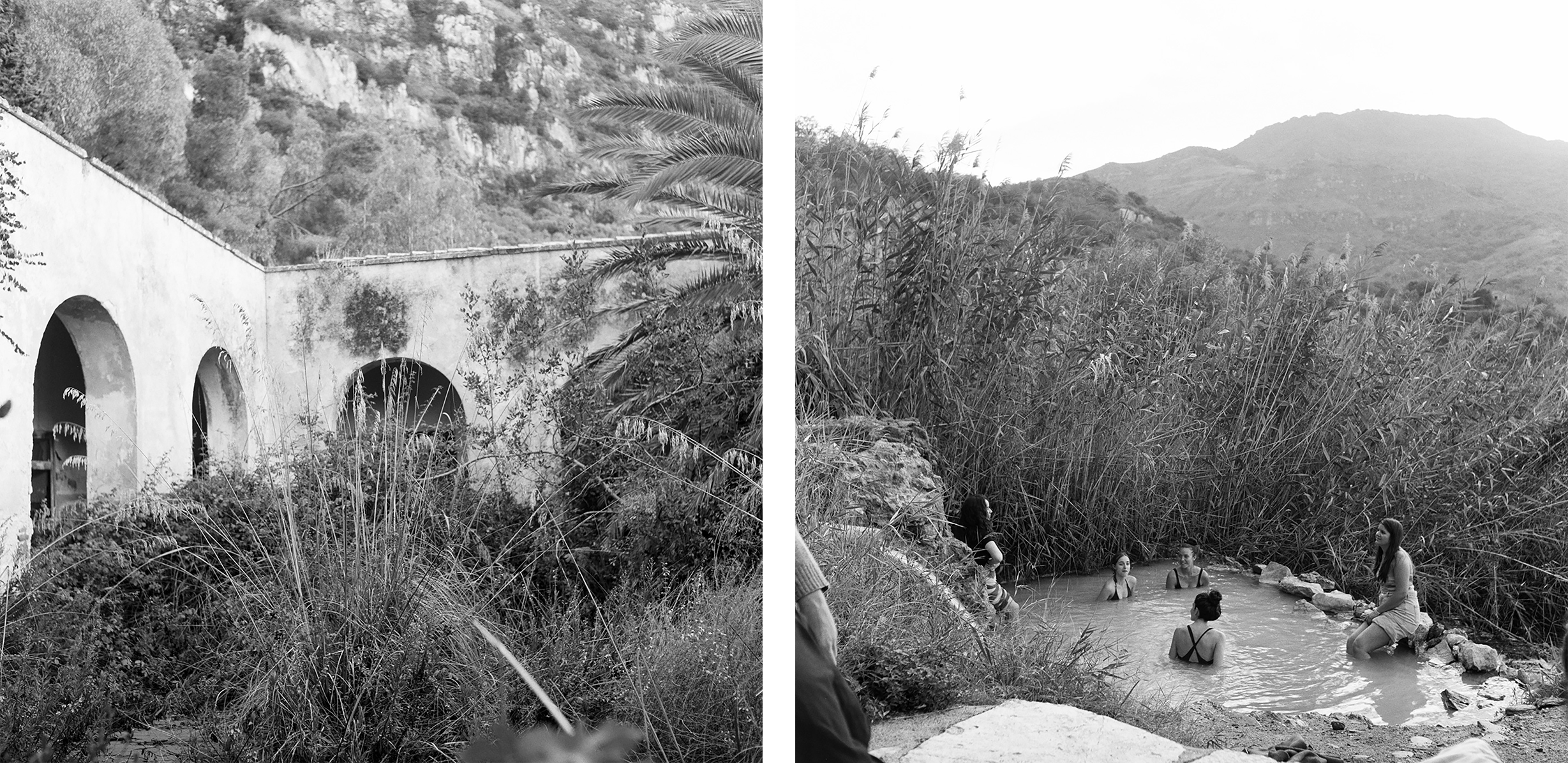
1 | The nineteenth-century thermal establishment, Sclafani Bagni, Ines Lechleitner, 2024.
2 | La Pozza, Sclafani Bagni, Ines Lechleitner, 2024.
The recent history of thermalism in Sicily is closely linked to small nineteenth-century thermal establishments, most of which are now out of operation. One example is Sclafani Bagni, located within Madonie Park. This site is renowned for its thermal waters, which were once prescribed for their healing properties (Cacciatore, 1828; Campisi 2015). Almost two centuries later, the site’s reality has changed profoundly, offering an insightful case study of thermalism in southern Europe. Here, spatial practices coexist between neglect and re-enactment of thermal heritage. On the one hand, there is the nineteenth-century thermal establishment, now in ruins and slowly being reclaimed by nature while awaiting a decision from above [Fig. 1]. On the other hand, there is a small, open, humble thermal pool built and cared for by local inhabitants and known as la Pozza [Fig. 2].
Recent scholarship has renewed attention on thermal heritage as a multifaceted phenomenon. Rather than considering thermal landscapes as strictly spatial, this approach recognises them as complex cultural, social and environmental systems. From this perspective, water is increasingly understood as a shared resource that shapes places by influencing collective practices and spatial configurations (Fiorentino et al. 2021). Studies of ancient thermal sites have also emphasised processes of abandonment, rediscovery, and contemporary reactivation, demonstrating how historical thermal contexts can evolve from neglection to new forms of appreciation (Rami Ceci 2020). Relevant in this respect is the recent thematic issue of “La Rivista di Engramma” no. 214, Archaeology of Thermalism. New studies on healing Waters (Bassani, Tabolli 2024), which brings together contributions focused on the archaeology of thermal sites and proposes an interdisciplinary reading of thermo-mineral landscapes, from ancient healing practices to their contemporary cultural meanings. While these contributions acknowledge continuities between past and present and document cases in which ancient thermal sites coexist with contemporary uses, the analytical focus does not primarily lie in the investigation of the present-day life of thermal landscapes.
Within this framework, the coexistence of abandonment and re-enactment observed at Sclafani Bagni takes on significance. From this process emerge the research questions that guide this study: How might thermal sites be reinterpreted and re-enacted by the communities that inhabit them? What role should institutions play in supporting these processes? And what future could be envisioned for abandoned thermal establishments? These queries shape the structure of the paper, which first outlines the context and methods, and then discusses the findings that address said queries through historical reconstruction and lived experience.
Methodology
This contribution explores three complementary methodological approaches: archival and documentary research; field observation and territorial exploration; and situated and participatory research. All of these approaches were carried out using the author’s doctoral investigation as a basis[1].
The first approach involved archival and documentary research aimed at better understanding the forms of thermalism associated with the spring of Sclafani Bagni. For this purpose, the book Terme e bagni di Sicilia: Caratteri di un’architettura specialistica (Campisi 2015), provides a detailed overview of the site within the Sicilian context, while Viaggio ai bagni minerali di Sclafani (Cacciatore 1828), offers a first-hand account of the author’s experience of the place at that time. Twentieth-century Italian guidebooks such as Stazioni climatiche, termali, marittime d’Italia (1907), Le stazioni termali in Italia (1939), and Touring Club Italiano editions (1936, 1965, 1968, 1982) were also consulted, as they trace the transformation of thermal sites in relation to modern notions of leisure and wellness. Finally, contemporary live archives, such as Google Maps, travel blogs, and digital maps created by travellers, offer an additional layer of recent experiential information that complements the historical sources.
The second approach consisted of a series of on-site observations and explorations aimed at documenting the current state of the thermal spring and its surroundings. This extended to the village to which the spring belongs: Sclafani Bagni. The first visit took place as part of a tour called Salti d’Acqua in January 2024. This tour was curated by Libero Osservatorio Territoriale sud – LOTs, an association founded in 2020 that promotes critical and sustainable tourism in Sicily. Diego Pérez, an independent researcher dedicated to the study of water, guided the visit. Upon discovering an intriguing reality, an abandoned nineteenth-century thermal establishment coexisting with a spontaneous continuation of thermal practices in an informal pool nearby, the desire to explore the specific case further was sparked. Further individual visits were undertaken to conduct field-based enquiries and better understand this coexistence of neglect and re-enactment.
The third approach evolved into situated and participatory research, articulated through two actions: an educational experiment and a series of interviews conducted during and after it. The educational experiment consisted of a summer school, in which participants explored and intervened in the area through site-specific events, engaging directly with locals. The programme was conceived and coordinated by the author and organised by academic institutions in collaboration with local stakeholders and international experts, with financial support from the DAAD (Deutscher Akademischer Austauschdienst – German Academic Exchange Service). During this collective phase, narratives, observations, and artistic expressions contributed to a situated collective understanding of the place. Interviews with locals conducted by the author revealed their perceptions of the abandoned thermal establishment and how thermal practices had been gradually re-enacted through a grassroots process, a narrative absent from written records. They also illuminated how the site-specific events developed during the summer school were perceived and integrated within the community.
Sclafani Bagni
The Thermal Spring
Highly saline and sulphurous thermal waters, rich in sodium, chloride, and hydrogen sulphide, are yielded by the spring of Sclafani Bagni, which flows approximately 450 litres per minute at a natural temperature of 32.7 °C (Alaimo et al. 1978). Known for their depurative, anti-inflammatory, and dermatological properties, these waters have historically been used in the treatment of scrofulous, herpetic, arthritic, and muscular diseases, chronic rheumatism, and persistent obstructions (Cacciatore 1828).
The origin of the therapeutic practices associated with the spring remains uncertain, as no reliable archaeological evidence predates the Arab period (827–1060). The settlement of Sclafani is indeed commonly attributed to this era. However, the scholar Pasquale Cipolla (1880) proposed a much earlier foundation, suggesting that the site of present-day Sclafani Bagni may coincide with the ancient Ambica mentioned by Diodorus Siculus (XX, 89), later known as Aesculapii Fanum, thereby linking both the thermal waters and the site itself to the cult of Asclepius.
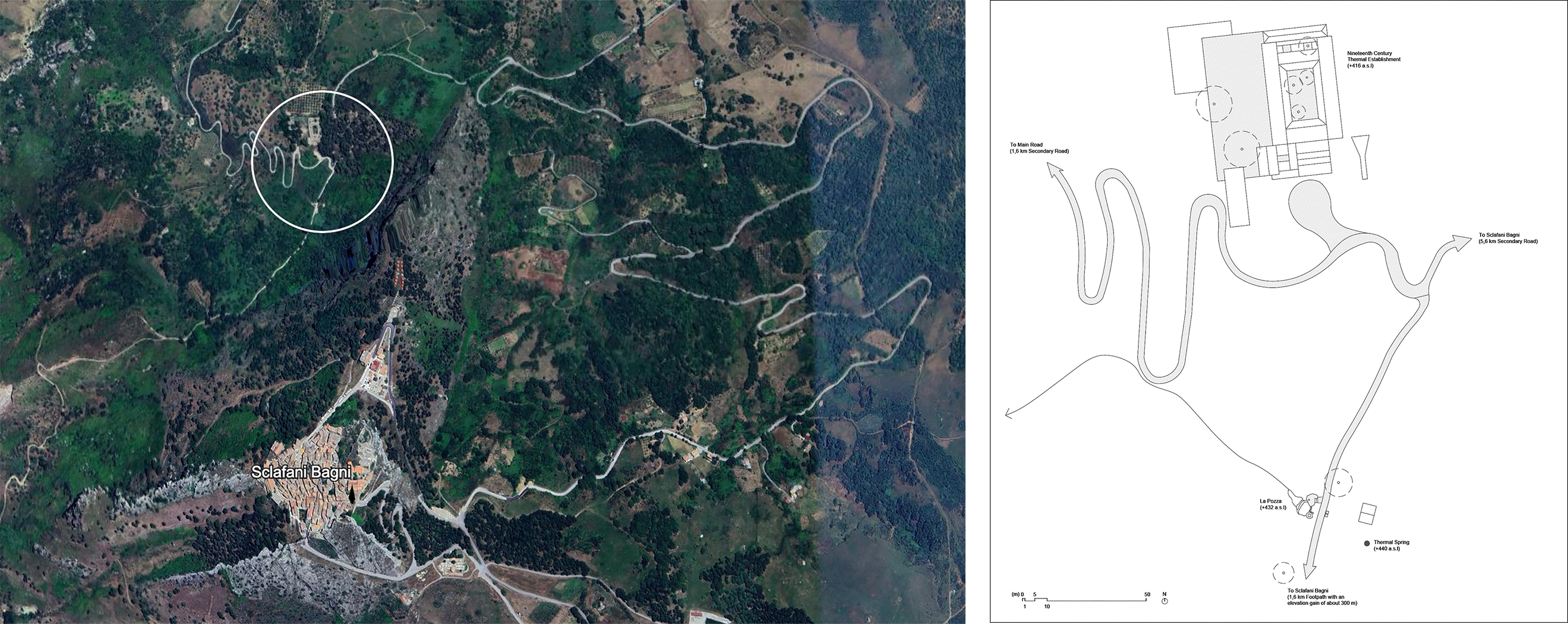
3 | The village of Sclafani Bagni and its thermal area, elaboration from Google Earth by the author, 2025.
4 | Plan of the thermal area of Sclafani Bagni, elaboration by the author, 2025.
The thermal spring lies within the Madonie Park, in the northern area of Sicily, along the route of the Via Francigena pilgrimage, at the foot of the mountain on which the village of Sclafani stands [Fig. 3]. The designation Bagni (“baths”) was officially added to the town’s name only in 1953, by municipal decree, in recognition of the presence of the thermal source. Near the thermal spring we find the nineteenth-century thermal establishment, now abandoned, and the informal pool created by local inhabitants, la Pozza [Fig. 4].
The nineteenth-century thermal establishment
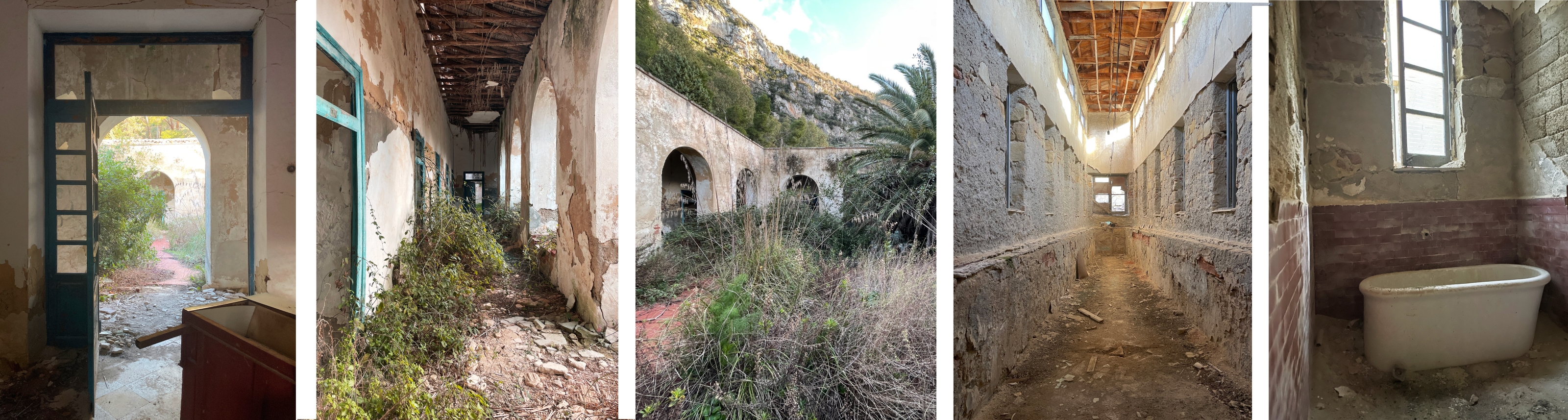
5 | Series of images of the nineteenth-century thermal establishment taken by the author during the field observation and territorial exploration, 2024.
The nineteenth-century thermal establishment has been closed to the public since 1985 due to a lack of funds for management and renovation [Fig. 5]. Although some investors have shown interest since the municipality purchased the majority share in 2003, the complex remains abandoned due to the significant investment required, the difficult access road (which only allows small vehicles and is in poor condition), its distance from the village and the broader depopulation of the area (interview conducted by the author 25 September 2025). Over time, people have occasionally removed building materials, further compromising the structure. Nevertheless, the forecourt in front of the building continues to serve as a gathering place for people who come to bathe in La Pozza.
Built in 1847, the single-storey rectangular structure consists of plastered brick and stone masonry, with reed ceilings made from local vegetation and ceramic roof tiles. Its date of construction is recorded on a white marble plaque mounted on a seasonal sundial in the central courtyard now barely visible beneath the overgrown foliage. The plaque bears the poetic line:
Più liete l’ore segnerò al mortale, cui nuovo dà vigor l’ora termale (on-site observation, 2025).
I shall mark happier hours for the mortal to whom the thermal hour gives new strength.
A verse that captures the curative spirit of the place and the timeless link between the passing of hours and the healing power of the spring.
The building is located approximately 150 metres from the thermal spring and 1.5 kilometres from the village by footpath, or 5.6 kilometres by car via a secondary road. The village itself lies around 300 metres higher up, overlooking the site. The area is characterised by dense vegetation, cultivated land, and a nearby freshwater stream. Earlier bathhouses existed on the same site, which were successively replaced or rebuilt in response to new needs or following landslides.
Access to the former establishment follows its central axis from a forecourt that also hosts a small chapel attached to the complex, positioned to the right of the entrance. The entrance hall, dining room, kitchen, common areas, and guest rooms are arranged around a central courtyard, while the bathing area is housed in an annex on the right wing, the side closest to the spring. This section, divided into two zones with six cubicles each (each equipped with a bathtub) and a central chamber for water distribution, was connected to a settling tank that collected water directly from the spring, located at a higher elevation than the building itself.
La Pozza
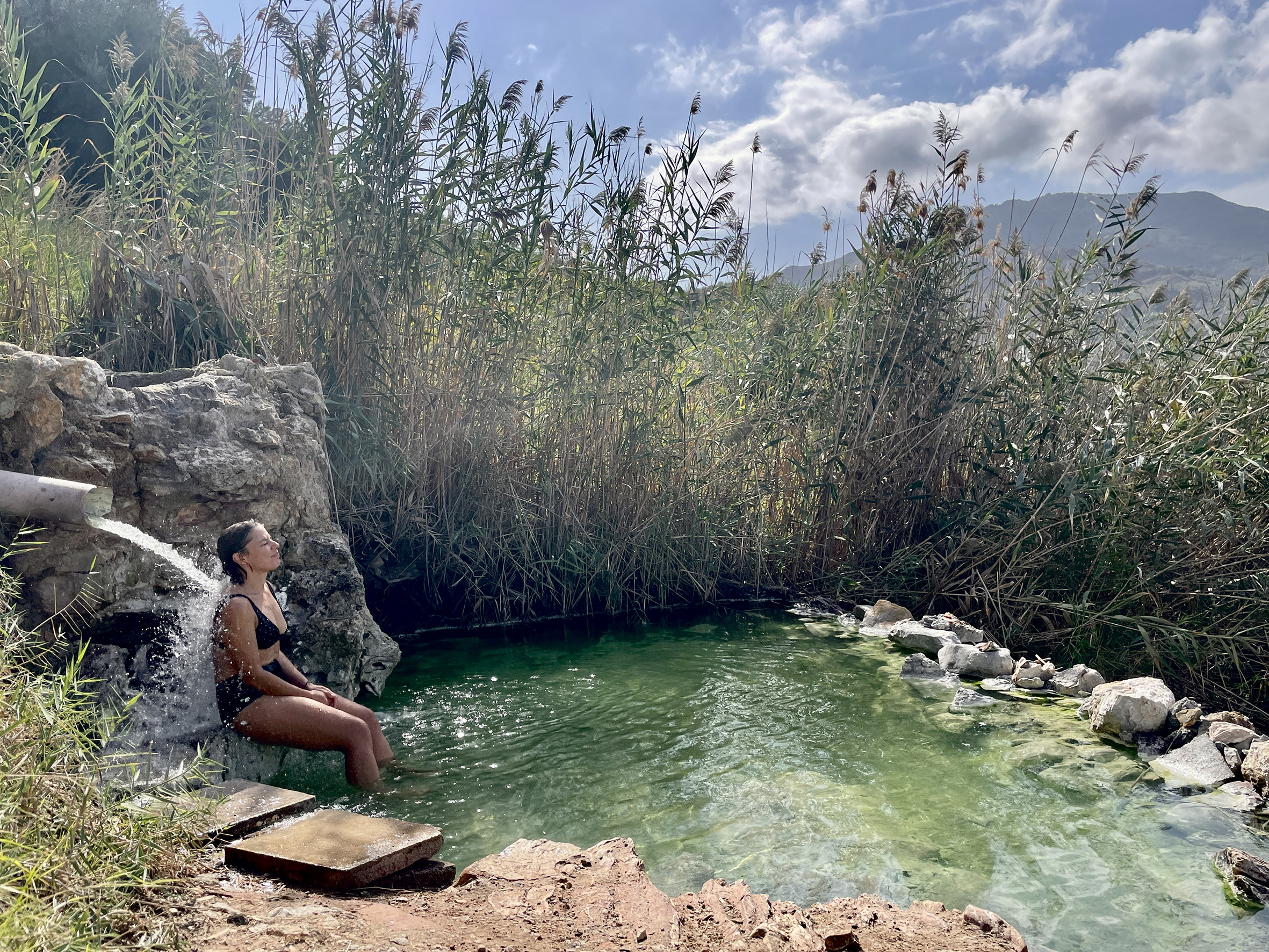
6 | Images of La Pozza taken by the author during the situated and participatory research, 2024.
In contrast to the neglect of the nineteenth-century thermal establishment, la Pozza, represents a living, collectively created open-air bath. Gradually shaped and maintained by the inhabitants, it consists of a small, organically shaped pool of about 2 by 3 metres, enclosed by an irregular stone wall that retains the thermal water and surrounded by riparian vegetation and reeds [Fig. 6].
La Pozza emerged unexpectedly after a public works project carried out at the beginning of the 2000s, which had been designed to redirect the spring water that, following the closure of the nineteenth-century thermal building, had begun to flood the area. The municipal intervention channelled the water toward a nearby stream, and in that process, a small basin formed naturally. People from neighbouring villages began to visit it for its healing properties and soon shaped the pool collectively, adding simple elements such as low walls, steps, a towel rack, and seating areas, which together constitute the thermal area visible today (interview conducted by the author 27 January 2025).
Through this process of gradual transformation, la Pozza became a simple yet fully functioning shared space, both improvised and cared for, that continues to attract people to bathe, gather, and engage with one another. Despite this collective stewardship, the site remains in a legal and administrative limbo: while the municipality tolerates its use, it cannot not assume responsibility for the interventions undertaken by the community.
Frequented mainly by locals, la Pozza has gained visibility since appearing on Google Maps, where it currently holds 144 reviews describing it as a wild and peaceful place, appreciated for its authenticity and natural setting, despite its limited facilities, with an overall positive rating (4.3/5). During site visits, groups of visitors and tourists from Poland, Germany, and even Hawaii were observed. Many camped or parked their caravans nearby, while others arrived in groups of motorcyclists.
Exploring thermalism between neglect and re-enactment
It was precisely this dichotomy between neglect and re-enactment that led to the development of a situated and participatory research process aimed at building a collective understanding of the place. To this end, a summer school titled Blue Paths: Revitalising Healing Places was held on-site in September 2024, followed by a series of interviews with locals. Conceived and coordinated by the author, the programme was organised by the University of Stuttgart, TH Nuremberg, and the Academy of Fine Arts of Palermo, in collaboration with Bagno Popolare, the municipalities of Sclafani Bagni and Petralia Sottana, and the Istituto Italiano di Cultura in Stuttgart, and funded by the DAAD (Deutscher Akademischer Austauschdienst – German Academic Exchange Service). It involved 31 students, five tutors, and seven guest contributors[2].
The summer school combined exploration, dialogue, and collective action through five site-specific interventions engaging with selected healing places: an abandoned swimming pool in Petralia Sottana, a fountain in the village, the footpath connecting the village to the spring, la Pozza, and the nineteenth-century thermal establishment. Each project transformed research into situated practice and public encounter, culminating in a two-day performative event called the Blue Path.
The subsequent interviews aimed to understand how residents perceived the presence and actions of the summer school, and how these experiences resonated with their memories, everyday life, and relationship with the thermal landscape. Their participation and openness revealed a deep emotional and cultural attachment to the site. The following section presents three of the five interventions, the ones more connected with the reflections of this contribution, Tè l’Acqua, C’è o non c’è?, and Lento [Fig. 7], together with the responses they elicited from locals.
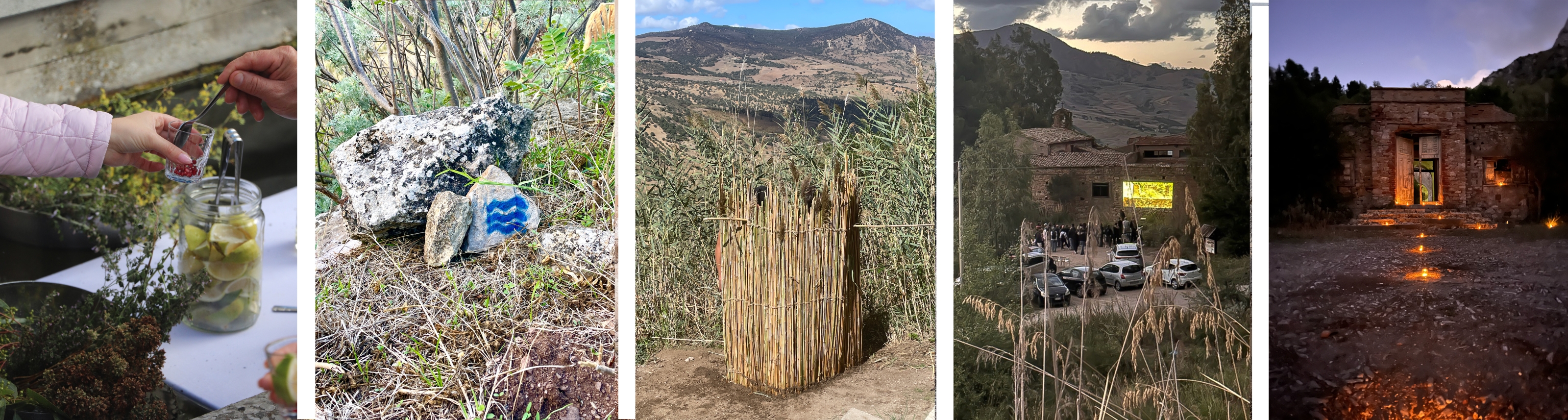
7 | Series of images from Tè l’Acqua, C’è o non c’è, and Lento taken during the situated and participatory research, Blue Paths: Revitalising Healing Places, 2024.
Tè l’Acqua consisted of a tea ritual and collective walk from the village to the thermal area. It began at the village fountain, near the herbal path leading down to the spring. A plank wrapped in a white tablecloth floated on the fountain’s surface, evoking a festive table adorned with offerings from the local landscape. The symbolic act of preparing and sharing hot tea infused with locally gathered herbs (pine, fennel, citronella, thyme, and eucalyptus) celebrated collective care and the rituals of shared care. The event continued as a collective walk along the overgrown path, which was cleared and newly marked to symbolically and physically reconnect the village with its thermal heritage. For residents, this poetic act revalued an ecology and connectedness long neglected yet deeply rooted in their context.
C’è o non c’è? reflected on the ambiguity of informality in relation to institutional recognition, a thermal place that exists yet remains officially invisible. Using the reeds that grow abundantly around la Pozza, the students built a small, ephemeral structure to serve as a changing space, responding to an observed local need. The intervention also featured a sound installation that blended the crunching of reeds underfoot with recordings from the collection and construction process, creating a subtle acoustic landscape that harmonised with its surroundings. The project actively involved locals, who took part in the bathing ritual and continue to use the reed structure to this day.
Lento, took place at the abandoned nine-century thermal establishment. A video projection on the wall of the former bathing area presented a slow cinematic portrait of the decaying building, its textures, light, nature, and sounds, highlighting its fragile beauty and temporal depth. Since direct access to the building is restricted, the projection allowed a symbolic re-entrance for visitors, who watched from the outside as the structure became both screen and subject. The event concluded with a shared aperitif and candle installation marking the old entrance, transforming the site from a space of absence into one of temporary convivial space. Residents spoke with emotion about returning, after many years, to a place once central to their collective memory, expressing both nostalgia and frustration toward institutional inaction.
Conclusions
The combination of archival, field-based, and participatory methods has shown that Sclafani Bagni’s thermal landscape operates not as a static remnant of the past but as a living system of relationships between places, bodies, and water. What appears as decay or abandonment on an institutional level reveal, on closer observation, a parallel vitality, one sustained through collective care, the quiet reclaiming of nature that welcomes new forms of life, and the persistence of informal use. The coexistence of the nineteenth-century establishment and la Pozza thus embody a dynamic dialogue between neglect and re-enactment.
This mixed approach has invited reflection on how neglected thermal heritage might be re-enacted by the human and more-than-human communities that inhabit them. The experience of la Pozza demonstrates that reinterpretation often emerges from spontaneous, small-scale actions rather than from planned restoration. The community’s ongoing use, maintenance, and adaptation of the spring reveal how heritage can be activated through embodied and collective practices. These gestures, modest yet persistent, transform thermal heritage into a form of living archaeology, where meaning is not preserved through conservation alone but through daily engagement and ritual. On the other hand, nature taking over the nine-century thermal establishments gives another approach to abandonment.
At the same time, the case of Sclafani Bagni prompts us to reconsider the role institutions might play in supporting such processes. Rather than relying on top-down redevelopment, local authorities could act as facilitators of evolving practices, recognising the legitimacy of spontaneous human and more-than-human dynamics and providing light infrastructural support, improving access, safety, or maintenance while preserving the autonomy of local stewardship. In this way, institutional involvement would not suppress informality but sustain it, fostering a framework of shared care.
The duality also stimulates reflection on what future could be envisioned for neglected thermal heritage. Regeneration need not depend on the full reconstruction or large-scale thermal tourism. Instead, hybrid strategies could emerge that balance economy, ecology, and social use. In this case, the nineteenth-century thermal establishment of Sclafani Bagni could be repurposed as a modest hospitality facility, connected to the Via Francigena and complementary to the informal thermal practices around la Pozza. Such coexistence would allow both residents and visitors to benefit from the healing properties of the water without one excluding the other. Yet another possible future might embrace non-intervention, allowing the building to return to nature while strengthening the informal thermal site through the reuse of its materials, recognising decay as a form of transformation and continuity.
Ultimately, Sclafani Bagni invites a broader reconsideration of minor thermal sites across Southern Europe. These places, often marginal and overlooked, hold the potential to become laboratories of coexistence, where water connects memory and renewal, and where thermalism continues to find sustainable and alternative forms of life [Fig. 8].
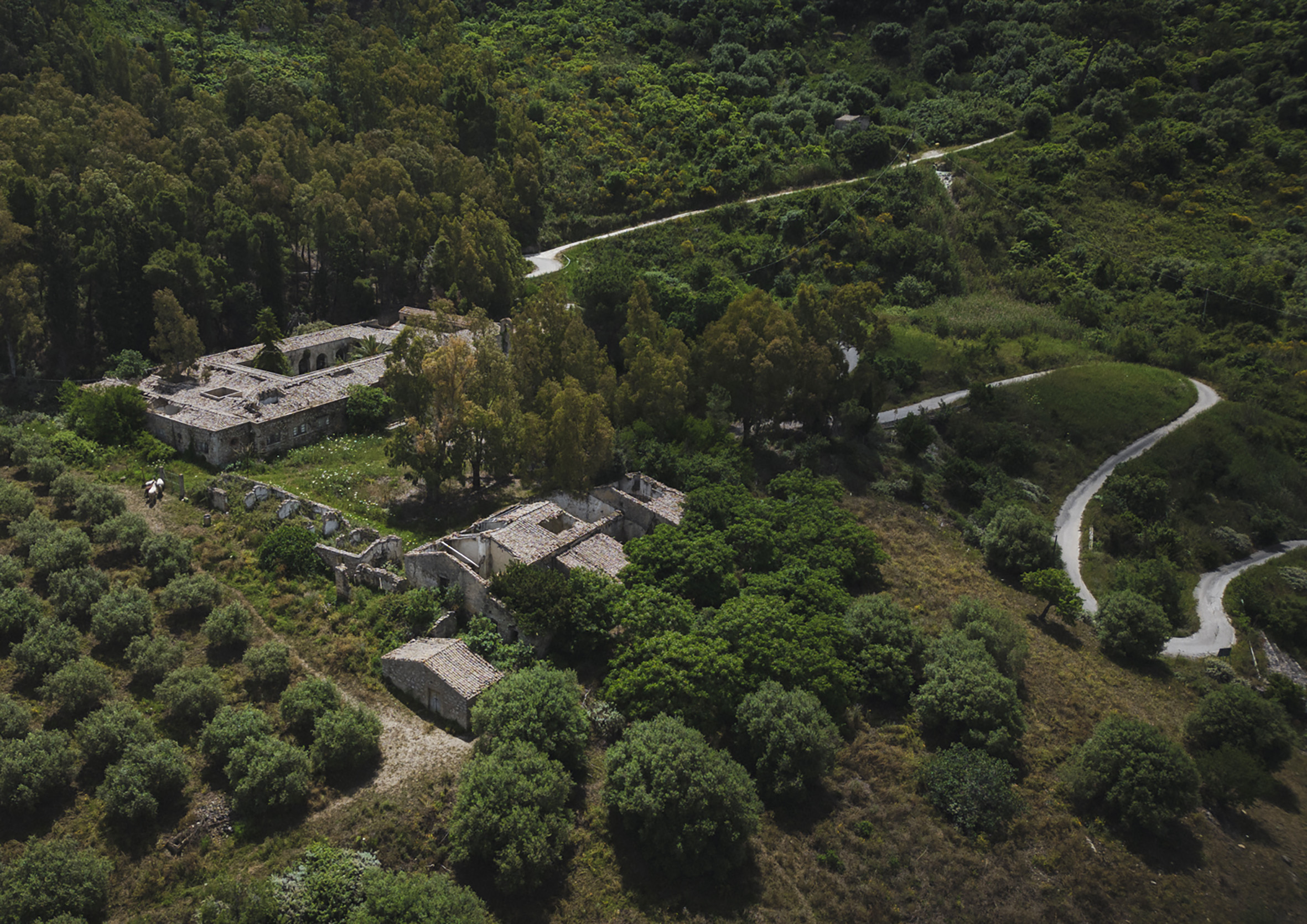
8 | View of the thermal area of Sclafani Bagni, Courtesy of Libero Osservatorio Territoriale sud - LOTs, Photo by CAVE STUDIO, 2024.
The author would like to thank the artist Ines Lechleitner and Libero Osservatorio Territoriale sud – LOTs association for providing photographic material. Gratitude is extended to the Municipality of Sclafani Bagni and its inhabitants for their collaboration, information, and valuable testimonies. For the summer school, the author also acknowledges the support of the DAAD (Deutscher Akademischer Austauschdienst – German Academic Exchange Service); the organisation by the University of Stuttgart, TH Nuremberg, and the Academy of Fine Arts of Palermo; the collaboration of Bagno Popolare and the Italian Cultural Institute; as well as the engagement and contribution of the students and guests in the programme.
Notes
[1] The PhD, titled Cities, Bodies, and Water: Urban Bathing as a Spatial Practice, was defended in January 2025 at the University of Roma Tre, Department of Architecture, Italy, under the supervision of Prof. Michele Beccu, Prof. Giovanni Longobardi, and Prof. Roger Connah.
[2] Students: Dorssa Ashena, Oleksandra Bobokhina, Luca Böhringer, Michael Dalby, Julia Deger, Kasimir von Enzberg, Giuseppina Gullo, Tobias Günther, Amelie Hamann, Paul Hirt, Elsa Kleinbach, Maximilian Kohl, Anja Kubasch, Gabriele La Tona, Nina Lietzau, Nina Ludwig, Hanna Maier, Katharina Maiwald, Tobias Minisini, Giacomo Molé, Mariia Pashchenko, Elias Röhner, Paulina Sacher, Elisa Poçi, Bastian Schuster, Eva-Maria Sölch, Lorenzo Steffenino, Stefan Weinreich, Sofie Widder, Melisa Yuca, and Edoardo Zumbo; Tutors: Dr. Pietro Airoldi, Dr. Alba Balmaseda-Domínguez, Prof. Dr. Carola Dietrich, Bettina Klinge, Gregor Löber and Špela Setzen. Guests: Kathrin Doppler (Bagno Popolare), Francesca Gattello (Libero Osservatorio Territoriale - LOTs), Ines Lechleitner, Diego Pérez, Dr. Eirini Sourgiadaki, and Dr. Lydia Xynogala.
Bibliography
- Alaimo et al.1978
Alaimo, M. Carapezza, G. Dongarrà, S. Hauser, Geochimica delle sorgenti termali siciliane, “Rendiconti della Società Italiana di Mineralogia e Petrologia” 34 (1978), 577-590. - Associazione Nazionale Italiana per il Movimento dei Forestieri 1907
Associazione Nazionale Italiana per il Movimento dei Forestieri, Stazioni climatiche termali marittime d’Italia, Roma 1907. - Bassani, Tabolli 2024
M. Bassani, J. Tabolli (eds), Archaeology of Thermalism. New studies on healing waters, “La Rivista di Engramma” 214 (2024). - Cacciatore, 1828
N. Cacciatore, Viaggio ai bagni minerali di Sclafani, Palermo 1828. - Campisi 2015
T. Campisi, Terme e bagni di Sicilia. Caratteri di un'architettura specialistica, Palermo 2015 - Cipolla 1880
P. Cipolla, Sulle probabili origini di Caltavuturo e Sclafani, “Archivio Storico Siciliano” (1880), 26-27. - Fiorentino et al. 2021
E. Fiorentino, G. Peghin, A. Scalas, Paesaggi termali. L’acqua come bene comune e dispositivo generatore dei luoghi, in A. Dib (ed.), Public Baths in the World: Between Tradition and Contemporaneity, Roma 2021, 240-261. - Rami Ceci 2020
L. Rami Ceci, Salus per Aquam. Terme antiche dall’oblio alla valorizzazione: tre casi italiani a confronto, “Geotema” 46 (2020), 45-52. - Sindacato Nazionale Fascista dei Medici 1939
Sindacato Nazionale Fascista dei Medici, Le stazioni termali in Italia, Roma 1939. - Touring Club Italiano 1936
Touring Club Italiano, Guida pratica ai luoghi di soggiorno e di cura d’Italia, Parte III: Le stazioni idrominerali, Milano 1936. - Touring Club Italiano 1955
Touring Club Italiano, Stazioni idrominerali, Milano 1955. - Touring Club Italiano 1968
Touring Club Italiano, Guida pratica dei luoghi di soggiorno, 6: Stazioni termali, Milano 1968. - Touring Club Italiano 1982
Touring Club Italiano, Stazioni termali in Italia ed altri luoghi di cura, Milano 1982.
Abstract
Sclafani Bagni, a small nineteenth-century Sicilian thermal establishment located within Madonie Park, exemplifies an insightful case study of thermalism between neglect and re-enactment. Today, its landscape oscillates through the coexistence of a ruined bathhouse and the informal pool, la Pozza. This article explores this dual reality through three complementary methodological approaches: archival and documentary research, field observation and territorial exploration, and situated and participatory research. Developed during the author’s doctoral thesis, this mixed methodology allows for a multi-layered interpretation of Sclafani Bagni as a thermal landscape negotiating between the past and the present, the private and the public, the top-down and the grassroots, and the human and the more-than-human. Such dichotomies have sparked reflections on themes such as water ownership, the tangible and intangible dimensions of heritage, and alternative forms of continuity.
keywords | Thermalism; Heritage re-enactment; Water; Grassroots practices; Neglection.
La Redazione di Engramma è grata ai colleghi – amici e studiosi – che, seguendo la procedura peer review a doppio cieco, hanno sottoposto a lettura, revisione e giudizio questo saggio
(v. Albo dei referee di Engramma)
Per citare questo articolo / To cite this article: Alba Balmaseda, Sclafani Bagni. Exploring thermalism between neglect and re-enactment, “La Rivista di Engramma” n. 231, gennaio/febbraio 2026.