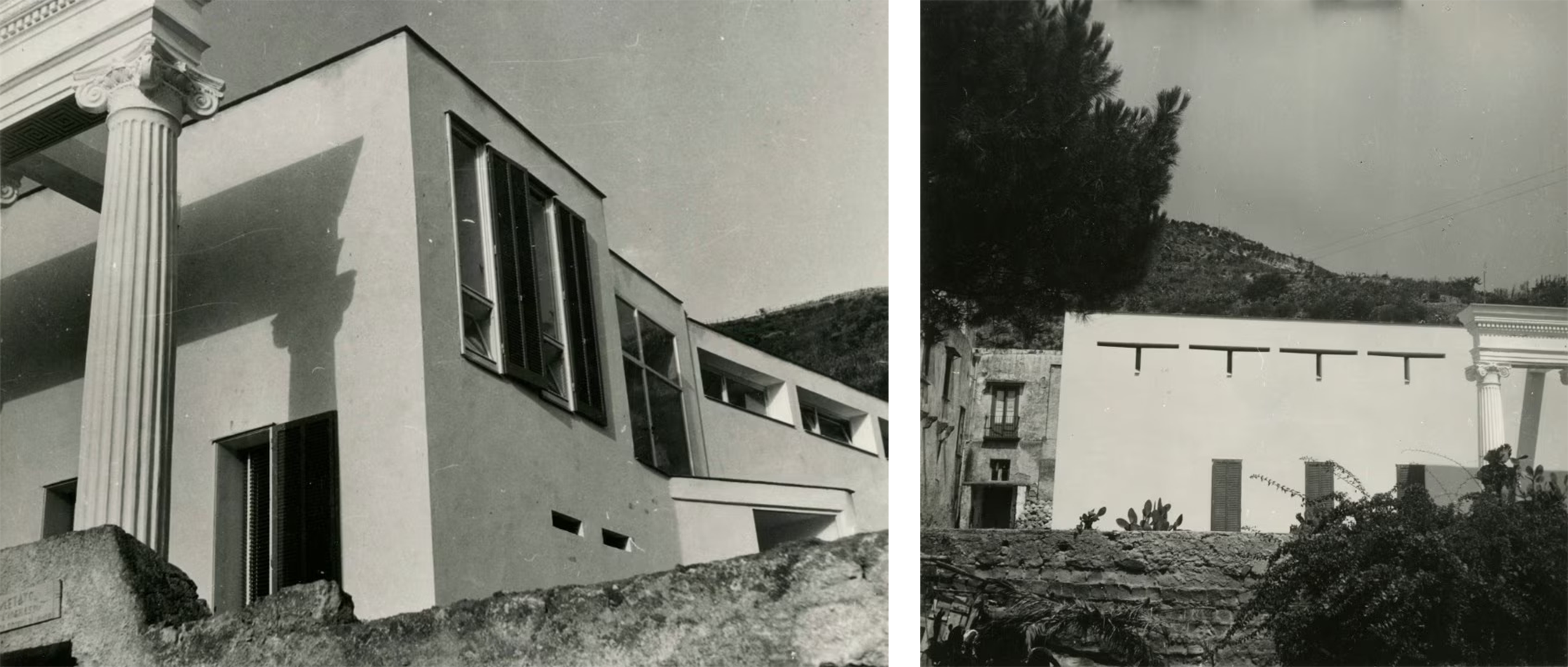
1 | Ignazio Gardella, Terme Regina Isabella in Ischia (1951-1953) (from Primizia su Ischia 1952 and Irace 2020).
2 | Ignazio Gardella, Terme Regina Isabella in Ischia (1951-1953) (from Ignazio Gardella. Progetti e architetture 1933–1990 1992).
The use of thermal waters for therapeutic purposes is an age-old practice deeply rooted in Mediterranean culture. Since antiquity, water has been regarded as a symbolic, regenerative and purifying element endowed with healing and spiritual powers. In both Greek and Roman civilisations, hydrotherapy played a central role not only in medicine, but also in the social and ritual spheres. As early as in Ancient Greece, thermal springs were often associated with the cults of Asclepius, the god of medicine, and incorporated into the complexes of therapeutic sanctuaries (Alesse 2010).
From Greece, the practice spread throughout the Roman Empire, where it reached an extraordinary level of organisation: according to archaeological estimates, the city of Rome alone contained more than 800 thermal complexes (Ward-Perkins 1981). The baths, such as those of Caracalla or Diocletian, represented an early form of public healthcare, but were also places for healing, leisure, and social interaction. While in the ancient world thermal waters were initially linked to cultic and therapeutic practices, in which healing was attributed to the direct intervention of the deity through ritual, this relationship underwent a profound transformation in the Roman period. Without completely losing their religious dimension, baths gradually acquired a more secular character, becoming both an economic resource and a structured space devoted to bodily care. As a result, a new conception of thermalism emerged, oriented not only towards healing, but also towards hygiene and physical and psychological well-being, anticipating patterns of use that remain familiar today (Zanovello et al. 2018).
With the fall of the Empire and the rise of Christianity, thermal culture underwent a long period of decline. Although water retained an important symbolic role within Christianity – baptismal water, in fact, cleansed from original sin (Berrino 2011) – during the Middle Ages the use of thermal baths was opposed on moral and religious grounds, being considered potentially hedonistic. Nevertheless, medical hydrology remained partially alive as a therapeutic discipline, practised within monastic or private contexts and based on empirical methods (Delitala 1998). It was the Renaissance that revived the culture of thermalism, in a climate of renewed interest in science and nature.
In the eighteenth century, thanks to the progress of experimental medicine and the systematisation of studies on mineral waters, hydrology became a genuine autonomous science. Thermal water began to be considered a natural pharmacological agent, while spa resorts gradually transformed into destinations for holidays and social life, anticipating the modern notion of health tourism (Fiorani, Ceccarelli 2007).
In Italy, beginning in the second half of the nineteenth century, thermalism became a true driving force for territorial and touristic development, thanks to the profound transformation that marked its passage from a therapeutic practice to a social and cultural phenomenon. Spas ceased to be places devoted exclusively to the treatment of illness, becoming instead spaces for leisure, recreation, and the representation of wellbeing, in keeping with a new conception of free time and the body. With the advent of the twentieth century, the thermal experience was democratised: resorts once reserved for the aristocracy gradually opened to the bourgeoisie and the middle classes, supported by the development of infrastructure and the emergence of a broader, more accessible form of tourism. Increasingly, architectural and urban design came to play a crucial role in shaping the experience.
Moreover, thermal tourism assumed a strategic role in the process of modernising the country, becoming both an economic driver and a laboratory for architectural experimentation. The year 1919 marked a turning point with the foundation of ENIT (Ente Nazionale Italiano per il Turismo, Italian National Tourist Board), charged with promoting Italy’s image abroad. This was followed in 1926 by the establishment of the Aziende autonome di cura, soggiorno e turismo (Autonomous Agencies for Health, Recreation and Tourism), which encouraged the coordinated development of spa towns. During this period, the architecture of the thermal baths emerged as an expression of a new national identity, capable of uniting health-related needs with aesthetic representation and landscape value.
From the post-war period onwards began the great season of social thermalism, coinciding with the expansion of the welfare state and the foundation of the Servizio Sanitario Nazionale (National Health Service, SSN) in 1978. Thermal treatments were recognised as preventive and rehabilitative therapies, supported by medical research confirming their efficacy in the treatment of various chronic conditions (Ministero della Salute 2015). Economic accessibility and public support allowed a broad segment of the population to benefit from these treatments, generating a widespread form of mass thermal tourism.
Within this context emerged a number of architects who interpreted the theme of thermal architecture as an opportunity for linguistic and technical experimentation: Ignazio Gardella with the Terme Regina Isabella in Ischia (1951-1953) [Figg. 1-2], Pier Luigi Nervi with the Nuove Terme di Chianciano, Gino Valle with the Terme di Arta (1962-1963), and Luigi Moretti with the renovation of the Fonti di Bonifacio (1965-1966).
To trace, in modern times, the archetypes of an architecture capable of embodying the thermal experience, one must look back to the eighteenth-century plan for the city of Bath. Its history as a resort began in the second half of the sixteenth century, following the publication of a medical treatise describing the therapeutic properties of the local waters, and thanks to the patronage of the Earl of Pembroke, who introduced part of the British aristocracy and the royal family to this locality in Somerset (Battilani 2001). If the first form of modern tourism can indeed be considered that linked to the thermal baths (Battilani 2003), it was in Bath that, for the first time, the modern concept of the spa resort took shape, giving rise to a genuine thermal city. The architectural and urban design of John Wood, which integrated Roman remains within a dialogue between the ancient and the modern, produced a city characterised by a homogeneous fabric punctuated by significant architectural episodes. The celebrated square–circus–crescent sequence spread from Bath across Britain and later throughout Europe, influencing the design of thermal cities, as well as that of new districts or urban areas developed with similar aims. Bath proposed an urban model that abandoned the concept of a rigid organism enclosed by solid walls, in favour of a fabric integrated with the surrounding landscape: streets, waterways and paths follow coherent ordering principles, while architectural elevations articulate the different roles and functions of the spaces.
Bath became a paradigm of the European thermal city for two fundamental reasons: on the one hand, its conscious reinterpretation of the classical heritage; on the other, its harmonious fusion of natural and architectural elements. The English city represents one of the first and most accomplished urban experiences in which architectural composition is founded on the interaction between the morphology of the site and the surrounding landscape where the eighteenth-century urban order engages in dialogue with the topography and the system of thermal waters, anticipating a modern and picturesque conception of the relationship between architecture and nature (Pevsner 1958). The relevance of Wood’s project is at the core of the doctoral research of one of the most interesting Spanish architects of the younger generation, José María Sánchez García, who in his thesis examines the strategies, techniques and tools employed by Wood in the construction of a territorial, urban and architectural project which, starting from a reinterpretation of classical architecture, can be understood as a “manifiesto contra la dispersión” (Sánchez García 2016).
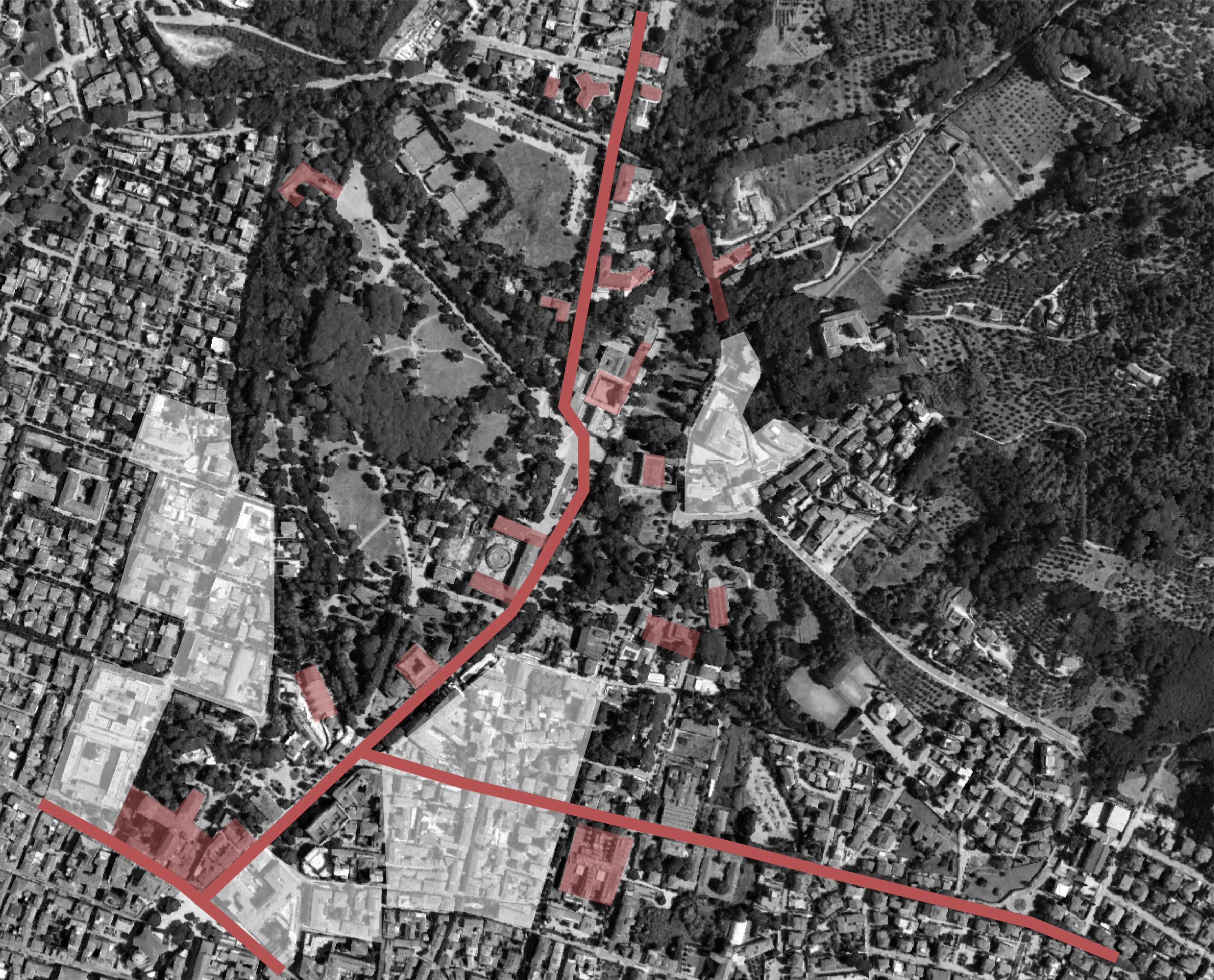
3 | Plan layout of Montecatini Terme as described by B. Secchi on an aerial photo.
Integration with the morphology of the territory, moreover, constitutes a reference model that became common in many European thermal towns between the eighteenth and nineteenth centuries, where organic urban plans for expansion and street regularisation were developed on the basis of two main elements: the promenade and the thermal park. The promenade, conceived as an axis of representation and movement, became the foundational spine of urban and social life, while the park assumed the role of therapeutic and spatial core, the privileged setting for sensory experience and contact with nature. This dual structure reflected a new urban paradigm that intertwined aesthetic, hygienic and moral concerns, anticipating the modern city as a complex and regulated organism (Choay 1965). The scale of the promenades gradually expanded, as exemplified by the Bristol–Bath route built along the Midland Railway line, extending over 20 kilometres and widely used both for daily commuting to school and work and for leisure and tourism purposes (Busi, Pezzagno 2006).
In Italy too, the impact of the thermal phenomenon has been such as to profoundly influence the morphology and development of numerous urban centres. In many cases, thermal cities have shaped their very structure around hydrothermal resources, establishing a privileged relationship with the landscape and organising their various urban components according to a system of functionally distinct yet organically interconnected spaces: areas dedicated to thermal activities, residential and hotel zones, public spaces and infrastructural connections. This gives rise to a conception of thermal urbanism as a device for balancing care, leisure and representation, in which the city itself becomes a laboratory for the experimentation of modernity. In such contexts, public health and loisir, the perception of the landscape and the urban form converge in an original synthesis capable of reflecting an ideal of collective wellbeing and of harmony between nature and the built environment.
Bernardo Secchi, in his paper La tradizione del progetto urbanistico nelle città termali europee presented at the Abano Terme conference in 1993, identified four main recurring morphological models, analysed in the doctoral thesis I paesaggi termali. Luoghi pubblici e identità collettive (Fiorentino 2019), which together outline a veritable typological atlas of European thermalism.
In the category “The city and the parks”, which includes towns such as Fiuggi, Chianciano, Montecatini [Fig. 3] and Salsomaggiore, the thermal core is organised as a large, recognisable urban void – largely undeveloped and designated as a public park – within which the therapeutic buildings are arranged. This configuration reflects the nineteenth-century tradition of landscape gardens and the fusion of hygiene, aesthetics and sociability (Rossi 1966).
It is followed by the configuration defined as “The city and the enclosure”, referring to Tivoli, Monticelli, Castrocaro and Castellammare, characterised by a well-defined and delimited thermal core, often coinciding with the hospitality structure itself, which tends to isolate itself from the surrounding urban context. In this model, the relationship between architecture and the city is one of separation rather than continuity, following a logic of spatial closure typical of certain modernist experiences.
In “The cities and the objects”, as exemplified by Abano and Montegrotto, recent growth has taken shape through the multiplication of independent hotel structures, conceived as “island-hotels” that deny any direct relationship with public space.
Finally, in “The city as ordering structure”, exemplified by Bagno di Romagna, the territorial morphology has constrained horizontal expansion, directing transformations towards the recovery and enhancement of the existing building stock. In this case, the spa centre integrates with the historic city, revealing a form of morphological and cultural sustainability that was ahead of its time.
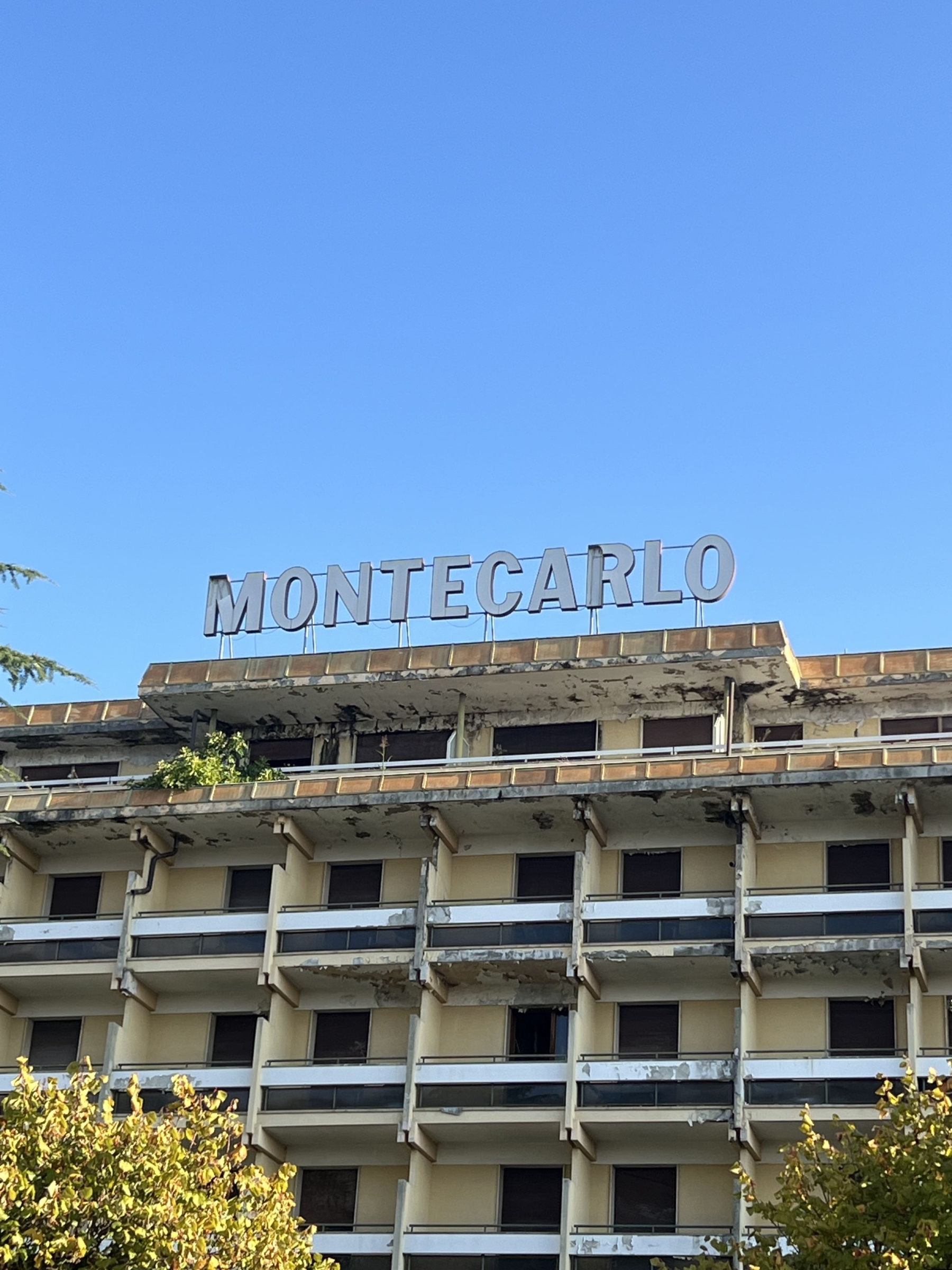
4 | The former Hotel Montecarlo, Montegrotto Terme, 2025, photo by Mauro Marzo.
From the 1980s onwards, however, the gradual reduction of public funding and the introduction of limits to healthcare provision brought about a profound crisis in the Italian thermal sector. Yet this issue concerns neither Italy alone nor merely the most recent decades. It is, in fact, a recurring condition in the development and subsequent decline that has always characterised the thermal model. The trajectory of the city of Bath itself unfolded over the course of a century, and the fate of other thermal towns followed a similar path (Battilani 2001). The welfare-based model, founded on state intervention and on the therapeutic conception of water, progressively revealed its fragility, prompting a shift in perspective: from cure to prevention, from pathology to wellbeing.
This transition generated a shift from health tourism to wellness tourism, marking a genuine paradigm change in language, target audiences, and strategies of communication and marketing. Such evolution had significant repercussions also on the architectural level: contemporary thermal buildings are no longer confined to meeting functional or therapeutic requirements, but are conceived as experiential and immersive spaces, where built matter enters into dialogue with water, light, and landscape.
The return to nature – no longer understood as a mere scenic backdrop, but as a generative principle of architectural form – marks the rebirth of a design culture centred on sensory perception and on the harmony between body, environment, and the built. From this perspective, thermal architecture appears as a device mediating between nature and artifice, between care and wellbeing, between matter and time. As Aldo Rossi (1966) reminds us, every architecture is an expression of memory and of the permanence of place (locus), and it is precisely in this relationship with the cultural and morphological identity of the context that the symbolic and experimental value of thermal architecture lies.
In Italy, the crisis of the sector led, in the final decades of the twentieth century, to the decline and abandonment of numerous thermal structures [Fig. 4]. Abroad, however – beginning in the 1990s – the landscape of thermal architecture underwent a profound transformation. In several European and international contexts, projects have been realised that establish a renewed dialogue between body, water, and landscape, emphasising the role of spas as identity-bearing and regenerative places. These new architectures are no longer conceived merely as spaces for treatment or leisure, but as engines of territorial, cultural, and economic valorisation, in which the architectural construction engages with the morphological, ecological, and symbolic specificity of its setting. Spas thus become instruments of environmental and landscape regeneration, capable of combining memory and innovation, tradition and contemporary design.
Among the most emblematic experiences of this period is the celebrated Therme Vals complex (1991-1996) in Switzerland, designed by Peter Zumthor. The work – now regarded as a manifesto of Zumthor’s thought – interprets matter and light as tools of perceptual excavation. The architect himself, in an interview with “Dezeen”, recalled the original communal dimension of the project: “This project was a social project, me and my wife lived there for almost 20 years with the community and it was owned by the community and was successful […]. It now belongs to a financial figure who bought all of it and destroyed it. The bath is a landmark so nothing will happen to the bath, but this social project is dead” (Mairs 2017).
The Therme Vals represent a paradigm of physical and symbolic integration with the Alpine landscape: an architecture that seems to emerge from the mountain itself, in a dialogical relationship between construction and nature. The alternation of massive stone volumes and cavities, the sequence of grazing lights and deep shadows, evoke an initiatory path through matter, in which the body reconnects with the primordial elements. The impact of this architecture on contemporary culture is such that it has become a source of inspiration for other artistic languages. A telling example is the graphic novel L’aimant (2017) by Parisian author Lucas Harari, set precisely within the Therme Vals, in which Pierre, a young architecture student, becomes so fascinated – and almost obsessed – with Zumthor’s work that he undertakes a journey to the thermal baths in an attempt to unveil their mysteries [Figg. 5-6]. Harari’s work, poised between introspection, myth, and the representation of space, testifies to how contemporary thermal architecture has entered the collective imagination, becoming a symbol of a new sensibility towards the relationship between body, matter, and landscape. This recalls a long-standing literary tradition of narratives set within thermal contexts, dating back to the sixteenth century: one might think of Niccolò Machiavelli’s comedy La Mandragola, set in Tuscany and later adapted for cinema by Alberto Lattuada in 1965, or of Michel de Montaigne’s diary describing the Baths of Lucca.
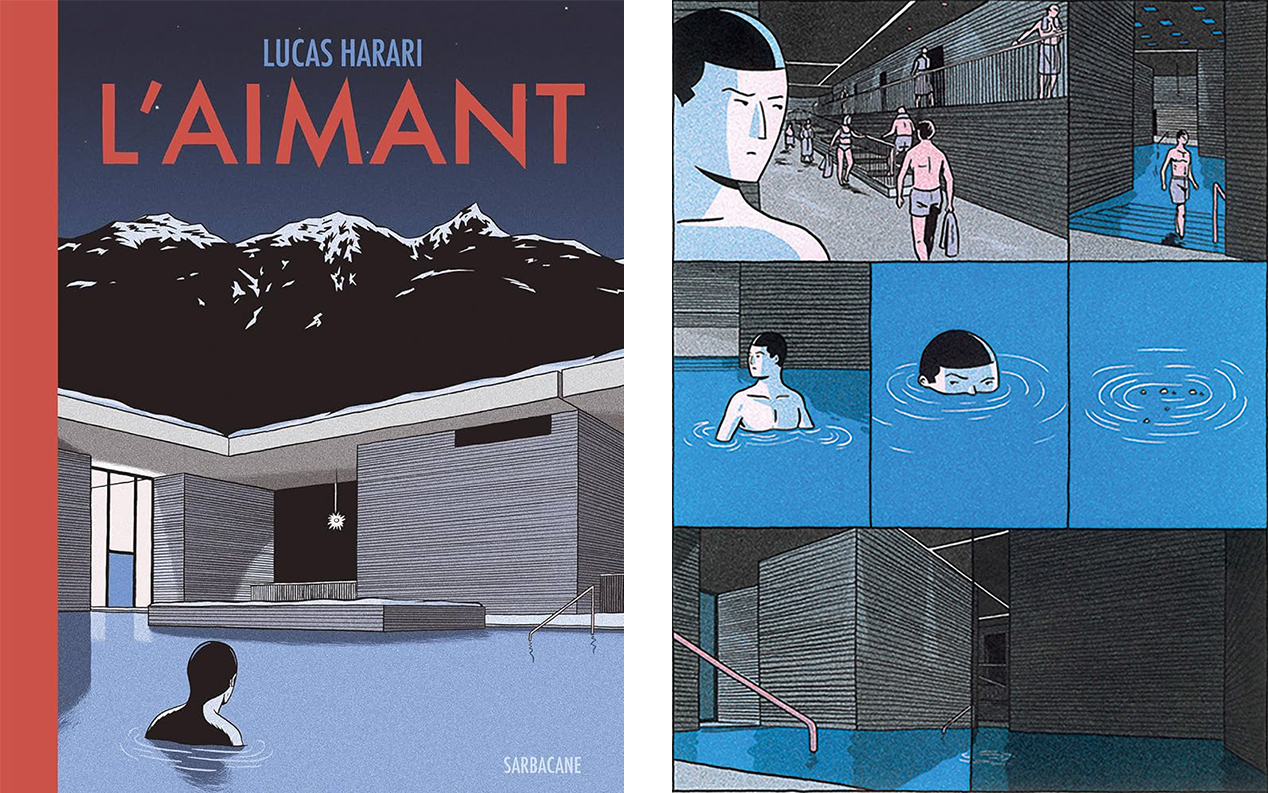
5-6 | Cover and a page from the graphic novel L’aimant by Lucas Harari (from Harari 2017).
A different yet equally intense relationship with the landscape characterises Kengo Kuma’s Horai Onsen Bath House (2000-2003), located near Atami, in Japan’s Shizuoka Prefecture. The project engages with a narrow, sloping site, where the architect works through the dematerialisation of the building: the walls dissolve, the pillars merge with the vegetation, while floor and roof extend as a continuation of the natural ground. In this way, Kuma translates the Japanese philosophy of ma – the interstitial and relational space – into an architecture of lightness and continuity, in which construction and nature merge into a perceptual continuum (Kuma 2012).
On the opposite side of the globe, the Blue Lagoon complex in Iceland (1999-2003; 2005-2007), designed by VA Arkitektar, is powerfully rooted in the volcanic landscape of the Reykjanes Peninsula. The project unfolds according to a dual register: on one side, the interior spaces open directly onto the geothermal lagoon; on the other, the architectural language establishes a material dialogue with the black lava rock of the Lava Fields. The result is an artificial landscape of great expressive intensity, where the thermal experience takes on a contemplative and almost sacred dimension.
In South America, Chilean architect Germán del Sol realised the Termas Geométricas (2004) within the Villarrica National Park [Fig. 7]. Here, the thermal route follows the course of a hot river immersed in a primary forest, unfolding through a sequence of wooden walkways and pools extending for about 450 metres. The architecture, reduced to its bare essentials, becomes a pure network of connections – a path that gradually reveals the natural space and transforms it into a sensory experience. Del Sol’s work represents one of the most poetic expressions of thermalism as a practice of immersion in the landscape (Del Sol 2010).
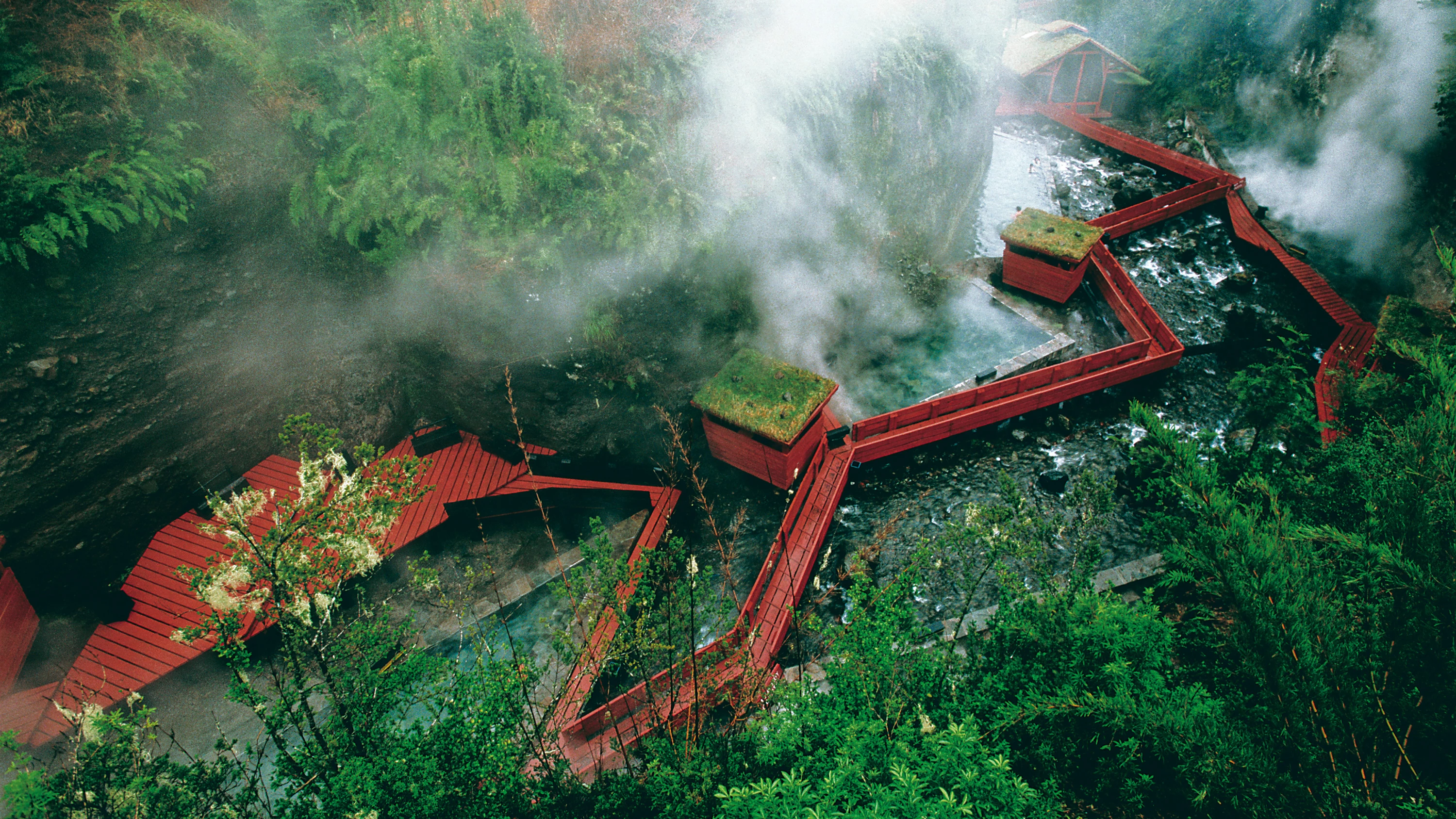
7 | Germán del Sol, Termas Geométricas, Parque Nacional Villarrica, photo by Guy Wenborne (from Termas Geométricas 2009).
In a radically different urban context, Jean Nouvel’s Bains des Docks (2001-2008) in Le Havre demonstrates the capacity of contemporary thermalism to act also as a driver of urban regeneration. Integrated within a vast redevelopment programme of the port area, the complex stands as an interface between the city’s industrial memory and the new metropolitan identity of “Greater Paris”. Inside, absolute white dominates the spaces, while the light reflected on the water generates a suspended, almost dreamlike atmosphere, as “the external aspect of the aquatic complex seems to mediate between the industrial image of the warehouses that once stood there and the new urbanities of ‘Greater Paris’” (Rapanà 2009). Nouvel’s work shows how thermal architecture can serve as a space of transition, capable of restoring meaning and cohesion to places in transformation.
Despite their geographical and linguistic diversity, these projects share a common vision: that of water as the generative principle of space. Contemporary spas no longer merely embody the meeting of therapeutic function and pleasure; they represent the search for a deep equilibrium between matter, light, nature, and memory. In them, a new form of architecture of wellbeing is manifested – one in which the physical dimension intertwines with the perceptual, restoring to human beings the awareness of their relationship with place and with the earth. Beyond their role in processes of urban development, these projects can be interpreted as marking a return to forms of thermal experience rooted in the ancient world, particularly in Roman culture. As in Roman thermae, where bathing was conceived as a multisensory practice involving the body, water, light, and architecture, contemporary spa design reasserts the experiential and spatial dimension of thermalism. The emphasis on sequences of spaces, controlled sensory stimuli, and the integration of architecture with landscape recalls the ancient understanding of baths not merely as functional infrastructures, but as places where physical wellbeing, perception, and a symbolic relationship with nature were deeply intertwined.
Building on these premises, and in light of global transformations and growing environmental awareness, thermalism is now called upon to redefine its role within the broader framework of sustainable tourism. Mass tourism, in fact, increasingly reveals its own criticalities – from pollution to the overconsumption of resources, to the loss of local authenticity – while proximity tourism and slow experiences are emerging as potential strategies of resilience and innovation for thermal territories (OECD 2021).
In this direction, oriented towards the enhancement of thermal and cultural heritage understood as both tangible and intangible patrimony, several Italian initiatives are currently underway. Through projects of restoration, adaptive reuse, and integrated promotion of landscapes and historic architectures, these initiatives are contributing not only to revitalising local economies, but also to restoring meaning and identity to places once marginalised. In this process, Italy has once again come to occupy a prominent position in the international thermal panorama, reaffirming its millennia-old tradition as a laboratory of balance between wellbeing, culture, and sustainability.
According to Federterme (2018), Italy ranks fifth globally in terms of the number of facilities and the scale of its offer, after China, Japan, Germany, and Russia. The geographical distribution reveals a predominance of northern regions (48.7%), followed by southern (36.2%) and central (15.1%) ones. Regionally, Campania ranks first with 95 establishments, followed by Veneto (92), Emilia-Romagna (25), Tuscany (22), and Lazio (15). With over 317 active thermal establishments, an annual turnover of approximately €1.6 billion, and a steadily growing tourist demand, Italy stands among Europe’s leaders in wellness tourism. These 317 thermal facilities are distributed across 134 municipalities, including thermal (51), seaside (18), mountain (12), hill (7), lakeside (4), and art cities (11) locations.
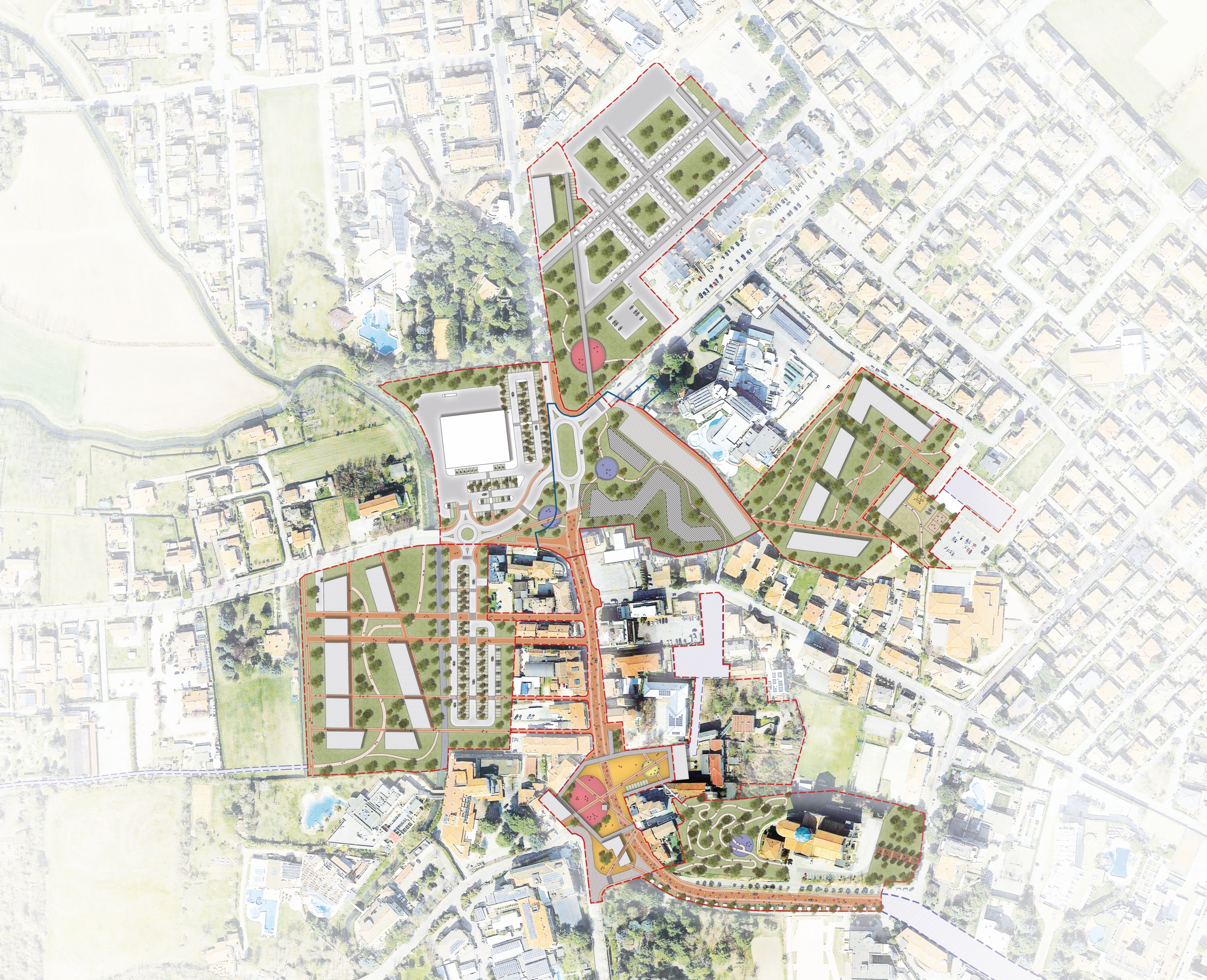
8 | Masterplan of the project Montegrotto 2050, available for download from the website. Detail of the original sheet.
Among the most significant Italian examples are several cases that have successfully reinterpreted thermal heritage through a contemporary lens, combining conservation, innovation, and sustainability. Montecatini Terme, for instance, following its 2021 inclusion on the UNESCO World Heritage List as part of the serial site “Great Spa Towns of Europe”, has initiated a regeneration process aimed at recovering the historical memory of its Rationalist and Liberty architectures, integrating them into an urban system oriented towards slow tourism and a culture of wellbeing. Similarly, locations such as Bagno Vignoni and Saturnia in Tuscany, or Abano and Montegrotto Terme in Veneto, are experimenting with strategies of enhancement based on the synergy between natural resources, landscape quality, and cultural offer, promoting a concept of thermalism that is diffuse and territorially integrated.
In Montegrotto Terme, for example, the local administration is investing in an extensive regeneration programme that concerns not only individual spa complexes but also public spaces and the cycle – pedestrian network. This vision finds expression in the Montegrotto 2050 masterplan [Fig. 8], a strategic project aimed at stitching together the urban fabric and overcoming the spatial discontinuities to which Secchi once referred. The stated objective is to “create an urban fabric on a human scale, improving public space, encouraging sustainable mobility, and strengthening spaces for social interaction”.
Thermalism today emerges as a catalyst for urban, environmental, and social regeneration – capable of triggering virtuous processes of territorial redevelopment and of reinforcing the bond between communities and their landscapes. Whereas spa towns were once mononuclear and monopolar, they have since evolved into polynuclear and multipolar systems (Lozato-Giotart 2008), marking an evolution from Secchi’s analysis. The recovery of thermal heritage – understood not merely as an economic resource, but as a cultural and identity-bearing asset – represents one of the most significant challenges for contemporary architecture: to reinterpret historic places through innovative languages, restoring to them a public, inclusive, and shared function.
These developments highlight a progressive shift in scale within contemporary thermal architecture. Initially focused on the experiential quality of the individual place, spa projects gradually extended their influence to the urban dimension, where thermal complexes became drivers of redevelopment and social reactivation. Now, this scalar expansion has moved beyond the city, positioning thermal architecture as a tool for territorial regeneration. In this broader framework, thermal sites operate within networks of landscapes, infrastructures, and sustainable tourism practices, redefining the relationship between water, settlement, and environment. This evolution reflects a growing awareness of thermalism not only as an architectural or urban phenomenon, but as a territorial strategy capable of integrating wellbeing, ecological balance, and cultural continuity.
In this regard, funding from the PNRR (National Recovery and Resilience Plan) has made possible, beginning in 2025, the launch of a large-scale programme for the redevelopment of Italian thermal facilities, with the aim of transforming them into true architectural, cultural, and touristic landmarks.
In Recoaro Terme, the rehabilitation of Building 1B within the Thermal Complex, launched on 3 October 2025, represents the first step in a pilot project of cultural and social regeneration. The restoration of the historic building goes beyond material recovery, redefining its function through an architecture capable of merging identity and innovation: the space will be converted into a multifunctional centre for cultural events, commercial activities, and tourism services. The intervention seeks to return to the town a symbolic place, fostering the emergence of new economies and the strengthening of local community bonds.
The Terme di Porretta, in the heart of the Bolognese Apennines, constitute an example of integrated regeneration among architecture, health, and landscape. The project – developed through a collaboration between INAIL, Gruppo Monti Salute Più, and the Regione Emilia-Romagna – involves an investment of around €30 million. The restoration of the Terme Basse and the Naiadi, the creation of a new thermal spa and an outdoor pool, together with the enhancement of the surrounding park, define a new equilibrium between historic architecture and contemporary wellbeing. One of the iconic domes will be converted into a spa, becoming an identifying and symbolic element of the entire complex.
In Acireale, where the thermal baths date back to 1873 and are distinguished by their neoclassical and Liberty elegance, the regeneration project – supported by a regional grant of €1.5 million – aims to preserve and enhance an architectural heritage of extraordinary landscape value. The restoration of the historic area and its gardens seeks to re-establish the relationship between architecture and nature, offering visitors an immersive experience within the temporal and spatial dimension of Sicilian thermalism.
The Nuove Terme di Sciacca, on the southern coast of Sicily, represent one of the most ambitious undertakings: an investment of €184 million aimed at refunctionalising and reinterpreting the historic buildings of the Terme Santa Venera and Santa Caterina. The project, which integrates thermal, hospitality, and cultural functions, intends to transform the complex into an integrated touristic and architectural hub, complete with nature trails, event spaces, and areas dedicated to the promotion of local gastronomic and artisanal excellence. Here, architecture becomes a tool of connection between memory, territory, and innovation.
Thermalism in the twenty-first century is no longer solely the care of the body, but also the care of the territory – an opportunity to rethink the relationship between human beings and the environment from an ecological and sustainable perspective. In this sense, thermal architecture presents itself as a laboratory for a new conception of collective wellbeing, in which built space becomes the expressive medium through which the territory recognises and renews its own vocation. A vocation grounded in the harmonious integration of landscape, architecture, and the human dimension – a paradigm that restores to thermalism its original and most profound meaning: that of a place of encounter between health, nature, and beauty.
Bibliography
- Alesse 2010
M. Alesse, Le acque sacre nella Grecia antica, Roma 2010. - Annibaletto et al. 2014
M. Annibaletto, M. Bassani, F. Ghedini, Cura, preghiera e benessere. Le stazioni curative termominerali nell’Italia romana, Padova 2014. - Battilani 2001
P. Battilani, Vacanze di pochi, vacanze di tutti. L’evoluzione del turismo europeo, Bologna 2001. - Battilani 2003
P. Battilani, Storia del turismo, Roma-Bari 2003. - Berrino 2011
A. Berrino, Storia del turismo in Italia, Bologna 2011. - Busi, Pezzagno 2006
R. Busi, M. Pezzagno (a cura di), Mobilità dolce e turismo sostenibile. Un approccio interdisciplinare, Roma 2006. - Buzzi Ceriani 1992
F. Buzzi Ceriani (a cura di), Ignazio Gardella. progetti e architetture 1933-1990. Catalogo della mostra, Padiglione d’arte contemporanea, 22 gennaio-18 marzo 1992. - Choay 1965
F. Choay, L’urbanisme, utopies et réalités : une anthologie, Paris 1965. - Cinti 2021
M.G. Cinti, Turismo Termale in Italia: evoluzione, impatti e prospettive di rilancio, “Documenti geografici” 1 (gennaio-giugno 2021), 65-88. - Ciocchetti 2021
S. Ciocchetti, Turismo del benessere e rigenerazione territoriale in Italia, Milano 2021. - D’Amia et al. 2024
G. D’Amia, E. Faroldi, M. P. Vettori (a cura di), Le città di Igiea. Luoghi termali tra memoria e progetto, Milano 2024. - Del Germán
S. Del Germán, Inmersión en la quebrada : Termas Geométricas, Parque Nacional Villarrica (Chile), “Arquitectura Viva” 125 (2009), 52-53. - Del Sol 2010
G. Del Sol, Termas Geométricas: Architecture and Nature in Chile, Santiago 2010. - Delitala 1998
L. Delitala, Storia dell’idrologia medica, Bologna 1998. - Eurostat 2020
Eurostat, Tourism statistics: nights spent at tourist accommodation establishments, Luxembourg 2020. - Faroldi 2007
E. Faroldi, Terme e architettura. Progetti tecnologie e strategie per una moderna cultura termale, Rimini 2007. - Federterme 2018
Federterme, Rapporto sul settore termale italiano, Roma 2018. - Fiorani, Ceccarelli 2007
C. Fiorani, G. Ceccarelli, Acque e salute: storia del termalismo in Italia, Firenze 2007. - Fiorentino 2019
E. Fiorentino, I paesaggi termali. Luoghi pubblici e identità collettive, Tesi di dottorato in Ingegneria Civile e Architettura, a.a. 2017/2018, tutor G. M. Peghin, Università degli Studi di Cagliari, Cagliari 2019. - Harari 2017
L. Harari, L’aimant, Paris 2017. - Irace 2020
F. Irace, La memoria senza peso di Ignazio Gardella nelle terme di Ischia, “Domus” (17 March 2020). - Kuma 2012
K. Kuma, Anti-Object: The Dissolution and Disintegration of Architecture, Tokyo 2012. - Lozato-Giotart 2008
J.-P. Lozato-Giotart, Geografia del turismo. Dallo spazio consumato allo spazio gestito, a cura di F. Dallari, Milano 2008. - Mairs 2011
J. Mairs, Peter Zumthor says his Vals spa project “destroyed” by new owner, “Dezeen” (11 May 2017). - Ministero della Salute 2015
Ministero della Salute, Le cure termali nel SSN: efficacia e appropriatezza, Roma 2015. - Mumford 1961
L. Mumford, The City in History: Its Origins, Its Transformations, and Its Prospects, New York 1961. - OECD 2001
OECD, Tourism Trends and Policies 2021, Paris 2021. - Pevsner 1958
N. Pevsner, The Buildings of England: North Somerset and Bristol, London 1958. - Ponti 1952
G. Ponti, Primizia su Ischia, “Domus” 268 (1952), 2-5. - Rapanà 2009
P. Rapanà, Les Bains des Docks : Ateliers Jean Nouvel, Centro natatorio a Le Havre, “AND Rivista Di Architetture, Città E Architetti” 2, 15 (2009), 82-89. - Rossi 1996
A. Rossi, L’architettura della città, Padova 1966. - Sánchez García 2016
J.M. Sánchez García, El Caso Bath, Tesis doctoral Escuela Técnica Superior de Arquitectura de Madrid, tutors A. Campo Baeza, E. Tuñón Álvarez, Universidad Politécnica de Madrid, Madrid 2016. - Secchi 1993
B. Secchi, La tradizione del progetto urbanistico nelle città termali europee, in S. Dinale, L’urbanistica delle città termali. Analisi e prospettive. Atti del Convegno Nazionale (Abano Terme, 26-27 marzo 1993), Padova 1993, 17-23. - Smith, Puczkó 2014
M. Smith, L. Puczkó, Health, Tourism and Hospitality: Spas, Wellness and Medical Travel, London 2014. - UNWTO 2022
UNWTO, Global Wellness Tourism Report, Madrid 2022. - Ward-Perkins 1981
J.B. Ward-Perkins, Roman Imperial Architecture, New Haven 1981. - WHO 2020
WHO, Healthy environments and sustainable tourism, Geneva 2020. - Zanovello et al. 2018
P. Zanovello, F. Ghedini, M. Bassani, Il termalismo nell’Italia romana, “Siris” 18 (2018), 167-172. - Zumthor 1998
P. Zumthor, Thinking Architecture, Basel 1998.
Abstract
In Italy, thermalism has long constituted a fundamental component of the national tourism system, deeply rooted in cultural and social values. Until the 1920s, spa stays represented one of the main forms of holidaymaking, closely associated with therapeutic practices and collective rituals. From the post-war period onwards, thanks to the support of the National Health Service, the phenomenon acquired a mass dimension. However, the restrictions introduced in the health sector during the 1980s led to a gradual downsizing of the role of thermal establishments as accredited therapeutic facilities. From this transformation emerged a new paradigm in which spa offerings were reconfigured as experiential destinations oriented towards holistic wellbeing. Today, together with Germany, Italy boasts the highest number of thermal establishments in Europe – a testament to a long-standing tradition that has seen these places act as genuine hubs of social, economic, and political life. In recent years, numerous architectural redevelopment projects have reinterpreted the thermal heritage in a contemporary key, generating new territorial centralities and activating processes of urban regeneration. Among the most significant international examples is Zumthor’s Therme Vals, while in Italy, noteworthy projects include the De Montel development in Milan, the restoration of the Grand Hotel in San Pellegrino Terme, and the revitalisation of the Bormio spas. The article analyses the evolution of Italian spa architecture throughout the twentieth century, with a particular focus on recent regeneration projects and their spatial, economic, and cultural impacts.
keywords | Thermalism; Architecture; Thermal tourism.
La Redazione di Engramma è grata ai colleghi – amici e studiosi – che, seguendo la procedura peer review a doppio cieco, hanno sottoposto a lettura, revisione e giudizio questo saggio
(v. Albo dei referee di Engramma)
Per citare questo articolo / To cite this article: Mauro Marzo, Anna Veronese, Strategies and Projects for Thermal Sites, “La Rivista di Engramma” n. 231, gennaio/febbraio 2026.