AI & Christian Iconography: the Past pro the Present
The Case of Donald Trump as Salvator Mundi
Alessandra Galizzi Kroegel
Abstract
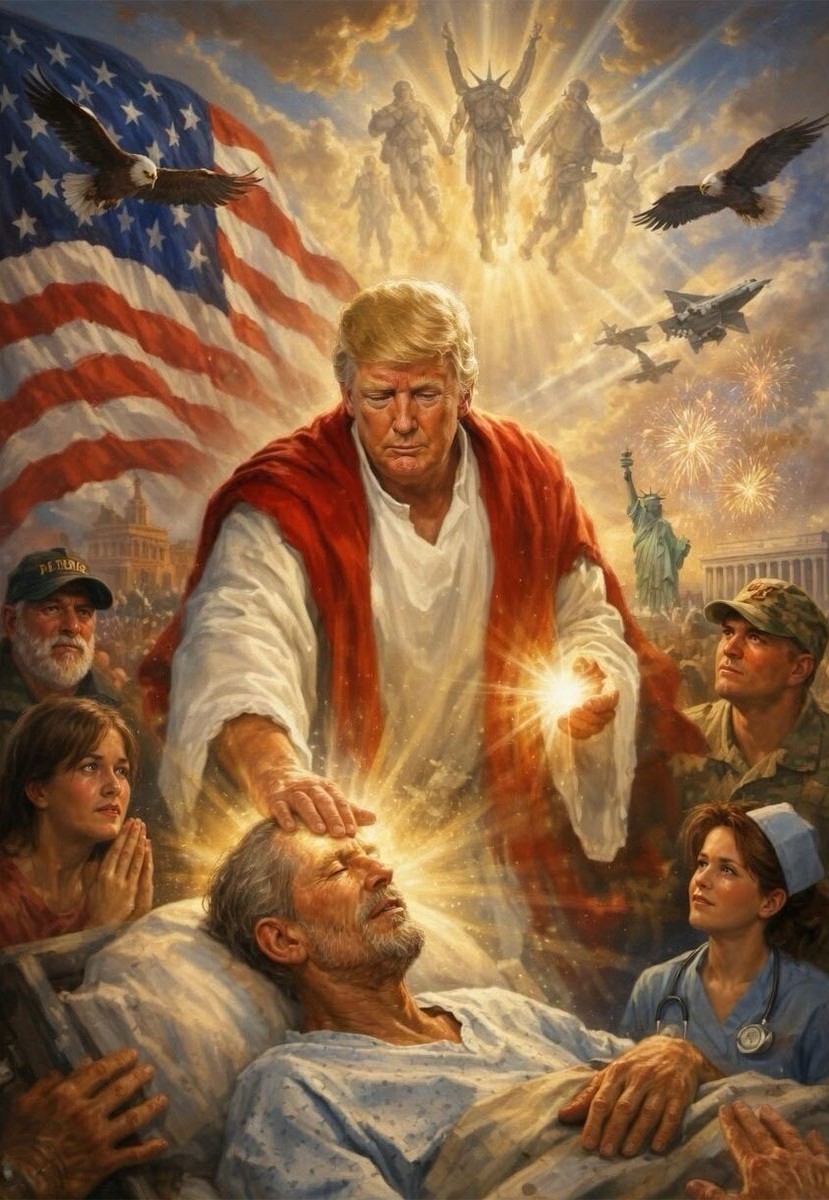
1 | AI-generated image posted by Donald Trump on Truth Social (April 12, 2026), subsequently deleted.
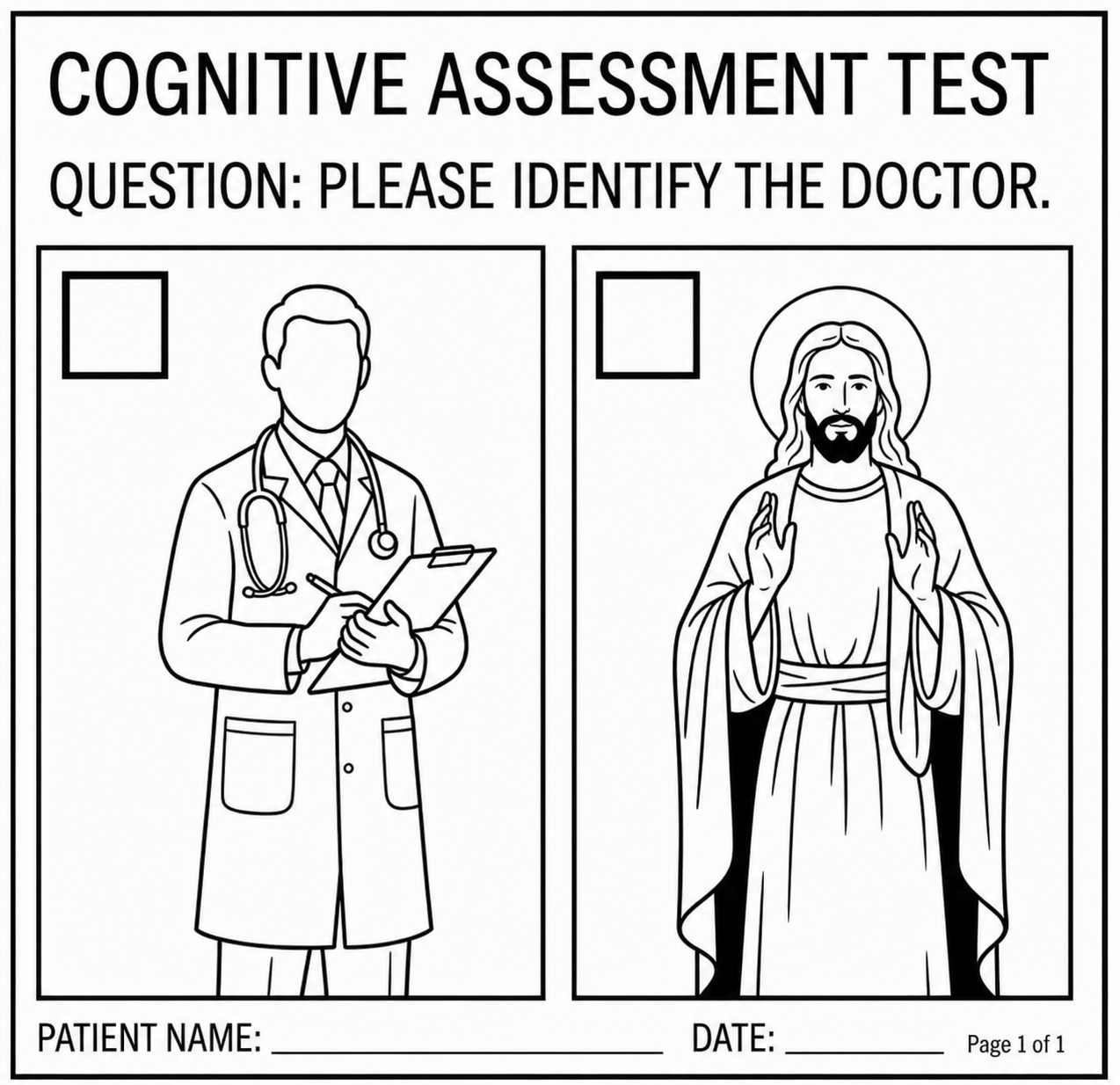
2 | Meme by unknown author, circulated on social media in response to statements by Donald Trump (April 2026).
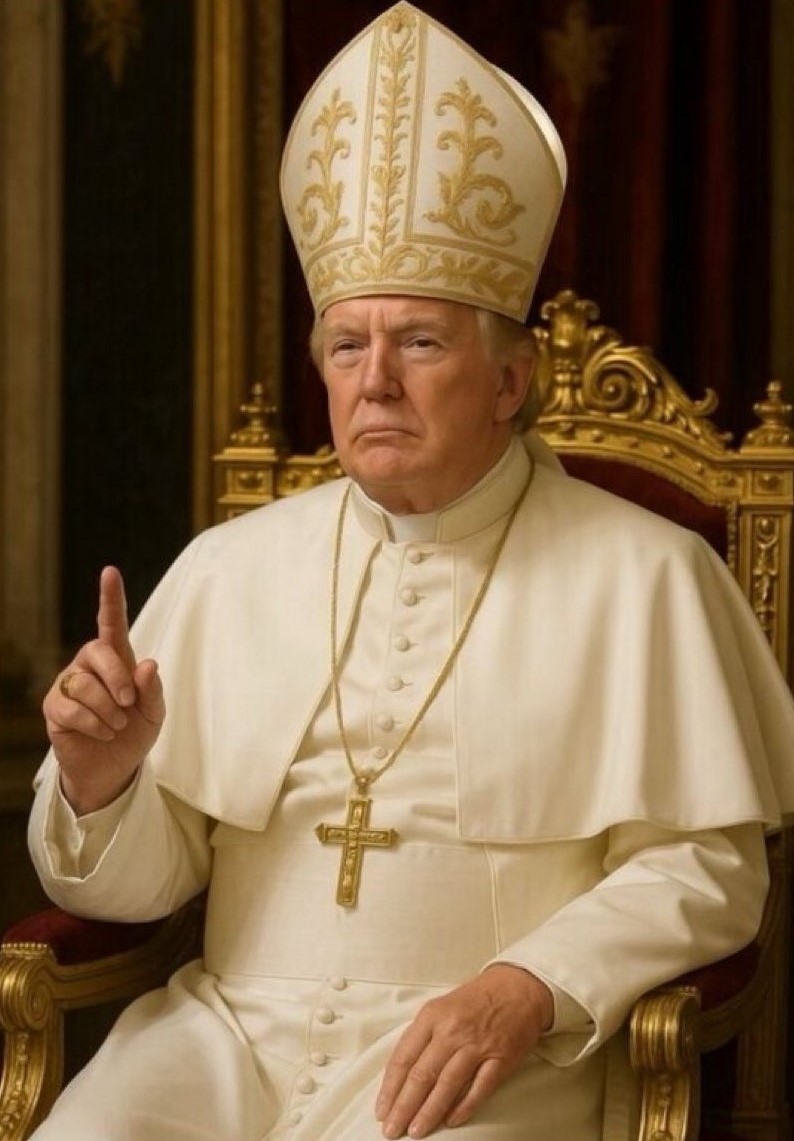
3 | AI-generated image of Donald Trump in papal attire, circulated on social media in April 2025 following the passing of Pope Francis.
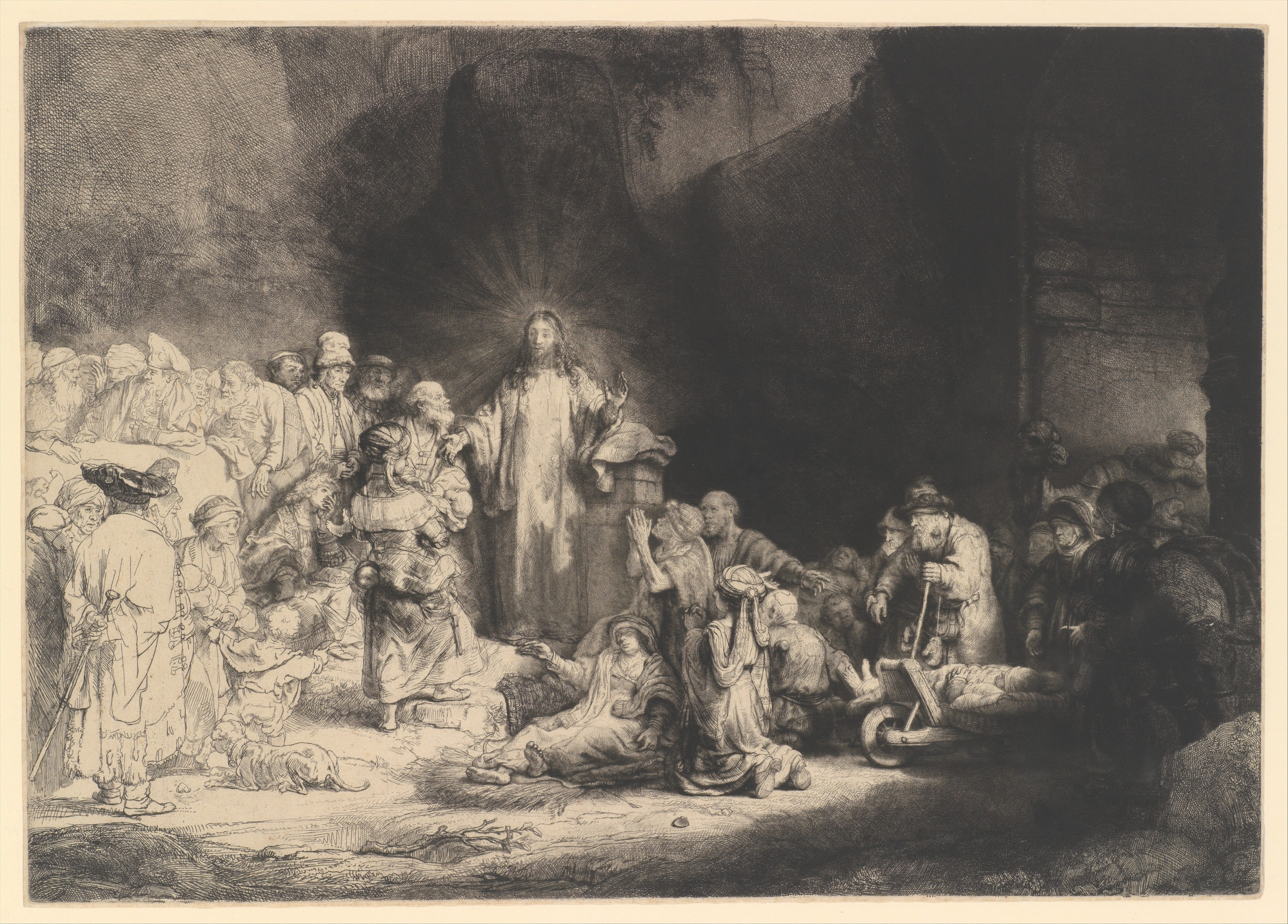
4 | Rembrandt van Rijn, The Hundred Guilder Print, Etching, engraving, and drypoint, 1648, New York, Metropolitan Museum, n. 29.107.35.
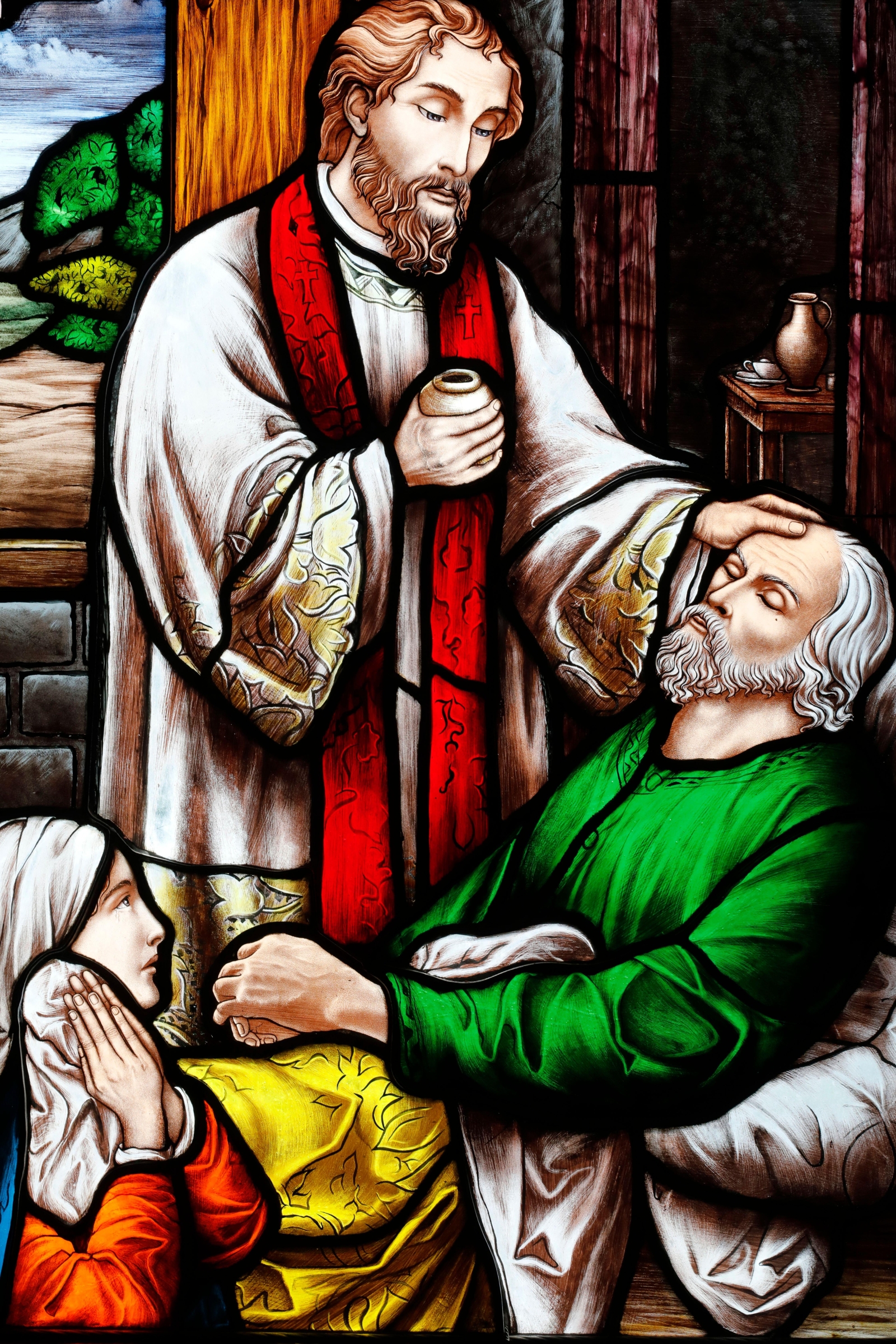
5 | Unknown artist (possibly Pham Hong Vinh / COBA Art Glass), The Sacrament of the Anointing of the Sick, stained-glass window, ca. 2020-2022, Song Vinh Church, Phu My City, Ba Ria-Vung Tau (Vietnam).
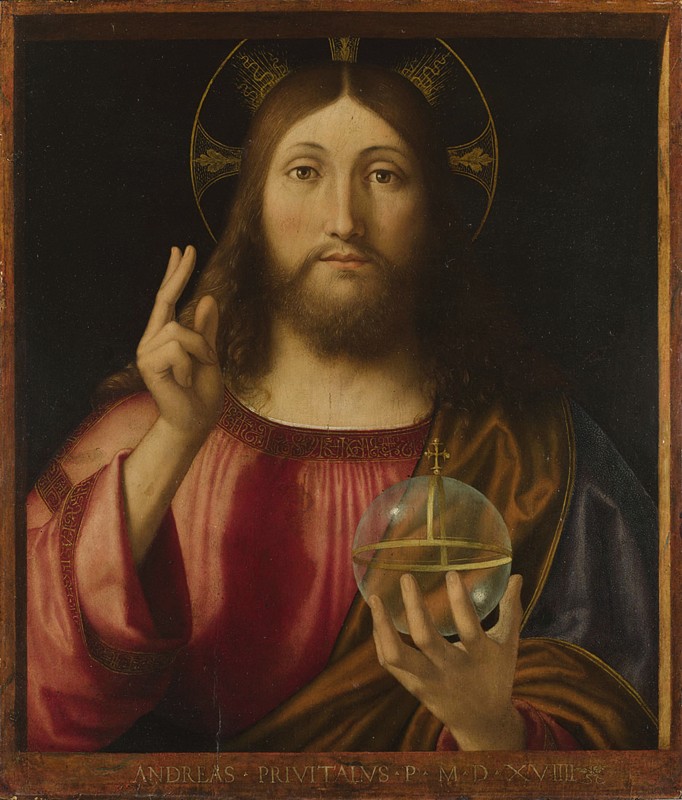
6 | Andrea Previtali, Salvator Mundi, oil on wood, 1519, London, National Gallery.
On April 12, 2026, U.S. President Donald Trump posted an AI-generated image of himself on Truth Social, which portrayed him in the act of healing a man lying in a hospital bed, sick-looking and possibly on the verge of death [Fig. 1]. Trump’s appearance had an unmistakably messianic, Christ-like character, as his figure radiated a bright light and was surrounded by men and women gazing at him in awe, some of whom even had their hands clasped in prayer. The image was withdrawn with unusual quickness the following day in reaction to waves of criticism from Christians worldwide, including MAGA members of various confessions. The President, however, rejected all criticism as unfounded, explaining that the image had been misinterpreted, as its subject had nothing to do with Jesus Christ. In fact, Trump stated: “It’s supposed to be me as a doctor making people better, and I do make people better. I make people a lot better.” (Brooks et al. 2026).
Unconvincing to most observers, such an explanation was immediately received with skepticism and derision, as evidenced by the wave of jokes that flooded the internet in the following days [Fig. 2]. Nevertheless, the public was left in a state of uncertainty and confusion, primarily because the iconography of Trump’s post lacked thorough analysis. Major news outlets, in particular, rarely provided art historians and theologians with the platform to move beyond a simple denunciation of the religious symbolism involved, offering little in the way of further explanation (Brooks et al. 2026; Grote 2026).
This essay addresses this gap by providing a more detailed analysis of the image and examining its broader implications. Specifically, it presents the findings of a seminar and discussion conducted shortly after the AI-generated picture was posted, as part of the ‘Introduction to Iconography’ course I teach at the University of Trento – a mandatory subject for all first-year students in the BA program in Cultural Heritage. Hailing primarily from Trentino-Alto Adige and other regions of Northern Italy, the majority of the students attending the course are Catholic, at least nominally. On the other hand, they also belong to what various polls and studies in recent years have identified as “Italy’s most secular generation ever” (Avallone 2023; Matteo 2017), a trend confirmed by the increasingly low attendance in religious education classes recently recorded by the Diocese of Trento, where more than one in three high school students opts out (see Rainews.it 2026). This may explain the students’ difficulty in analyzing the iconography of Trump’s image, reflecting a broader contemporary condition: being iconographically illiterate despite being visually saturated. However, the keen interest and active participation I witnessed during the seminar serve as a prime example of how Christian iconography becomes particularly compelling when it reveals the connection between contemporary visual culture and its millennial tradition, thereby decoding the past to interpret the present and its underlying messages.
As previously mentioned, the image in question was explicitly AI-generated – as has been the case for several other often provocative images the U.S. President has posted over the last year, beginning with his portrait as Pope, shared shortly after the death of Pope Francis on April 21, 2025 (Matza 2025) [Fig. 3]. While that portrait aimed for photographic realism, the new Christ-like image possesses a cheap, oleographic quality. This aesthetic may recall the cruder expressions of social realism from the interwar period, as has been suggested (Brooks et al. 2026), but older generations of Catholics are likely to find it alarmingly similar to the catechism illustrations they encountered as children.
Shifting the focus from style to iconography, the image’s religious aura is underscored by several concrete elements. As we explored in class, the protagonist’s gesture and attire serve as the primary points of departure. Donald Trump is depicted laying his right hand on a sick man’s forehead; the thaumaturgic power of this contact is emphasized by rays of light emanating from the point of touch. As some students promptly noted, the scene evokes the iconographic tradition of Christ healing the infirm – a theme central to the miracles of Jesus that gained significant traction in Western painting, most notably thanks to Rembrandt’s famous ‘Hundred Guilder Print’ of 1648 (Bauer 1968, 438) [Fig. 4]. Trump’s image appears to be specifically modeled after the healing of the leper, as this is the primary instance in the Gospels where Jesus is explicitly described as healing through mere physical touch (Mk 1:40–41; Mt 8:1–4; Lk 5:12–16).
While the Scriptures do not specify the exact point of contact, artistic tradition frequently depicts Jesus placing his hand on the sufferer’s head or forehead. In this AI-generated image, however, the gesture is placed within a setting where the man is lying in bed – a detail inconsistent with the Gospel account, in which the encounter takes place on the road. On the other hand, this compositional choice strongly echoes the Catholic ritual of the Anointing of the Sick, one of the Seven Sacraments administered to the seriously ill or elderly. Indeed, a stained-glass window with this subject from the Song Vinh Church in Phu My City (Vietnam) – a monumental neo-Gothic building belonging to the Ba Ria Diocese and consecrated in 2022 (Quang Hung 2005) – is very likely to have provided the model for Trump’s image [Fig. 5]. This is suggested by the composition, which is almost identical in both works, albeit reversed; by Trump’s posture and attire, which faithfully reproduce those of the priest in the stained glass, with just a few yet significant differences that will be examined below; by the sick man, whose reclining position and features are remarkably similar, including the white hair and beard; and finally, by the young woman with clasped hands in the left corner of both compositions.
Needless to say, the Vietnamese prototype contributes to giving the U.S. President a strong priestly authority, deeply rooted in the visual lexicon of liturgical tradition. However, such authority evidently was not deemed sufficient by whoever instructed the AI to produce the image. Thus, the latter introduced a few new elements that provide the figure of Trump with a truly messianic character, and his action with a miraculous aura. As mentioned before, this aura is immediately suggested by the light emanating from his right hand, laid on the sick man’s forehead – a detail obviously missing from the Vietnamese stained glass, where the priest is simply administering the anointing with his left hand while holding the oil container in his right. Significantly, the President’s left hand also emanates a bright light; in this case, the rays appear to originate from a spherical shape – a detail that students could not link to any specific iconographic model. In fact, the image’s most immediate reference within Christian iconography is no longer the healing Christ, an iconography often referred to today as Christus Medicus, borrowing a metaphor from Patristic tradition (Arbesmann 1954), but rather the Salvator Mundi – Christ as Savior of the World. In this iconographic tradition, Christ is typically represented half-length, holding an orb in his left hand while the right is raised in a gesture of blessing. This iconographic type developed during the Renaissance, originating in Flemish painting (Legner 1968, 423-424); its influence remained relatively circumscribed, although it appears to have gained significant prominence within Leonardo da Vinci’s circle. It was here that the motif of the orb – represented either as a transparent crystal sphere or in more realistic, cosmographic terms – was suggestively explored by Leonardo himself (see the famous painting recently attributed to him, sold at Christie’s in 2017 and now in a private collection in Abu Dhabi) and by artists such as Marco d’Oggiono and Andrea Previtali [Fig. 6]. The visual parallels suggest that the AI may have drawn from this specific Leonardesque tradition to construct the image’s messianic aura.
Furthermore, the iconic hybrid created by the AI incorporates yet another significant model from Christian imagery, one that most students were able to recognize: the luminous halo framing Trump’s entire figure. We are clearly dealing with a modern interpretation of the ‘mandorla’ – the almond-shaped aureola traditionally reserved for Christ or the Virgin Mary in majesty – which serves to further amplify the President’s thaumaturgic and supernatural aura. Indeed, Christ is surrounded by a similar luminous glow in the aforementioned Christ Healing the Sick by Rembrandt. However, the ‘mandorla’ is more typically an attribute of theophanic episodes, such as Christ’s Transfiguration and Ascension, or his central role in the Last Judgment (Messerer 1971).
The AI image’s theophanic dimension may find further confirmation in Trump’s attire, in spite of the fact that its most immediate source was, without any doubt, the white cassock with a red stole worn by the priest in the Vietnamese stained glass of the Anointing of the Sick (incidentally, the stole worn by the minister for this sacrament is generally purple, not red). Indeed, Jesus is consistently depicted wearing a white robe in scenes of the Transfiguration – where it is said that “his clothes became as white as the light” (Mt 17:2; see also Mk 9:3; Lk 9:29) – as well as in the Ascension, since white traditionally symbolizes ultimate purity and divine glory (Holl et al. 1970, 8).
As for the red garment completing Trump’s attire, it differs from the priest’s stole in the Vietnamese model, since it does not simply fall across the President’s chest in two elongated strips but is also draped over his shoulder. This variation is unlikely to be without significance, as it evokes the combination of mozzetta and stole – two key elements of the Pope’s official attire in public ceremonies, starting from his first appearance on the central balcony of St. Peter’s after his election. Respectively red and crimson, the mozzetta and stole represent the chlamys purpurea (‘purple chlamys’), the dark red short garment, originally among the symbols of imperial sovereignty, which passed from secular to papal power starting from the Carolingian era (Sanchirico 2010). Considering that Trump’s image was posted on April 12, 2026, only hours after his attack on Pope Leo XIV regarding the latter’s stance on crime and war – an act that created an unprecedented rift with the Vatican – one cannot help but conclude that the AI was intentionally prompted to frame the President as a true competitor to the Papacy. By appropriating the Pope’s most recognizable attributes, the image seeks to bridge the gap between political power and spiritual sovereignty, positioning Trump as a domestic and global alternative to the new American Pope.
While understandably daunted by the image’s complex religious dimension – which spans iconographic, liturgical, and papal symbolism – the students attending the seminar were immediately more at ease decoding the rest of the scene, imbued with American patriotism thanks to a visual language widely popularized by the media. Starting with the small crowd in awe of the President in the lower part of the composition, to the left it is easy to recognize a young woman with clasped hands – she differs from the Vietnamese model only by having her head uncovered – and an elderly man who can be identified as a member of the MAGA movement thanks to the inscription on his beret. Significantly enough, the building surmounted by a neoclassical dome that appears right above him is the Capitol, the seat of the U.S. Congress and the heart of the federal government’s legislative power. It is difficult not to perceive its presence as a disquieting memento of the violent attack carried out by a crowd of Trump’s supporters on January 6, 2021. A huge American flag waves in the sky, while another symbol of the U.S., an eagle, is flying towards Trump. Moving to the right, we see a second young woman turning to the President with an admiring gaze; identifiable as a doctor by her stethoscope, her presence suggests that Trump’s thaumaturgic and supernatural power prevails where medical science fails – an idea conveying the skepticism that the Trump administration has shown towards science on many occasions. A member of the U.S. Army appears behind the woman; finally, the Statue of Liberty and the Lincoln Memorial stand in the background. Three fighter jets and a second eagle fly through this portion of the sky.
A bit more problematic turned out to be the identification of the winged figure who appears to be leading a group of soldiers surrounded by rays of light and marching towards the viewer in the middle of the sky, right above the president’s head in the first image. As one student cleverly observed, the figure’s radiate crown hints at its identification as the personification of Liberty, one of the best-known symbols of the United States thanks to the huge statue by French artist Frédéric Auguste Bartholdi, which was inaugurated on New York’s Liberty Island in 1886. On the other hand, the pair of wings associates her with Nike, the personification of Victory, of Greco-Roman origin. In light of this, the figure most likely symbolizes a Victorious America; indeed, a similar one is designed to surmount the monumental Triumphal Arch that Trump intends to build on Columbia Island in Washington, D.C., to celebrate the 250th anniversary of the Declaration of Independence [Fig. 7]. The project, which was presented in two different designs on October 16, 2025, and April 16, 2026, is clearly inspired by the Arc de Triomphe in Paris, yet aims to become – in Trump’s words – “the greatest and most beautiful Triumphal Arch, anywhere in the world” (Habeshian 2026). Despite encountering resistance from the public, it was granted final approval by the Commission of Fine Arts on May 21, 2026 (Broadwater 2026 and references in Wikipedia’s ad vocem).
Going back to the comparison between the Triumphal Arch’s figure of a Victorious America and the analogous one in the AI-generated image of Trump, the latter shows a totally different and pugnacious character – not only because it advances quite menacingly, but also because it wears a chiton-like garment with a tactical vest over it. If one looks carefully, grenades and ammunition clips are visible in its pouches. This, again, recalls another popular image of Christian iconography, namely St. Michael the Archangel, who is always represented descending from the sky, fully armed, often with armor over his tunica, as he leads the celestial army against Satan (Rev 12:7-9) (Holl et al. 1971). Once again, the AI has generated a hallucinatory hybrid mixing past and present, pagan and Christian tradition, secular power and religious belief; all this to convey the terrifying message that the United States is entitled to use military force since all its opponents share a satanic nature.
This is a grim confirmation of how AI is perfectly in step with the Zeitgeist, but also of how relevant Christian iconography remains for understanding contemporary visual culture in general, and AI strategies in particular, as they both rely on a millennia-old iconographic tradition. Ultimately, teaching Christian iconography – independently from the personal beliefs of the instructor or the students – proves to be a crucial tool for fostering critical thinking, especially in younger generations, empowering them to navigate the present and be better prepared to face the future.
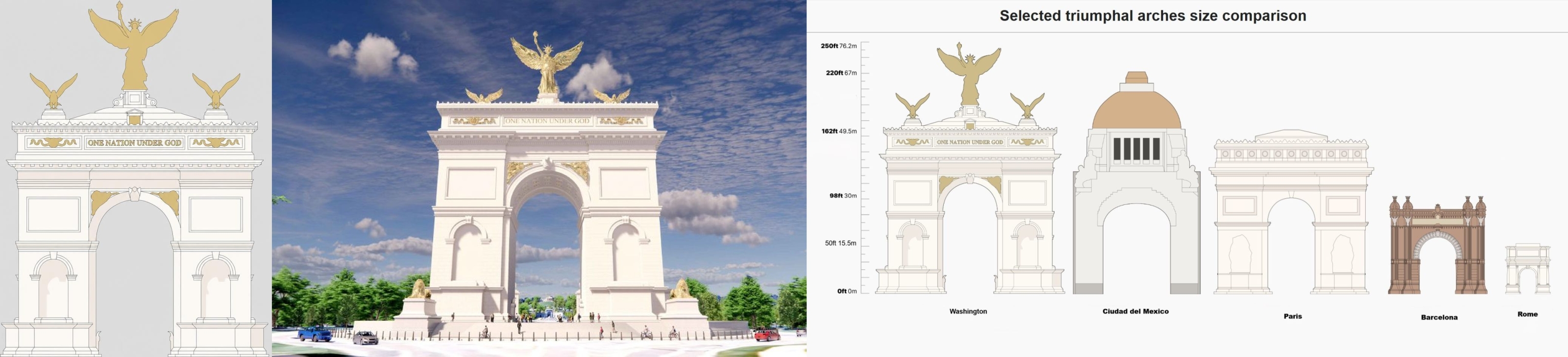
7 | Rendering project of the United States Triumphal Arch, second version, submitted to the U.S. Commission of Fine Arts, April 2026 (Source: Wikipedia).
Bibliographical references
- Arbesmann 1954
R. Arbesmann, The Concept of ‘Christus medicus’ in St. Augustine, “Traditio” 10 (1954), 1-28. - Avallone 2023
R. Avallone, Giovani e fede: il difficile rapporto delle nuove generazioni con la fede, “Il Mattino” (April 3, 2023). - Bauer 1968
H. Bauer, Christus, Christusbild. B. 17 u. 18 Jh., in E. Kirschbaum (a cura di), Lexikon der christlichen Ikonographie, vol. I, Freiburg im Breisgau 1968, 435-442. - Braunfels 1972
W. Braunfels, Wunder Christi (Wunderheilungen), in E. Kirschbaum (a cura di), Lexikon der christlichen Ikonographie, vol. IV, Freiburg im Breisgau 1972, 542-549. - Broadwater 2026
L. Broadwater, Federal Panel Approves Trump’s Plan For 250-foot Arch in Washington, “The New York Times” (May 21, 2026). - Brooks et al. 2026
B. Brooks, H. Coster, J. Ax, Trump’s AI image of himself as Jesus-like figure follows feud with Pope Leo, “Reuters” (April 13, 2026). - Grote 2026
L. Grote, Wie der US-Präsident Religion für sich nutzt. “Wir haben die wahren Gefahren noch gar nicht erkannt”, “Tagesspiegel” (April 18, 2026). - Habeshian 2026
S. Habeshian, Trump’s victory arch design for US capital moves forward, “BBC News” (April 16, 2026). - Holl et al. 1970
O. Holl et al., Farbensymbolik, in E. Kirschbaum (Hrsg.), Lexikon der christlichen Ikonographie, vol. II, Freiburg im Breisgau 1970, 7-14. - Holl et al. 1971
O. Holl et al., Michael, Erzengel, in E. Kirschbaum (Hrsg.), Lexikon der christlichen Ikonographie, vol. III, Freiburg im Breisgau 1971, 255-265. - Legner 1968
A. Legner, Das Christusbild der gotischen Kunst, in E. Kirschbaum (Hrsg.), Lexikon der christlichen Ikonographie, vol. I, Freiburg im Breisgau 1968, 414-425. - Matteo 2017
A. Matteo, La prima generazione incredula: il difficile rapporto tra i giovani e la fede, Catanzaro 2017. - Matza 2025
M. Matza, Trump criticized after posting AI image of himself as Pope, “BBC News” (May 4, 2025). - Messerer 1971
W. Messerer, Mandorla (Gloriole, ganzfigurige Aura), in E. Kirschbaum (Hrsg.), Lexikon der christlichen Ikonographie, vol. III, Freiburg im Breisgau 1971, 147-149. - Quang Hung 2025
Quang Hung, Song Vinh Church: The Gothic jewel of Ba Ria – Vung Tau, “Vietnam Global” (April 29, 2025). - Rainews.it 2026
Insegnamento religione Cattolica, uno studente trentino su quattro non frequenta, “RaiNews.it” (January 4, 2026). - Sanchirico 2010
S. Sanchirico, I Pontefici in bianco e rosso, “L’Osservatore Romano” (July 14, 2010).
Abstract
This essay examines the use and re-signification of Christian iconography in contemporary political communication, focusing on an AI-generated image posted by Donald Trump in April 2026. The image portrays the President in a messianic, Christ-like role while healing a sick man through physical touch, an act that sparked immediate controversy, causing the image to be quickly removed. Through a detailed iconographic analysis, the author traces the visual models underlying this digital hybrid: after identifying its most immediate contemporary prototype in a stained-glass window from the Song Vinh Church in Vietnam, it discusses other iconographic references, from the Flemish and Leonardesque tradition of the Salvator Mundi to the motif of the “mandorla” in Christ’s theophanic episodes, up to the borrowing of papal attire. Through such analysis, the essay also presents the findings of a seminar on Christian iconography conducted at the University of Trento, highlighting how younger generations, despite living in a highly secularized society, can regain critical thinking tools by studying the millennial tradition of images. Ultimately, the paper emphasizes the urgency of iconographic literacy as an indispensable tool for navigating and decoding visual manipulation strategies within the digital Zeitgeist.
keywords | Salvator mundi; Anointing of the Sick; Artificial Intelligence (AI); Donald Trump; Political communication.
La Redazione di Engramma è grata ai colleghi – amici e studiosi – che, seguendo la procedura peer review a doppio cieco, hanno sottoposto a lettura, revisione e giudizio questo saggio (v. Albo dei referee di Engramma)
Per citare questo articolo / To cite this article: Alessandra Galizzi Kroegel, AI & Christian Iconography: the Past pro the Present.The Case of Donald Trump as Salvator mundi, “La Rivista di Engramma” n. 238, agosto 2026.