Χάρις. Studies in Christian Iconography
Editorial of Engramma 238
edited by Maria Bergamo, Marina Vicelja
Italian version | Abstract
“Nothing beautiful or lovely comes to men without the Graces”
(Theocritus, Idylls, XVI, 107)
This issue of “Engramma”, published in Italian and English, is organized into three sections following the editorial: a small group of essays selected for their methodological value, a broad range of case studies spanning different periods and geographical areas, and a closing contribution in memoriam of our Augusto Gentili. We chose the title because it is the acronym of our incoming project Ch.ar.i.s: Christian Art Iconographic Studies, but also for the profound and manifold semantic resonance of the concept of charis – grace – which in art, and in Christian art in particular, unfolds its full expressive power, inseparable from the very value of Beauty and Gift.
I. The Saving Beauty
I.1 Why Charis
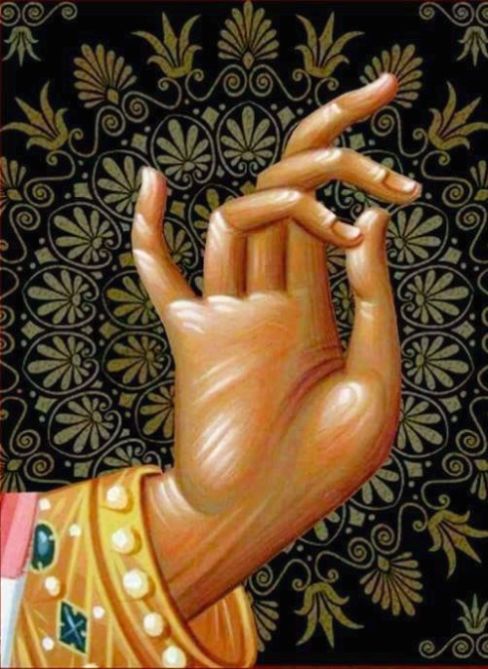
Charis is grace, beauty, salvation, gift. It is the circular dance of the sister goddesses emanating from Aphrodite, it is spring rebirth, it is radiant charm, but also welcome and attraction, it is a dynamism that both acts and is acted upon. It is sensual and vital favor, self-giving, gift and sacrifice rendered in return. Indeed, the grace bestowed necessarily calls forth a response: not only as an act, but as a powerful transfiguring action.
Charis is therefore beauty given as revelation, bound to the moment – the kairòs – in which splendor becomes transforming. Charis is shed upon Odysseus on the shore of the Phaeacians, upon Moses descending from Sinai, upon Mary opening herself to the Angel’s announcement, upon the face of Christ transfigured on Mount Tabor. It is the grace that makes visible, accessible, the tremendum of the glory that made the vision of the Old Testament God deadly, as John announces in the Prologue to his Gospel: with the Incarnation of the Logos, the doxa becomes tangible presence because it is accompanied by charis:
Καὶ ὁ Λόγος σὰρξ ἐγένετο καὶ ἐσκήνωσεν ἐν ἡμῖν, καὶ ἐθεασάμεθα τὴν δόξαν αὐτοῦ […], πλήρης χάριτος καὶ ἀληθείας (Jn 1, 14)
And the Word was made flesh, and dwelt among us, and we beheld his glory […], full of grace and truth
Charis is the “beauty that saves” that remained a question in The Idiot of Dostoevsky: what saves cannot in fact be pulchritudo, or the kalòn, the absolute and fixed beauty of the eidolon or agalma, to be venerated or to be seduced and corrupted by, as Pavel Evdokimov asks in his Théologie de la beauté. It is rather charis, the shining grace which – in Christianity – glows as a spiritual gift until it reaches – in order to tear it open – the utter darkness of the sacrifice of death. The Eucharistic sacrifice – εὐχάριστος – is a rendering of thanks (Catechism of the Catholic Church, §1360). This is why the sorrowful face of the Servant of JHWH (Is 53, 3) is transfigured into “the most handsome of men, full of grace and splendor” (Ps 45, 3), that is, into the Beloved of the Canticle, the King of glory, the Messiah.
Charis is therefore dynamism and relation, passive and active movement, which “in mente nostra et movet et movetur” (Thomas Aquinas, Summa Theologica I-II, q.111, a.2). As a principle of attraction, descending and ascending, grace – in the celebrated words of Simone Weil in La pesanteur et la grâce, but as throughout mysticism – asks, moves, arouses reciprocity, a response, and therefore implies an action. Grace poured out as gift does not call for a unilateral and equivalent restitution but – in the logic of Christ’s “superabundance” according with Paul Ricoer (La logique de Jésus. Romains 5) – becomes free and universal. And this is what an image asks for: not only a gaze, but an understanding, a response, an inner reaction to a beauty wondrously given by art.
I.2 Why Christian art
The concept of an active, dynamic beauty, in continuous symbolic and affective relation with absolute beauty, is the ground of Christian art, and allows a distancing both from aestheticizing historical-critical positions and those of “pure visibility” and from a rigid categorization of figurative vocabulary within its necessary bond – or subjection – to the text.
When Plotinus said that “to contemplate beauty the soul must itself become beautiful” (Plotinus, Enn. I, 6, 9), he pointed to a return, a rediscovery, a search for the original principle in which beauty resides. Christian art – or sacred art in general – cannot be severed from its bond with the metaphysical dimension, cannot avoid relating to its origin, whose deep meaning it conveys. Its ascending-descending symbolic value deposits in the imagination of the faithful a “world of forms”, a “cultural memory” at a peculiar hermeneutic level, essentially metaphorical – not to say allegorical or anagogical. In the proactive dimension in which they live their devotion, Christians do not distinguish the artistic masterpiece from the printed holy card, nor do they fear the infinite stylistic variations of the same subject; they do not experience a separation between liturgical action and personal prayer, between the preacher’s word and the biblical text; nor can they divide faith from their own life experience. Art is incarnate in the dimension of faith.
As indeed is its very ontological status since the Second Council of Nicaea, which takes up the words of John of Damascus: “when you have seen that he who is incorporeal has become a man [...] then you will make the image of his human form [...] and you will set before the sight of all him who has accepted to be seen” (John of Damascus, De imaginibus, I, 8). This is why Herbert Kessler rightly speaks of Christian art as a true “incarnography” (Above Iconography, in “Iconographica” 2023), taking up Bonaventure: since sin has “darkened the eye of contemplation” of the Invisible, the “light of art” becomes the vehicle “to lead us back home” (Bonaventure, De reductione artium ad theologiam, 11-12).
I.3. Why – still – iconography
Christian art, in its specific forms, that is in its iconography, needs updating now more than ever. An updating that is lexical before it is conceptual, didactic before it is catechetical. Émile Mâle wrote, in his celebrated studies on medieval art, that Christian art is a symbolic language whose grammar has to be learned. Around these words, and around the semiotic-grammatical value of iconography – and of sacred iconography in particular – an entire century of historical studies and art theory has measured itself. Between critiques of literalism, of stylistic formalism or of forced interpretation, part of the scholarship has today reached a mediation: without renouncing the idea of iconography as a regulated and intelligible system, it has claimed its historicity, its mobility and its dependence on practices of reception, restoring to the sacred image a grammar that is not normative but situated and culturally negotiated.
Nevertheless, in today’s atheist or multi-religious society, we witness a real form of iconographic illiteracy, also the outcome of a secularized and self-referential contemporary theology. Against this, Pierangelo Sequeri – among others – calls for a possible aesthetic-affective theology, one that starts not from doctrinal concepts but from the sensible and emotional experience of the sacred, necessarily inclusive of image and imagination (La teologia non ha futuro senza immaginazione, 2021).
If in wholly other cultures blindness before Christian subjects is self-evident, today in the West too that social medium of an even superficial shared tradition – popular and widespread Christianity – has historically fallen away. For the general public, for artists and even for scholars, the knowledge and the capacity to read sacred images in their primary, literal, iconographic meaning have been lost. Yet knowledge of representations, of biblical figures and narratives, the relation with liturgy, with exegesis, with cultural context, as well as the perception of primary symbols shared with other religions too – high/low, circle/square – become more necessary than ever to vision, to contemplation, or simply to full aesthetic experience.
For if it is true that images are “royal doors” opened onto the mystery of the sacred, it is also true that their power lies in physicality, in form, in iconography precisely. In this sense one may draw on what Hans Urs von Balthasar elaborated in his work The Glory of the Lord. A Theological Aesthetics:
Only what has form can carry off and enrapture into ecstasy; only through form can the lightning-flash of eternal beauty blaze out (von Balthasar Herlichkeit).
II. Charis: Between human and divine
Charis, as a foundational theological concept, lies at the core of the Christian iconographic method. Theology approached Christian art from different perspectives, of which the theology of beauty has become dominant as said Bruno Forte in The Portal of Beauty: Towards a Theology of Aesthetics, as it seeks an answer to God’s visibility and presence in Christian representations referring to beauty as one of the attributes of God who is invoked in Augustine as “pulchritudo pulchrorum omnium” – “the beauty of all things beautiful” (Augustine, Confessiones, III.6.10). Aesthetic experience is an experience of intense meaning since art provides essential insights into religious concepts and truth also in Hans-Georg Gadamer thinking (The Relevance of the Beautiful, 1986). Along with its reference to beauty, divine favor and theology of grace, charis also bridges the gap between ancient traditions and the Christian approach to images, especially within Western Christianity, whose perspective was for many centuries based on Gregory the Great’s letter to Serenus, bishop of Marseilles, in which the pope rebuked Serenus for destroying images by asserting that:
Nam quod legentibus scriptura, hoc idiotis praestat pictura cernentibus, quia in ipsa ignorantes vident quod sequi debeant, in ipsa legunt qui litteras nesciunt; unde praecipue gentibus pro lectione pictura est (Gregory the Great, Epist. XI, 10).
For what writing presents to readers, this a picture presents to the unlearned who behold, since in it the ignorant see what they ought to follow; in it the illiterate read. Hence, chiefly to the nations, the picture is instead of reading.
This statement, which largely shaped the perception of religious art as a “Bible of the illiterate”, was challenged in the early modern period, which revealed different layers of meaning, especially with regard to images as representing the invisible truth. Images were defined in their manifold capacity: as the adornment of God’s earthly house, the symbols of Ecclesia, and the principal emblems of the universal church, as effective narratives that sustained verbal communication and endorsed education, and, most of all, in their capacity to convey and communicate meaning and messages, and to lift the mind to God. They were capable of representing spirituality through material elements, such as forms, colors, and light, and they have been considered active and productive more than just reproductive. The capacity to transmit messages, either in narratives or as symbols, rested on their particular mediality and their “bodies”. They were experienced as inseparable from their “bodies”, which, to a large extent, determined the mode of representation, the choice of content, the access to the object, and the way they were to be received (e.g., private versus public veneration). Yet it went beyond their materiality, towards other specific elements that influenced and affected their representation and perception, such as the spatial context or textual models, which built the original environment, in which the image constructed its identity, logic, and significance. It was only within this context that its meaning could be adequately grasped. Images were also interactive with the audience, which added new perspectives to their role and power – they were venerated, adored, carried in processions, touched, kissed, approached by believers, but also criticized, violated, and destroyed in the iconoclastic periods (on the isseu, see Marina Vecelja essay in Religious Iconography for The Routledge Companion to Medieval Iconography).
Images were not only intended for observation but also considered “present” at the moment of liturgy. Pictorial programs were carefully developed and constructed but also fell within the laws of communicating a message. Observers from different historical periods possessed a far more potent imaginative sensibility heightened by rhetoric, and they could see more and beyond the displayed. The image must have seemed to them a carefully balanced mixture of realism and abstraction, expressed by a combination of the human and the divine driven by charis.
The contemporary discourses, practices and image theories often split this carefully constructed unit into displaced fragments that are, consequently, analyzed and interpreted separately, creating new perspectives and meanings. Changes brought on by modernity made a profound alteration of the paradigm – art has become personal, experiential, emancipated from religious and church life, turning to spirituality or the experience of transcendence but not necessarily following a certain dogmatic content or liturgical purpose. The artists promote the creative act as an encounter with an idea – it was irrelevant whether it was a complete and true religious experience, a serious criticism, or just a way to express an idea or to communicate a message as wrote by Donald Kuspit Concerning the Spiritual in Contemporary Art, in The Spiritual in Art: Abstract Painting 1890-1985. The “image”, therefore, was focused on the affective and experiential dimension of the individual – the artist, but also the viewer. The post-postmodernist aporia of competing intentions, definitions and social and intellectual tendencies has opened up new discursive spaces outside the confines of established practices. The iconography that has been deeply rooted in the Christian tradition and belief has developed into a universal cultural inheritance and is developing further and stronger in a secular context as studied in the Alena Alexandrova thesis in Dis-Continuities: The Role of Religious Motifs in Contemporary Art. In this regard, the role and responsibility of iconography and iconology today are critical, since they connect modern audiences to centuries of continuity and provide sense to images with detached, general and referential context – the images that are strongly engaged in our day-to-day visual experience.
III. Index
The essay of Andrea Dall’Asta SJ, Note per un lessico della “grazia” tra Antichità e Cristianesimo traces the semantics of charis from the Greek world (gratuitous gift, beauty, reciprocity in Aristotle and Demosthenes, the myth of the Charites, the charis that transfigures Odysseus) to its Christian development as gratia, a central soteriological concept tied to the gift of Christ. Its value lies in framing the paradox of beauty sub contraria specie in the Passion, and tracing the line from Aquinas to von Balthasar’s theological aesthetics.
Fabrizio Lollini’s essay D’oro, di luce, di pelle e di sangue. I reliquiari ‘aperti’ di sant’Antonio e san Petronio analyzes how beyond their aesthetic value, reliquaries hold a metaphysical status as images in Kessler’s sense, within Christian visual culture. This essay examines their visual permeability — the extent to which the faithful could see, or glimpse, the sacred remains held within these precious objects. It focuses on two reliquaries of Saint Anthony of Padua (the “chin” and tongue reliquaries) and a related pair containing the skulls of Saints Petronius and Dominic, both made by the Bolognese goldsmith Jacopo “Rosetus” at the end of the 14th century.
Through an analysis of the Introduction and the first complete publication of the structure of Volume I (courtesy of Presses Universitaires de France), Maria Bergamo in the article Louis Réau e la vie profonde des images. Un’analisi di metodo de l’Iconographie de l’art chrétien reassesses the methodological value of Louis Réau's magistral work situating it within the historiography of its time. In the scholar's own words, Iconography should be regarded neither as a mere pastime for amateurs nor as an auxiliary science subordinate to major disciplines such as Art History or Archaeology, but rather as an independent science, in both its object and its methods, one that "contributes to the understanding of the profound life of images".
The text of Yvonne Dohna Schlobitten, The Phenomenology of Seeing: Guardini’s Welt-Anschauung. Seeing the Sense, Spirit and Being of Iconography is a critical approach to classical iconography as a method from the phenomenological perspective. Following Lionello Venturi’s disparaging approach to iconography, and in the line with this volume’s topic to raise the issues of various aspects of religious iconography, she argues that seeing cannot be reduced to the functional iconographic understanding, based on the usage of clichés, advocating for bodily and emotional experience in constructing the spirit of iconography in the dialogue with the artwork.
The article of Barbara Baert Dance, Inversion, Grid. Salome in the Benedictine Abbey of Saint John in Müstair (c. 1160), provides interesting insight in the interplay of image, text and context while interpreting the Romanesque murals in Müstair. Analyzing the iconographic theme of beheading of Saint John and Salome’s dance, the author provides new hypotheses of understanding image within specific exegetical learning as well as a strong focus on the significance of the iconographic method.
Alina Heiremans’ paper Margins in Motion. Narrativity and Dynamic Viewing in 14th Century Ghent Marginalia, examines images on the margins of several 14th-century manuscripts from Ghent. The author stresses the new approaches to medieval image as dynamic, performative and generating memory which, in turn, through new iconographic and iconological research, transformed manuscript marginalia in a promising field of visual cultural studies.
In the study of Domenico Salamino, Enthymēthentos. Sulla retorica del dubbio e della regalità nell’arco di Santa Maria Maggiore a Roma, reconsiders Joseph in the triumphal-arch mosaics of Santa Maria Maggiore, focusing on the gesture — the hand drawn to the chest — through which he is shown awake, rather than asleep, in the Annunciation scene. Drawing on ancient rhetorical theories of gesture (Quintilian, chironomy, actio), the author reads this as a deictic, self-referential act: Joseph considers, receives the angel’s word, and turns it into obedience. Its value lies in linking this rhetorical-gestural reading to the arch’s second register, the Adoration of the Magi, revealing two distinct bodily grammars – allocution and ceremonial – within the same post-Ephesian Christological programme.
Ivana Čapeta Rakić, in the text entitled The Lost Grammar of Anti-Jewish Iconography. Rediscovering Medieval Visual Literacy in Istria, outlines specific aspects of Christian iconography in the medieval fresco paintings in Istria (Croatia). Analyzing selected examples and focusing on particular details – the zoomorphic motifs – the author demonstrates the importance of rediscovering their significance that has become less accessible in modern, increasingly secularized society that lacks iconographic literacy.
In the paper The Lost Grammar of Anti-Jewish Iconography. Rediscovering Medieval Visual Literacy in Istria Agnieszka Skrodzka examines the iconography of two figures that were, as a result of misunderstandings and lack of iconographic literacy, often conflated and misidentified. This interesting case study demonstrates the importance of iconographic knowledge built on the complex historical, political and cultural mindset of the period in question.
In Oltre la figura. “Litanie della Vergine” di Mario Deluigi e l’orizzonte del sacro Mattia Angeletti traces the genesis and meaning of Mario Deluigi’s Litanie della Vergine (1948-50), an abstract altar frontal now in the Vatican Museums, reading it through his dialogue with Mondrian, the Venetian milieu (Scarpa, Ambrosini, Bettini), and his exchange with don Germano Pattaro. Its value lies in showing how the work, refusing figuration, still builds a “theology of presence” – through the cross, the sphere, and the litany’s structure – offering itself as a decisive test of modern sacred art beyond figuration, culminating in its gift to Paul VI in 1972.
Pity is a Rebel Passion. Jenny Saville’s Contemporary Pietà by Luana M. Wedekin starting from the exhibition Jenny Saville a Ca’ Pesaro (2026), the essay traces the iconography of the Pietà (from the German Vesperbild to plates 5 and 42 of Warburg’s Mnemosyne Atlas) to read how Saville subverts it: faceless mothers, a father in the mother’s place, multiplied limbs, the classically-derived "arm of death". Its value lies in linking these contemporary images of war to the tradition of the mater dolorosa, back to Euripides’ Hecuba, showing the persistence of the dispossessed mother as an indictment of the logic of war.
Alessandra Galizzi Kroegl’s paper, AI & Christian Iconography: the Past pro the Present. The Case of Donald Trump as Salvator Mundi starting from the AI-generated image Trump posted and quickly deleted in April 2026 (showing him performing a miraculous healing, radiating light), the essay traces its iconographic sources: a Vietnamese stained-glass Anointing of the Sick, the Flemish-Leonardesque Salvator Mundi tradition, the theophanic mandorla, papal vestments, and St. Michael the Archangel. Its value lies in documenting, through a university seminar, how iconographic literacy remains an essential critical tool for decoding AI-generated imagery in contemporary political communication.
We would like to present a new brand book on Christian art with the Presentation of Brunet and Scattolini’s volume “Ha fatto bella ogni cosa. Ripensare l’arte cristiana (Paoline 2026), structured around the Catechism’s four pillars (the content of faith, liturgy, moral life, prayer), through which Christian art is said to have "made beautiful" two thousand years of Church history. Two excerpts are reproduced: Gabriele Pelizzari’s preface, which rereads Genesis 1:26-27 to ground theologically the role of the image (“man according to the image”), and the authors’ introduction, linking artistic beauty to a humanizing, pastoral function via the Ar-Theò Project. The contribution’s chief value lies in Pelizzari’s preface, which offers an original reading of the Decalogue’s prohibition of images — not as aniconism but as a ban on “usurping God’s place”.
As a fitting close to the issue, a few months after the passing of Augusto Gentili, a leading professor of iconology and art history, the editors republish a 2006 essay of his on a sacred subject, Dal Monte dell’Orazione al Monte Calvario introduced by two of his students, Maria Bergamo and Simona Dolari. The essay traces the symbolism of the “mountain” in religious culture between the 15th and 16th centuries, from the mystical allegory of the Monte de la oratione to Bellini’s altarpiece with St. Jerome, to Guevara’s Monte Calvario and Tintoretto’s Crucifixion at San Rocco. Its value lies, beyond Gentili’s essay itself, in the editorial gesture of memory and tribute to a master of the discipline.
Abstract
This issue of Engramma explores charis – grace, beauty, gift, and salvation – as a key concept for Christian iconography. Drawing on the relationship between ancient and Christian traditions, the editorial presents beauty not as a static quality but as a dynamic, relational force capable of making the invisible visible and engaging the viewer in an active response. Within this framework, Christian art is understood as an “incarnography”: a material and symbolic mediation of the divine, inseparable from liturgy, devotion, cultural memory, and the practices of reception. The issue also reflects on the need to renew iconographic studies in an increasingly secular and visually saturated society, where the ability to read sacred images can no longer be taken for granted. Its essays combine methodological reflections with case studies ranging from medieval manuscripts, mosaics, reliquaries, and frescoes to modern and contemporary art and AI-generated political imagery. The volume concludes with a tribute to Augusto Gentili, whose work exemplifies the historical and contextual depth of Christian iconographic inquiry.
keywords | Christian iconography; Charis; Theology of beauty, Visual Literacy
Per citare questo articolo / To cite this article: Maria Bergamo, Marina Vicelja, Χάρις. Studi di iconografia cristiana. Editoriale di Engramma 238, “La Rivista di Engramma” n. 238, agosto 2026.